

MTCH2 blockade reduces fat-cell formation in early lab work
Weizmann researchers reported cell and mouse findings that point to MTCH2 as a possible metabolic target. The evidence remains early and is not a human trial.
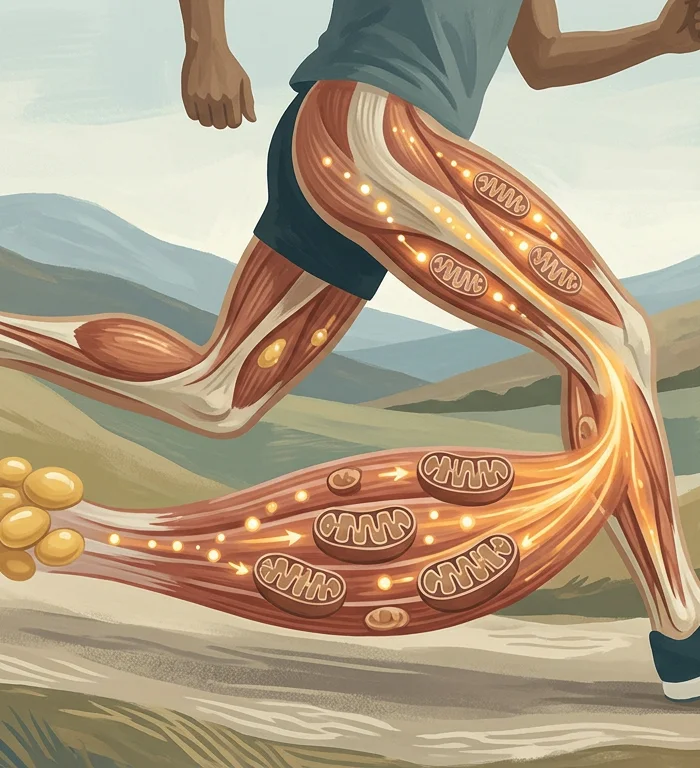
Weizmann Institute of Science researchers said in an Oct. 24 ScienceDaily research summary that disabling MTCH2, nicknamed Mitch, increased fat use in lab-grown human cells and reduced fat-cell formation in mouse precursor cells.
Evidence grade: Early (small, animal, cell or preprint). The finding matters because current weight-loss drugs such as semaglutide and tirzepatide mainly act through appetite and food responses; a 2026 analysis of 20 clinical trials with 15,782 participants found lean mass made up about 25% to 39% of weight lost with several widely used weight-loss medications. In the Weizmann work, about 80% to 90% of normal mouse precursor fat cells matured within six days, compared with 5% to 10% of cells lacking MTCH2.
Sabita Chourasia, a doctoral student cited in the Weizmann material, said the team tracked more than 100 metabolic substances after removing the protein from human cells. “We saw an increase in cellular respiration, the process in which the cell produces energy from nutrients, such as carbohydrates and fats, using oxygen,” she said.
Atan Gross, a professor at Weizmann, said the altered human cells showed a shift in lipid use. “In other words, we showed that Mitch determines the fate of fat in human cells,” Gross said.
The work builds on earlier mouse experiments in which reducing MTCH2 activity in muscle tissue was associated with higher energy expenditure, better endurance and resistance to diet-related obesity, the Weizmann researchers said. The findings discussed in the release were published in The EMBO Journal in January 2025, with additional related research published in Nature Communications on Oct. 3, 2025.
MTCH2 is linked to mitochondria, the cell structures that help convert nutrients into usable energy. The Weizmann researchers said Gross’s team had previously shown that Mitch helps control mitochondrial fusion, the process by which mitochondria join into larger networks. Without the protein, the mitochondrial network became more fragmented, and the cells used more fuel.
The fat-cell experiments tested adipogenesis, the process by which immature precursor cells become fat-storing adipocytes. Gross said removing Mitch made that process less favorable. “When we deleted Mitch from the progenitor cells, we discovered that the environment created in these cells was not conducive to the synthesis of new fats,” he said.
The same 2026 analysis cited by the researchers found that similar proportional lean-mass losses occurred with lifestyle interventions, while adding resistance training helped preserve more lean tissue. That context has increased interest in approaches that might influence body fat while protecting tissues needed for strength, mobility and metabolic health.
The study cannot show that blocking MTCH2 would cause weight loss, prevent obesity or preserve muscle in people. The detailed nutrient-use work was done in human cells grown in the laboratory, while the fat-cell maturation experiment used a mouse-derived cell line.
For readers, the result applies to early biology in cells and mice, not to clinical treatment decisions. The next step supported by the research is further work to test whether MTCH2 can be manipulated safely and usefully in living systems beyond laboratory models.
Source: ScienceDaily Health research summary based on Weizmann Institute of Science material, Oct. 24, 2026.
Atlas360 reports health research and does not provide medical advice.
More stories
- CDC counts 4,588 US measles cases in 2026
- Facial AI study links cancer survival with apparent age
- Shamonda virus case in France marks first human infection
- India caps margins on 137 cancer drugs
- Obakulactone reduces joint swelling in arthritis-model rats
- England maternity units face closure risk at up to 20 sites
Latest news
- Berkshire shares set records after Buffett succession selloff
- Kotak Mahindra Bank posts 26% profit gain
- FICCI seeks Dutch manufacturing investment after $58.1bn FDI
- Macklemore repeats Palestine call in 17-song Red Rocks set
- Makura cites 50 AfCFTA ratifications in Africa image challenge
- Indonesia cuts Singapore gas exports by 31m cubic feet a day
- France to deploy 70,000 police before Saturday protests
- Taiz hospital cuts dialysis sessions to 2.5 hours