

Facial AI study links cancer survival with apparent age
Researchers report that facial AI estimates cancer patients’ survival risk, but the model still requires testing before clinical use.
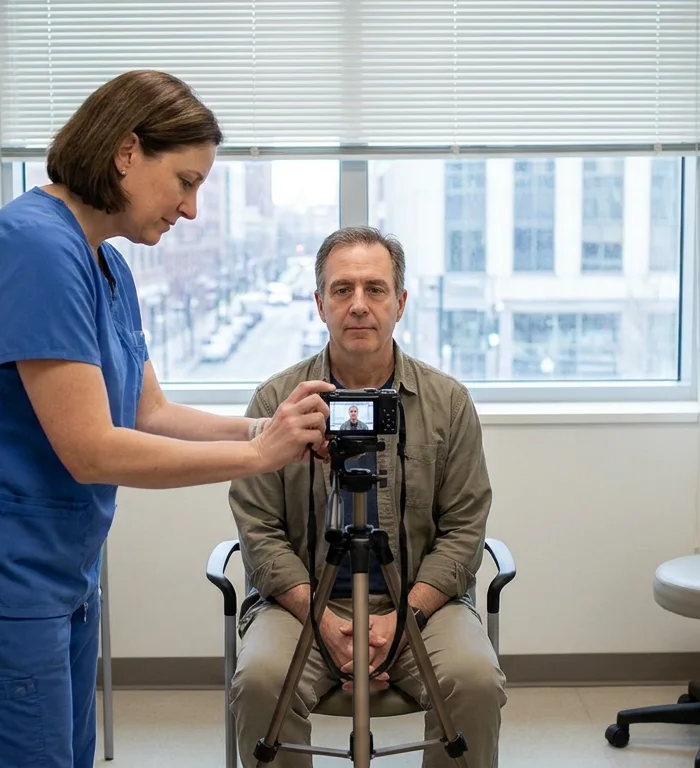
Researchers report that facial AI estimates cancer patients' survival risk, but the model still requires testing before clinical use.
The researchers reported that 64 of 122 patients assigned the highest risk score died within 90 days after being photographed. That subgroup belonged to a test population of 3,820 cancer patients; the result describes outcomes within a group, rather than certainty about any individual's survival.
The study, published October 19, 2026, examines whether photographs can supplement clinical assessments. Ray Mak, a radiation oncologist at Mass General Brigham Cancer Institute and a study researcher, hopes the technology will eventually support decisions about treatment and care near death.
Facial scores supplement clinical judgment
Mak describes the work as an attempt to make more objective the visual impressions physicians form when assessing illness or frailty. Those judgments can influence treatment choices, including operations, chemotherapy and radiation, he says.
The team initially exposed its algorithm to 40 million facial images without assigning a particular task, according to the research account. It subsequently adapted the system for separate assessments of biological age and survival among people with cancer.
A separate evaluation covering more than 38,000 cancer patients found an association between appearing older than chronological age and increased mortality risk, the researchers reported. Mak says incorporating both facial-age and survival scores into a clinical prediction model improved its performance over using either score separately.
Mak also reported that smokers and people who drank heavily tended to receive older facial-age estimates. These observations suggest possible connections with established health risks, but the mechanism behind the survival estimates remains unclear.
Nose and eye regions draw attention
To investigate the system's behavior, the team examined which facial regions received attention during its calculations. Age estimates emphasized forehead areas and the folds running between the nose and mouth, while survival assessments emphasized the nasal bridge and regions beneath the eyes.
The researchers could not explain why those particular regions were associated with mortality risk. The attention maps therefore identify where the model concentrated its calculations without establishing a biological explanation for its results.
According to Mak, differences in expression, makeup and lighting did not undermine the assessments. He also reported that age estimates generally accommodated cosmetic surgery, although photographs taken after rhinoplasty tended to receive slightly older estimates than photographs taken before the procedure.
Clinical testing meets coverage concerns
The survival model was developed using cancer patients around Boston, most of whom were white, according to the research account. Mak says the team is expanding the diversity of its training material; whether performance holds across broader patient populations remains an unresolved clinical question.
Matthew Liao, a professor who directs the Center for Bioethics at New York University and did not participate in the research, sees possible value in identifying people needing additional care. He also warns that incorrect assessments could result in patients missing necessary treatment, and raises concerns about insurers or employers using facial assessments for coverage or hiring decisions.
Mass General Brigham has a pending patent covering facial health algorithms, giving the institution an intellectual-property interest in the technology. If further testing supports clinical use, Mak envisages an additional input for physicians, not a finished tool available today; development and clinical evaluation are still needed.
More stories
- Shamonda virus case in France marks first human infection
- India caps margins on 137 cancer drugs
- Obakulactone reduces joint swelling in arthritis-model rats
- England maternity units face closure risk at up to 20 sites
- Delayed hepatitis B dose may raise child infections 83%
- Harvard experts weigh GLP-1 priorities after 1-in-8 uptake
Latest news
- Iran phone buyers face 30% import duties
- Bruno Fernandes keeps United captaincy after Como criticism
- Oil rises as Aramco staff reportedly told to leave offices
- Damages dispute puts Trump finances at center of lawsuit
- Venezuela protests seek elections as vote dates stay unset
- Citi gets China securities license, now faces scale test
- Xizang earthquake blocks highway as crews build shelters
- Typhoon Champi weakens but keeps Taiwan largely shut down