Micron, Nike Earnings to Test AI and Consumer Narratives
Micron and Nike earnings plus new GDP data will provide critical insights into the durability of the AI rally and the health of the global consumer.
Jurgen Goldmeier ·
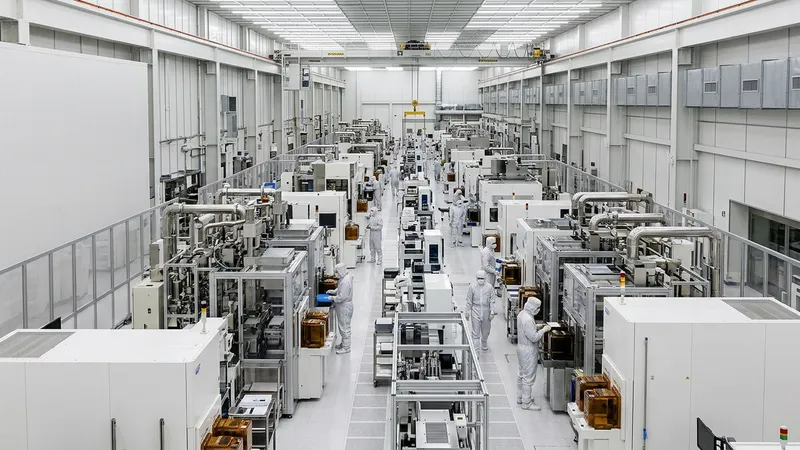
Growth on Trial: AI, Consumers, and GDP Earnings from semiconductor manufacturer Micron and apparel giant Nike, alongside the final revision of first-quarter gross domestic product (GDP), create a critical test for markets next week. The reports will provide fresh data points on the defining narratives of 2024: the artificial intelligence build-out and the resilience of consumer spending, both set against a complex macroeconomic backdrop. ## Background The market enters the week with technology stocks, particularly those linked to AI, trading near all-time highs. The semiconductor index has outperformed the broader market, driven by intense demand for chips powering large language models. Micron, as a key supplier of High-Bandwidth Memory (HBM) — a type of high-performance RAM essential for AI processors — is viewed as a direct beneficiary. Investors will scrutinize its earnings per share (EPS), a measure of profitability, and revenue, but will focus intently on its guidance, which is the company’s forecast for future performance. Any change in its outlook for HBM demand or pricing will be read as a signal for the entire AI hardware sector. Meanwhile, the health of the consumer remains a subject of debate. While headline economic data has suggested resilience, investors question how long households can sustain discretionary spending amid persistent inflation. Nike serves as a global bellwether. Its performance in North America reflects the state of the US consumer, while its sales in Greater China offer a key insight into that region's economic recovery. The market will compare Nike's results against a backdrop of mixed reports from other consumer-facing companies, looking for confirmation of either strength or emerging weakness. ## Why it matters The read-through from these reports extends beyond the individual companies. A strong report from Micron, especially on HBM, would validate the high valuation multiples currently assigned to AI-related stocks and could further narrow market breadth, where a small number of large-cap tech stocks drive index performance. A disappointing outlook could trigger profit-taking across the semiconductor space and force a re-evaluation of the entire AI hardware investment thesis. Those betting against a continued, concentrated tech rally would be vindicated by a weak MU print. Nike’s results will directly influence the consumer discretionary sector. If the company signals robust demand and manages its inventory effectively, it will bolster the 'soft landing' narrative. If it reports faltering sales or bloated inventories, it will serve as a warning for other retailers, travel companies, and service providers, putting investors positioned for a strong consumer on the wrong side of the trade. The GDP figure will frame these micro-data points, directly influencing expectations for the Federal Reserve's interest rate path. A stronger-than-expected print combined with strong earnings could push rate-cut expectations further out. ## What to watch Three data points will dictate the market’s reaction. First, Micron’s forward guidance on memory demand and, specifically, its pricing power for HBM. Second, Nike’s regional sales breakdown, particularly in North America and China, alongside its channel inventory levels. Third, the headline GDP growth rate and its core components. By the end of July, the market will have priced in a clearer view based on this data. If the prints are strong, expect a narrative of economic re-acceleration to gain traction, supporting growth stocks and challenging the case for imminent rate cuts. If they prove weak, it would signal a slowdown that could prompt a rotation into defensive assets and increase pressure on the Fed to ease policy.