Mecca Defense Pact Triggered as Houthi Strikes Escalate
Saudi Arabia, Pakistan, and Turkey initiated the Mecca Joint Defense Agreement following increased Houthi attacks, focusing on collective security.
Atlas Newsdesk ·
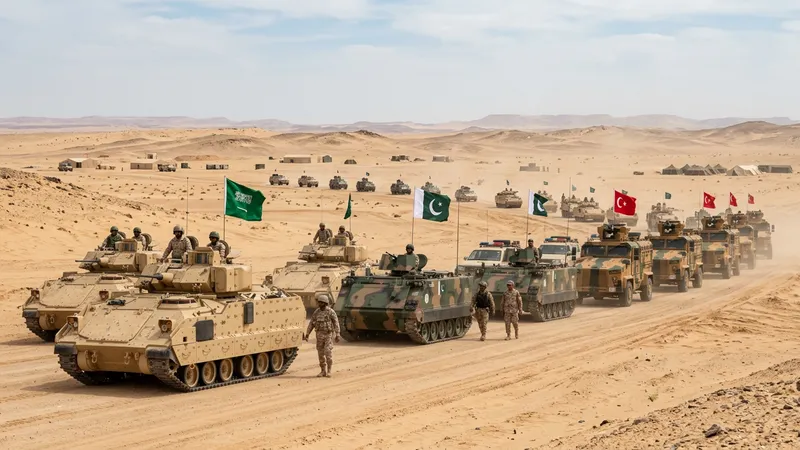
Saudi Arabia, Pakistan, and Turkey have begun implementing the Mecca Joint Defense Agreement, a mutual defense pact established in August. This activation follows a significant increase in attacks by Houthi militants targeting Saudi infrastructure, including its capital and regional airports.
The initiation of this agreement signals a shift in regional conflict dynamics towards a structured collective defense framework, moving beyond previous bilateral cooperation. The pact aims to establish a unified front focused on mutual protection and stability within the territories of the signatory nations.
Turkey's Commitment and Legislative Process
Turkey has publicly confirmed its commitment to offer defensive support under the pact. However, officials have explicitly stated that Turkey will not engage in offensive operations. Full legislative approval for the agreement is still pending, as the Turkish parliament has yet to complete its formal ratification process.
Due to the ongoing ratification, any immediate Turkish assistance would be governed by existing bilateral security arrangements. This situation highlights the complexities inherent in multinational defense collaborations, particularly concerning the varied legislative requirements and commitment levels among participating countries.
Pakistan's Role and Mandate
Pakistan has appointed a retired lieutenant general as the inaugural secretary-general for this defense collective and has committed to deploying its military forces. Islamabad has clarified that its primary involvement is to safeguard critical maritime trade routes through the Bab el-Mandeb strait, which are considered vital for its national economic stability.
Pakistani officials have denied any claims that their fighter jets have engaged in offensive strikes. They have emphasized that the current mandate for Pakistani forces remains strictly defensive, aligning with the pact's stated purpose.
Regional Security Implications
The formal activation of this defense agreement reflects a concerted effort by the participating nations to bolster regional security and address escalating threats. While the immediate objective appears to be countering Houthi aggression, the broader implications involve enhancing collective defense capabilities across the Middle East.
The long-term effectiveness of the pact will depend on the successful completion of ratification processes by all members and the precise coordination of defensive measures among the three signatory nations. This collaborative approach seeks to create a more stable security environment in the region.