

Global Trade Arteries Stumble as Shipping Bottlenecks Persist
Global trade routes face disruptions from conflict and climate change, causing longer transit times and rising shipping costs. Stay informed today.
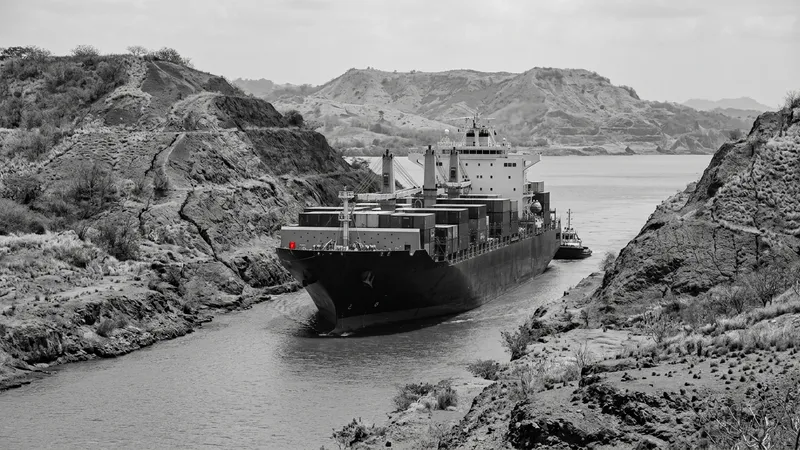
Major global shipping arteries are currently confronting substantial, widespread disruptions that are significantly affecting international trade. Critical passages such as the Strait of Hormuz, the Bab al-Mandab Strait, and the Black Sea, alongside inland waterways like the Panama Canal and European rivers, are operating under severe limitations.
These challenges are attributed to a combination of ongoing geopolitical tensions and environmental factors exacerbated by climate change, according to recent assessments.
These essential maritime routes are pivotal for a substantial portion of global commerce. For example, the Strait of Hormuz alone accounts for approximately 19 percent of the world's liquefied natural gas (LNG) trade and 25 percent of global oil shipments. The current impediments are evolving beyond isolated security incidents or environmental concerns, transforming into systemic bottlenecks that are impacting global supply chains.
Operational Strain on Shipping Vessels
Shipping vessels are increasingly forced to undertake extensive rerouting or reduce their cargo capacity, particularly when navigating shallower inland waterways. This situation has led to transit times increasing by up to two weeks, placing considerable operational burdens on carriers. These extended journeys necessitate higher fuel consumption, contribute to increased labor expenses, and result in elevated insurance premiums for maritime shipments.
While shipping companies are presently absorbing these escalating costs, industry analysts anticipate that these expenses will eventually be passed on to consumers. This pass-through effect is expected to exert sustained inflationary pressure on essential commodities, particularly within the energy, fertilizer, and grain sectors worldwide.
Anticipated Economic Ramifications
Even if geopolitical conflicts subside or environmental conditions, such as water levels, improve in the near term, the logistical backlogs created by these widespread disruptions are substantial. Furthermore, the embedded nature of increased insurance rates and revised operational contracts suggests that elevated transport costs are likely to persist for an extended duration, potentially throughout the medium term.
Financial markets have not yet fully assimilated the potential for prolonged capacity shortages or the broader implications for the reliability and efficiency of global supply chains. The cumulative effect of these challenges highlights a complex and evolving landscape for international trade, with potential long-term consequences for global economic stability and consumer markets.
Wider Market and Trade Implications
The convergence of these factors indicates that the global trade system faces a protracted period of adjustment. Businesses reliant on international shipping may need to reconsider inventory management, sourcing strategies, and supply chain resilience. The pressure on energy and food prices could exacerbate living costs for consumers and create further challenges for central banks aiming to manage inflation.
Policymakers may need to address not only the immediate crises but also the underlying vulnerabilities in global trade infrastructure. Investment in alternative routes, advanced logistics, and climate-resilient transport solutions could become increasingly vital to mitigate future disruptions and ensure the stability of international commerce.
More stories
- Pune police detain 92 over election-roll protest
- Tesla takes 90% of output from Arizona solar project
- New Horizon posts $4.1 million Q1 loss as R&D rises
- French Borrowing Costs Hit 5% as Debt Crisis Deepens
- Grabar probes shareholder claims at four Nasdaq companies
- Byrna revenue drops 46% as sales reset deepens
- Murdoch Family Feud Erupts Over Secret Trust Succession Plan
- Deposit Returns Decline After Central Bank Rate Adjustment
- DCW Q1 specialty sales rise 38% on record CPVC
- Hormuz closure oil shock split Latin America in 2026
Latest news
- Putin relays Iran view to President Trump
- Red Cross says Gaza hostage access involved Haniyeh talks
- Trump urges Zelensky replacement over refinery strikes
- Saudi Arabia suspends Riyadh airport operations after attack
- Kyiv playground blast puts Ukraine air-defense stocks back on Washington’s agenda
- Rubio’s Athens speech hardens Washington’s public line on Iran
- Saudi airport hit in new Houthi attack, officials say