

Genetic Research Identifies Decades-Long Development Window for Acute Myeloid Leukemia
Genetic research reveals that acute myeloid leukemia can develop over five decades, potentially enabling earlier identification and preventive intervention…
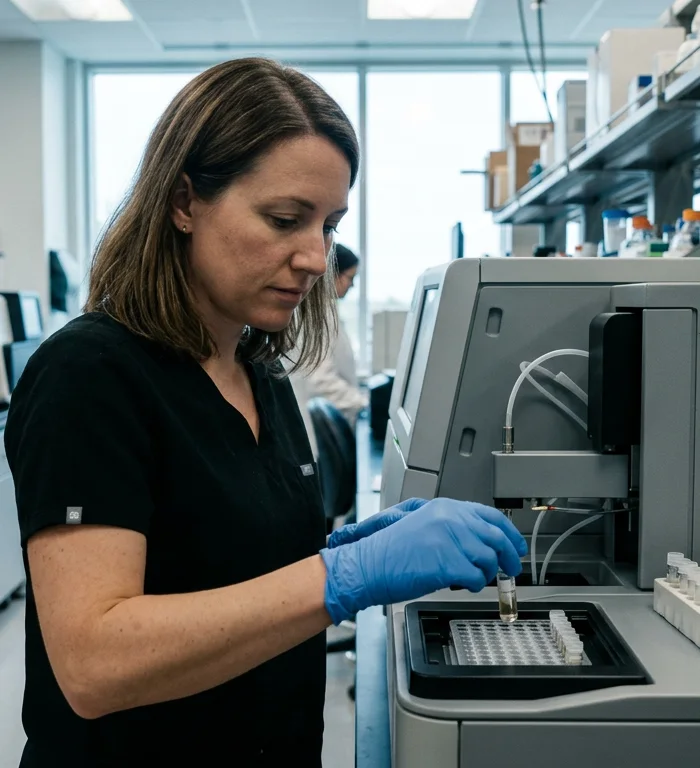
Recent longitudinal research indicates that the genetic precursors to acute myeloid leukemia (AML) may emerge more than 50 years prior to clinical diagnosis. Analysis of blood samples suggests that in approximately 80 percent of cases, the acquisition of primary driver mutations occurs decades before the disease manifests. Two-thirds of individuals who developed AML were found to have acquired their initial driver mutation by age 20.
While these mutations are common in aging populations, the study highlights that the progression to leukemia is a multi-stage process. Initial mutations provide only a marginal growth advantage to blood-cell clones, with subsequent genetic events required to accelerate cellular proliferation. The findings suggest that the exponential nature of this growth creates a significant temporal window for potential medical intervention.
Researchers identified distinct patterns in clonal hematopoiesis that Researchers identified distinct patterns in clonal hematopoiesis that differentiate future AML patients from healthy controls. Future clinical strategies may focus on identifying high-risk individuals through genetic sequencing and potentially utilizing existing pharmacological agents to slow the growth of high-risk cell clones. Such interventions aim to shift the clinical approach from reactive treatment to early disease interception.
However, the study notes that these findings are currently limited to post-menopausal women, and it remains unclear if these patterns are universal across other demographics. Furthermore, approximately 20 percent of cases showed no detectable genetic indicators until one to two years before diagnosis, suggesting that preventive strategies will not be applicable to all patients. The feasibility of long-term preventive treatment remains contingent on the development of therapies with minimal side effects, as the target population would consist of otherwise healthy individuals.
More stories
- Nigeria's family-planning budget falls 97%
- Peter Attia reviews cold therapy claims on longevity
- Dietitians advise small swaps for plant-based eating
- TikTok dementia videos mislead in 66.4% of sample, researchers say
- Aberdeen Royal Infirmary faces police inquiry call over 19 deaths
- Bariatric surgery group loses 28.2% after GLP-1 use
- Australians receive all GP care bulk-billed at 63% rate
- Snap enrollment drops 13% after Trump food-stamp rules
Latest news
- Morocco targets 2030 World Cup final with new stadium bid
- Barclays puts AI bust risk at center of US growth debate
- US inflation reaches 3.8% before December Fed rate meeting
- Türkiye Desk: GTA 6 drains UK mobile spend as Turkish studios feel pressure
- Global stocks fall 0.4% as tariffs and US inflation loom
- CIA hack affects unclassified data; scope remains unclear
- Eisenkot secures first coalition deal but lacks majority
- Trump prepares tariffs on China and other major exporters