Lee accepts South Korea policy secretary resignation offer
South Korea policy secretary Kim Yong-beom resigned after President Lee Jae Myung’s first cabinet reshuffle, leaving a policy post tied to ETF scrutiny.
Mei Lin ·
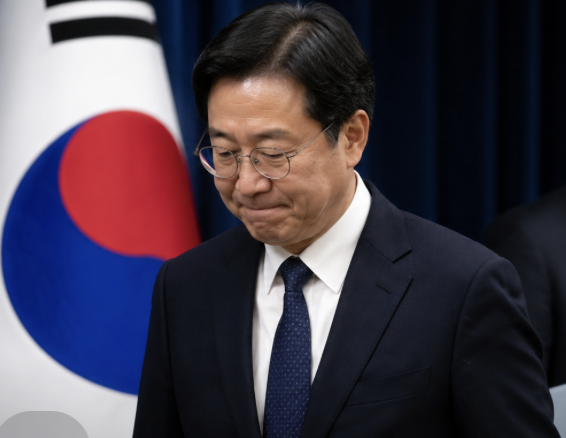
South Korea policy secretary Kim Yong-beom resigned after a four-ministry reshuffle, removing a central coordinator of President Lee Jae Myung’s domestic agenda.
President Lee accepted Kim’s resignation on Tuesday, the presidential Blue House said. Kim had submitted his offer to leave on Monday from a post responsible for coordinating economic and domestic policy across the administration.
Kim exits Lee’s policy hub
The departure lands shortly after Lee made his first broad cabinet reshuffle since taking office in June 2025. The changes covered finance, land, justice and defense, placing Kim’s exit alongside a wider reset of senior personnel rather than an isolated staff change.
Kim had been one of the administration’s central policy designers, according to the supplied account of his role. That made the secretary’s office a key channel between Lee’s political priorities and the ministries expected to turn them into regulations, budget plans and domestic programs.
ETF scrutiny shadows departure
Kim’s tenure also became linked to criticism over the fast rollout of single-stock leveraged exchange-traded funds tied to Samsung Electronics Co. and SK Hynix Inc. The products were introduced in May as part of an effort to pull more retail money into South Korean equities.
Leveraged ETFs can magnify gains and losses because they are designed to deliver a multiple of the daily move in an underlying security. When the reference shares swing quickly, retail holders can face losses that are larger than the move in the underlying stock would suggest.
The Samsung Electronics and SK Hynix products were later cited in the supplied material as contributing to more extreme trading moves. Regulators tightened investor safeguards after the volatility, putting the policy push under closer examination inside a market already sensitive to retail flows.
Cabinet changes widen policy test
The reshuffle across finance, land, justice and defense gives Lee room to reorder the government’s domestic program after his first year in office. It also leaves the policy secretary’s successor with a broad brief: align economic management, financial-market rules and domestic reforms across ministries with different mandates.
For the equity market, the immediate issue is whether the administration keeps encouraging retail participation while limiting products that can amplify short-term moves. The answer matters for ETF issuers, brokerages and individual investors, since tighter safeguards can slow new product approvals or raise compliance costs.
For Samsung Electronics and SK Hynix, the direct corporate issue is not management control but market structure around securities linked to their shares. If leveraged single-stock funds remain under closer scrutiny, trading tied to those products may become more constrained even as the companies remain central reference names for domestic investors.
Lee faces successor choice
Three conditional paths frame the next phase. If Lee appoints a successor quickly and keeps the new investor protections in place, the global macro effect would likely be limited to policy continuity in one Asian equity market, while the administration preserves coordination and ETF issuers operate within clearer boundaries.
If the vacancy lasts, ministry coordination could slow on economic and domestic initiatives just as the reshuffled cabinet settles into place. That path would leave Samsung Electronics and SK Hynix exposed to continuing debate over products tied to their shares, while the wider funds industry waits for a clearer signal on approvals.
If regulators tighten the rules further, the mechanism would run through product design, disclosure and investor eligibility rather than through the underlying companies themselves. The open question is whether Lee’s next policy chief treats the ETF episode as a narrow market-safety issue or folds it into a broader review of retail participation in South Korean equities.