Kurtulmuş funding remarks put Turkey’s legal cleanup on Washington’s radar
Turkey’s parliament speaker said a funding investigation would not go unanswered, giving Washington another signal to weigh as it assesses Ankara’s…
Lauren Collins ·
Kurtulmuş funding remarks put Turkey’s legal cleanup on Washington’s radar
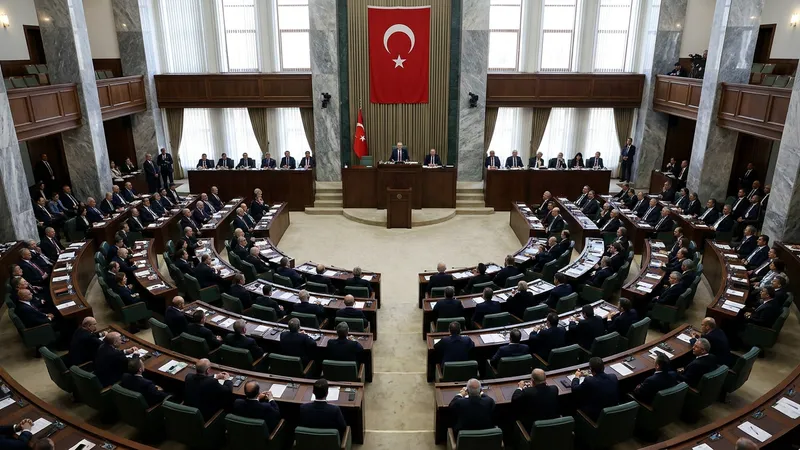
Turkish Parliament Speaker Numan Kurtulmuş said before an official visit to Portugal that a domestic funding investigation would not be allowed to fade without consequences, a message that lands in Washington as Turkey tries to frame rule-of-law enforcement as part of its security agenda. His remarks also touched on Ankara’s “Terror-Free Turkey” process, keeping counter-terror financing and domestic legal credibility in the same political frame for US officials watching Turkey’s NATO role.
The immediate audience was Turkish, not American. But in Washington, statements by senior Turkish officials about opaque funding channels are read against a wider file: Turkey’s counter-terror financing controls, its judiciary, its Syria policy, and the durability of defense cooperation after years of tension inside NATO.
Kurtulmuş is not a cabinet minister, but as speaker of the Grand National Assembly of Turkey he sits near the center of Ankara’s institutional politics. His comments matter because Parliament can shape the legal and political environment around security investigations, party competition, judicial oversight, and any legislative changes presented as part of a broader counter-terror program.
The “fon soruşturması,” or funding investigation, refers to a politically sensitive domestic probe over money channels that Turkish officials have described as requiring accountability. Based on the available public summary, Kurtulmuş did not lay out new charges, name additional defendants, or provide documentary evidence during the flight interview; he presented the issue as one that would not be left unresolved.
Turkish Parliament Speaker Numan
The second track is Ankara’s “Terörsüz Türkiye” initiative, a phrase Turkish officials use to describe a political and security push aimed at reducing terrorism and its support networks. For a US audience, the important point is not the slogan itself but the mechanism behind it: whether Ankara can show consistent legal processes, financial controls, and enforcement standards that allies can evaluate.
Washington has long separated tactical cooperation with Turkey from strategic unease about Turkish domestic politics. The Pentagon values Turkey’s geography, bases, air force, Black Sea access, and role in NATO planning; members of Congress often focus on rule of law, sanctions exposure, human rights, Syria, and Ankara’s defense ties outside the alliance.
That split shaped the long debate over Turkey’s fighter fleet. The United States approved a new F-16 sale and modernization package for Turkey after Ankara moved on Sweden’s NATO accession, but congressional trust remains a variable in any future defense transaction. Turkish statements about counter-terror financing therefore do not automatically move US policy, but they can affect the atmosphere around oversight, export approvals, and alliance confidence.
Turkey’s air force modernization is also an interoperability issue, not only a bilateral arms sale. NATO planning depends on allied aircraft, communications systems, munitions compatibility, training cycles, and maintenance networks working together under pressure. If Washington sees Turkey as tightening financial and legal controls, it gives supporters of security cooperation a cleaner argument against new restrictions.
The reverse is also true. If US lawmakers conclude that domestic probes are selective, opaque, or aimed mainly at political opponents, Turkish legal messaging could harden skepticism rather than ease it. That would matter less for routine diplomacy than for high-visibility defense files, where Congress can delay, condition, or publicly challenge an administration’s case.
The White House and State Department usually carry the diplomatic argument for keeping Turkey anchored inside NATO’s defense architecture. The Pentagon tends to emphasize operational needs: air policing, deterrence, access, regional logistics, and deconfliction in contested theaters. Congress is the harder audience, because members can link defense cooperation to legal credibility and to Turkey’s conduct in Syria and the Eastern Mediterranean.
Kurtulmuş’s remarks therefore sit at the intersection of domestic politics and alliance management. A Turkish official can intend a comment for Ankara’s political class, while Washington extracts a different test from it: whether the Turkish state is building transparent counter-financing capacity or merely signaling toughness.
For Ankara, the incentive is clear. Turkey wants to show that it can fight terrorism through courts, financial scrutiny, and state institutions while still demanding allied support against groups it defines as security threats. For Washington, the question is narrower: whether those steps are verifiable enough to support continued defense cooperation without inviting a congressional backlash.
No fresh named expert quote within the last 72 hours was provided for this piece, so no expert section is included. The absence matters because the Washington readout is not yet visible through public comments from former officials or think-tank specialists; the clearest available signal is still Ankara’s own framing.
The falsifiable test is whether US officials or members of Congress connect Turkey’s anti-terror financing posture to defense cooperation before December 27, 2026.
If the White House, State Department, or Pentagon publicly credits Turkish enforcement steps while keeping the F-16 modernization track clear of new conditions, Ankara’s legal messaging will have helped stabilize the security file; if Congress or the administration instead says the probes lack credibility or keeps assistance politically constrained, the remarks will look more like domestic reassurance than alliance confidence-building.