Washington weighs Turkey’s COP31 wind push as Europe looks to Ankara
WindEurope’s chief executive said Turkey is right to put electrification at the center of its COP31 agenda.
Lauren Collins ·
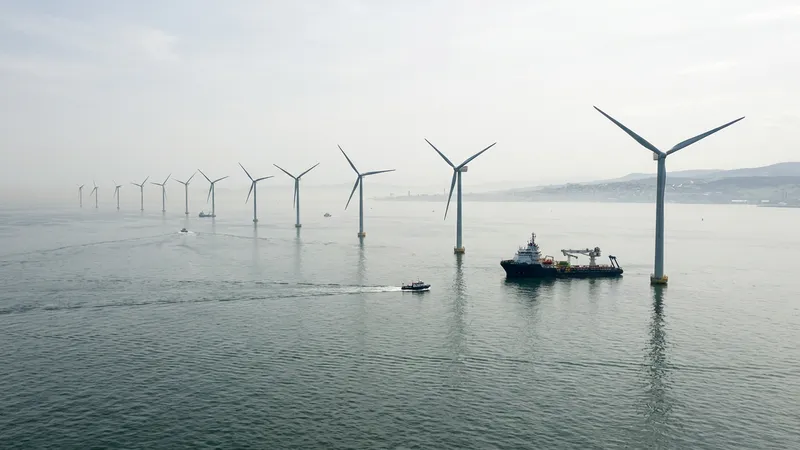
Washington weighs Turkey’s COP31 wind push as Europe looks to Ankara
Washington is assessing Turkey’s emerging role in European energy security after WindEurope chief executive Tinne Van der Straeten said Ankara’s emphasis on electrification for COP31 is the right approach. Her comments, made during WindEurope Hamburg and published this week, put Turkey’s wind market and offshore ambitions into a wider contest over supply chains, energy resilience and NATO-aligned infrastructure.
Van der Straeten described Turkey as an important market and supply-chain hub for Europe’s wind sector, and said offshore wind investments are being closely watched. For US officials, the question is whether Turkey’s clean-power buildout becomes another area of alignment with Europe, or another file where Ankara’s industrial strategy moves faster than the transatlantic policy machinery around it.
COP31 gives Turkey a diplomatic stage for a domestic energy agenda that already carries geopolitical weight. Electrification means shifting more of an economy’s transport, heating and industrial demand onto the power grid, then trying to make that power cleaner and more reliable. In practice, it requires generation, transmission, permitting and industrial capacity to move in the same direction.
That is why wind power matters beyond climate policy. Wind turbines, towers, cables, ports and grid equipment sit inside a manufacturing ecosystem that can either deepen European reliance on nearby suppliers or expose new choke points. Van der Straeten’s comments place Turkey in that first category: not only as a buyer of wind technology, but as a place where parts of the European supply chain can be built, assembled or routed.
Ankara Washington
The Washington lens is different from Brussels’ but overlaps with it. The White House looks at Turkey through NATO, Black Sea security, sanctions enforcement, energy corridors and defense-industrial access. The State Department tends to frame energy cooperation as resilience and diversification, while the Pentagon watches whether civilian infrastructure can withstand pressure in a crisis.
Turkey’s location gives the issue additional weight. It sits between Europe, the Caucasus, the Middle East and the Black Sea, and already occupies a central position in regional energy transit. If Ankara adds stronger wind manufacturing and offshore power capacity to that geography, it could become more relevant to Europe’s energy security even where the assets are commercial rather than military.
Offshore wind is the more difficult test. It requires seabed leasing, ports able to handle large components, specialized vessels, grid connections and long financing horizons. Van der Straeten’s statement that Europe is watching Turkey’s offshore investments points to interest, but the summary available does not identify specific projects, financing commitments, port upgrades or grid milestones.
For Washington, the industrial piece may matter as much as the electricity itself. US policy has pushed allies to diversify clean-energy supply chains away from excessive concentration in any one country or region. A larger Turkish role in wind components could fit that objective if it remains tied to transparent procurement, sanctions compliance and interoperable standards with European and US partners.
Congress would view the same issue through several committees at once. Energy lawmakers would focus on supply chains and clean technology. Foreign policy committees would test how Turkish-EU alignment affects NATO cohesion. Defense committees would ask whether more resilient power systems in allied territory reduce vulnerability during regional crises.
The main constraint is that WindEurope’s comments are industry positioning, not a Turkish policy decree or a US government announcement. They show how a major European trade body frames Turkey’s value. They do not, by themselves, prove that US agencies, EU institutions or private lenders have converged on a shared plan for Turkish offshore wind.
That distinction matters because Turkey’s energy diplomacy often intersects with more contentious issues. Washington and Ankara have disagreed in recent years over defense procurement, sanctions exposure and regional conflicts, even while cooperating inside NATO. A clean-energy opening can reduce friction only if it produces concrete projects and avoids becoming another symbolic track without financing or regulatory follow-through.
The upside case is straightforward. If Turkey advances electrification while expanding wind generation and supply-chain capacity, Europe gains a nearby industrial partner, Turkey gains investment and export leverage, and Washington gains another channel for energy-security cooperation with a difficult but important ally. The mechanism would be practical rather than rhetorical: factories, grid upgrades, port work, offtake agreements and rules that make capital comfortable.
The downside case is also clear. If offshore wind stalls on permitting, financing, grid readiness or political uncertainty, WindEurope’s praise will remain a signal of interest rather than a marker of momentum. That would limit the strategic value for Washington, which tends to measure energy partnerships by deliverables that can survive elections, budget fights and regional shocks.
By December 27, 2026, the test is whether Turkish ministries, WindEurope, EU officials or US agencies move from supportive language to named projects, policy updates or financing channels tied to electrification and offshore wind. The call is right if official Turkish updates are followed by US or EU statements that explicitly back collaboration on wind, grid resilience or supply-chain diversification; it is wrong if there is no substantive transatlantic acknowledgement, if Turkish offshore plans slip, or if European energy-security strategy shows less reliance on Turkish corridors and industrial capacity.