

Jayakumar highlights Ong’s 1993–99 test of Singapore presidency limits
The former senior minister’s account revisits early disputes over reserves, Article 22H and Lee Kuan Yew’s original proposal for the elected presidency.
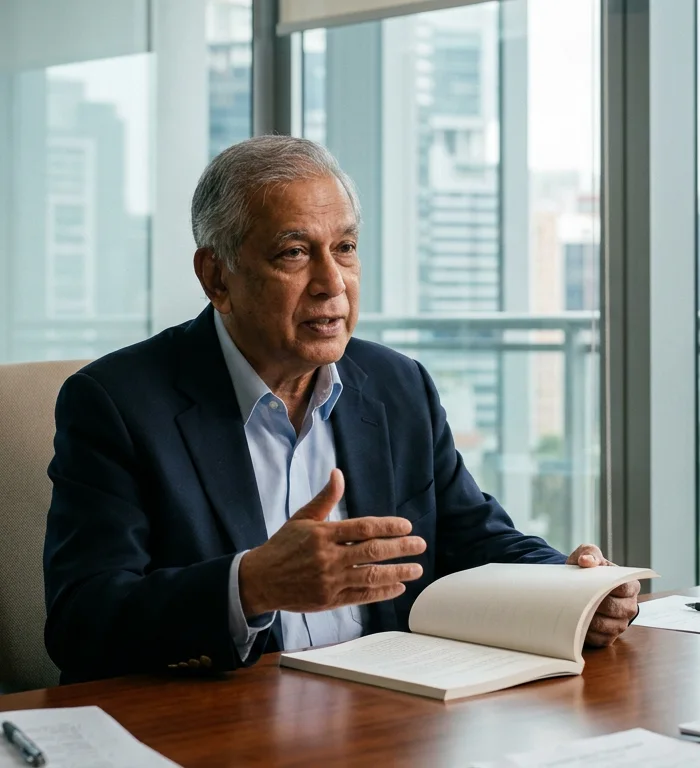
Former Senior Minister S Jayakumar said in a Channel NewsAsia interview published Oct. 29 that Ong Teng Cheong’s one 1993-99 presidential term tested Singapore’s elected presidency framework.
The stakes were institutional: Singapore’s 1991 constitutional change gave an elected president powers over reserves and senior appointments, compared with the pre-1991 system in which Members of Parliament chose the president.
“He was from the establishment. He had been deputy prime minister and became elected president. He took the role seriously and in the course of his term of office, there were some issues on which there were disagreements (with) the government,” Jayakumar said.
Jayakumar, who launched Creating Three Unique Singapore Laws: An Inside Story in August, discussed the elected presidency alongside Group Representation Constituencies and Non-Constituency Members of Parliament, three legal schemes created through constitutional amendment. Channel NewsAsia said the article was the second of three from its interview with him.
Ong, a former deputy prime minister, served as president from 1993 to 1999 and died in 2002. On July 16, 1999, near the end of his tenure, he said he would not seek another term and raised problems he said he faced with the government, including what he viewed as insufficient cooperation from civil servants and concerns over possible use of reserves.
Jayakumar said then-Prime Minister Goh Chok Tong and then-Finance Minister Richard Hu later addressed Ong’s points in parliament. He said they presented the matter as a misunderstanding by Ong, who did not return to contest their response.
A separate institutional dispute began in 1994 over Article 22H of the Constitution, which allows the president to withhold assent to bills that reduce or bypass his discretionary powers. Jayakumar said the government wanted the veto to apply to ordinary bills, not constitutional amendments, and disagreed with Ong over whether he could veto that change.
The two sides sought an advisory opinion from a special constitutional tribunal of judges. Parliament passed legislation in August 1994 to create the tribunal, which ruled in April 1995 that Ong could not veto the proposed amendment.
“I cite this too to show that you can have a president from the establishment who could still exercise powers independently,” Jayakumar said. He added that Ong and the government also reached agreement on principles for operating the reserves framework.
Jayakumar said Lee Kuan Yew’s first idea for the elected presidency was a “wicket-keeper model”, a cricket reference for a role standing behind the batter to stop balls that get through. He said younger ministers accepted the need to protect reserves but considered Lee’s version too broad compared with the office’s powers today.
“In fact, as Dr Tony Tan put it, the president would more or less be the chief executive officer,” Jayakumar said. Tony Tan later served as president from 2011 to 2017.
Jayakumar said younger ministers spoke up because they would later have to operate the system. He said Lee listened and changed his initial proposal, a recollection Jayakumar presented as evidence against the idea that Lee brooked no dissent.
More stories
- South Africa health department faces call on boys' HPV shots after 3.6M girls vaccinated
- Singapore tribunal backs dismissal over secret workplace recording
- Malaysia faces calls to tighten haze rules for 1.8 million workers
- Dubai asking prices hold as 56,600 homes near market
- Bolsonaro reaches Miami after defeat and fleeing Brasil
- South African parties split over Cape Town's 30,000-home annual gap
- Iran talks draw Qatar push as Hormuz terms loom this week
- South Africa shootings kill 27 around its biggest cities
Latest news
- One Planet Partners makes Yulu first investment in $93m round
- Brainstem nerve cells may curb blood-pressure swings
- Alphabet shares slide 10% after $111.2bn sales miss
- HUL sales rise 15% as inflation clouds demand outlook
- Cyclone Arnab kills at least three on India's east coast
- EU rules bar Nord Stream return under 2027 gas phaseout