

Italy faces nationwide strike over pay and public services
Italy faces a nationwide strike as students and workers demand better pay and public services while opposing higher military spending.
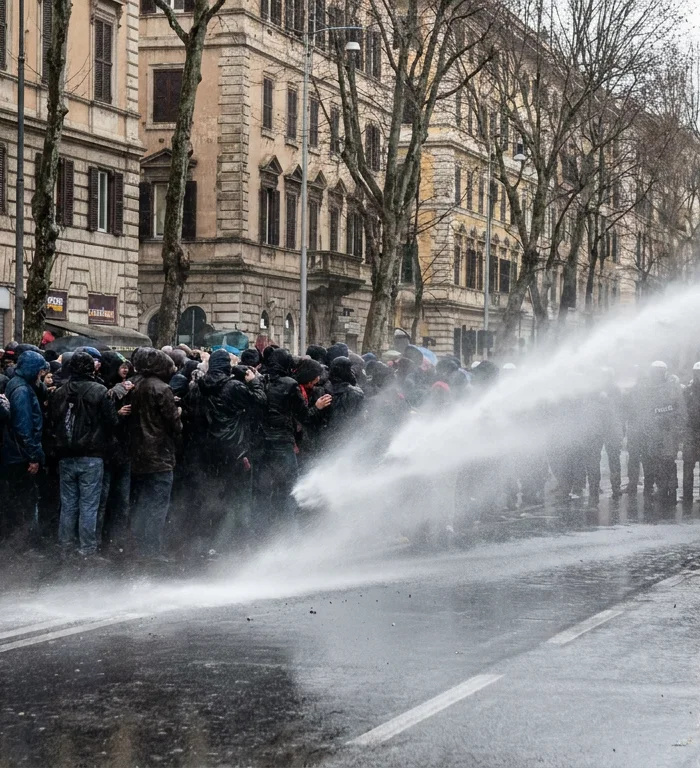
Italy faced a nationwide strike on Friday as students and workers demanded better pay and public services while opposing higher military spending.
Tens of thousands demonstrated across the country on October 30, bringing household finances and government spending priorities into the streets. Most gatherings remained peaceful, though police deployed water cannons during confrontations in Turin and later in Rome.
Unione Sindacale di Base, a grassroots labor organization, called the daylong stoppage and scheduled demonstrations across more than 40 cities. That figure described the intended geographic reach of the action, rather than a confirmed count of cities where marches ultimately took place.
Pay demands meet military spending opposition
Demonstrators sought wage increases and better public services while protesting the pressure of everyday expenses. Their opposition to additional military expenditure placed a separate government budget choice alongside those demands, giving the action a broader focus than workplace pay alone.
Students joined employees among the main groups participating. The turnout brought together concerns about earnings, living expenses and public provision, although the demands described did not include a specific wage target or a quantified change in service funding.
The distinction between a general strike and its accompanying marches also matters when assessing the event. The reported crowd size establishes the scale of street participation; it does not establish how many employees stopped working or how extensively workplaces and services were disrupted.
Turin cordons and Rome confrontations
In Turin, students and activists from the political left moved toward police lines around the prefecture. Officers responded with a water cannon to force the group back from the cordons protecting the building.
In Rome, a procession traveled close to the Colosseum, and participants said they intended to pitch tents and stay through the weekend. That stated intention pointed to a possible continuation of the protest beyond the union’s one-day strike, rather than an announced extension of the stoppage itself.
There were also incidents involving burning trash bins positioned across roads in the capital. Later that evening, police used a water cannon when a large group attempted to head toward parliament, adding a further confrontation to a day that was otherwise mostly peaceful.
Weekend plans follow earlier street violence
Friday’s demonstrations followed disorder earlier in October, when confrontations with officers, shop looting and property damage accompanied protests. Those earlier incidents provide context for the security tensions, but they should not be treated as a description of the nationwide gatherings on Friday.
The immediate unresolved issue in Rome was whether demonstrators would carry out their announced weekend stay. If they did, the street protest would continue after the scheduled labor action ended; whether wage demands, public-service funding or military expenditure would become subjects of negotiations remained unresolved.
More stories
- French protests draw 320,000 in third cost-of-living wave
- Khamenei orders unrestricted response to any US or Israeli attack
- Trump administration widens Alaska election investigation
- COUP in Poland? Tusk accused of power grab as riot cops swoop on Constitutional Court
- Nigeria minister seeks clean-cooking finance for 2060 plan
- ICN warns on misinformation after Congo Ebola nurse killing
- US approves $2.1 billion Patriot missile sale for Ukraine
- France faces recession risk after 0.1% GDP drop
- Saudi Arabia extends Riyadh airport shutdown after 12 killed
- Trump administration sanctions International Criminal Court