US Rescues Pilot Amid Escalating Iran Tensions
U.S. rescues an F-15E pilot in Iran as a 48-hour Strait of Hormuz ultimatum and regional attacks heighten tensions across the Gulf.
Lauren Collins ·
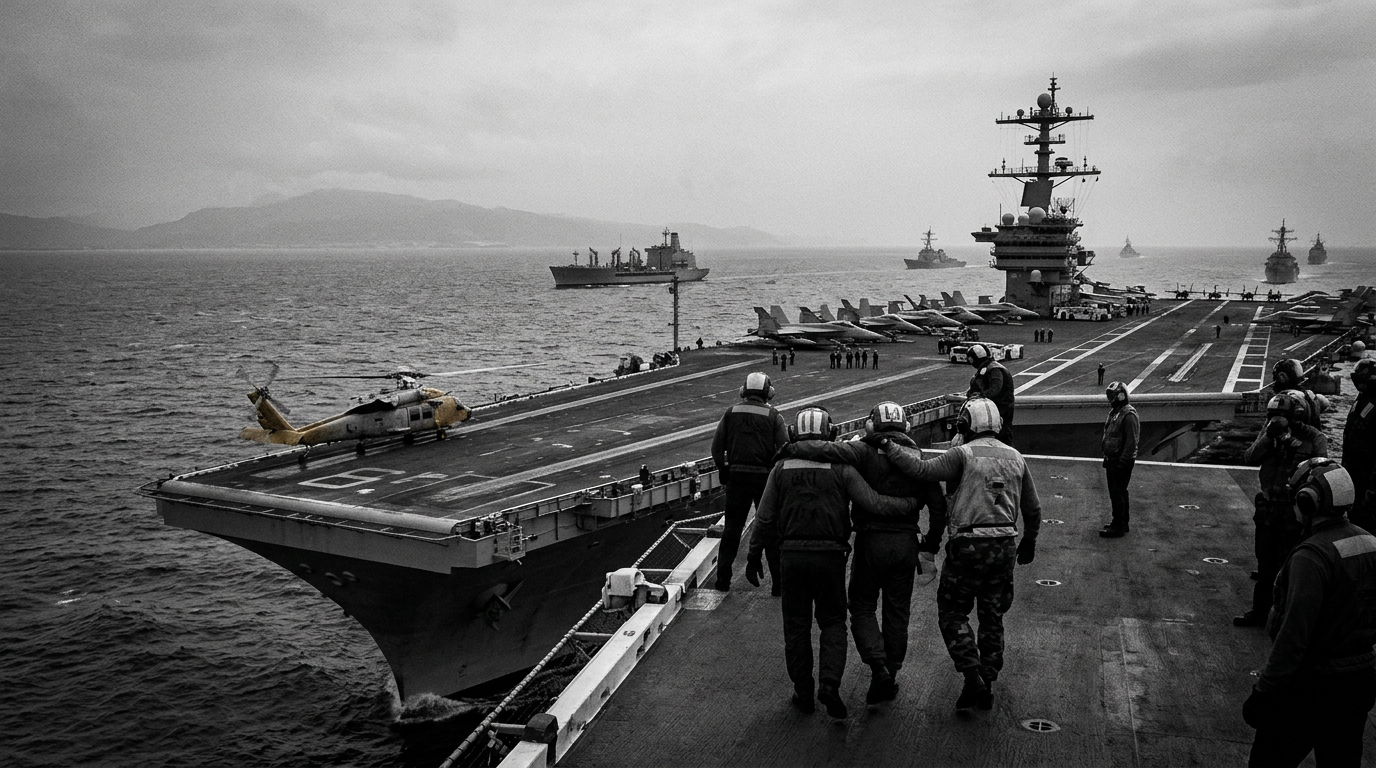
The United States military said it rescued a missing F-15E pilot in Iran on April 5, 2026, after a firefight, as Iranian officials warned that the conflict could intensify amid ongoing U.S.-Israeli military actions. The rescue came during a period of heightened regional pressure tied to the Strait of Hormuz, a key route for global oil and gas shipments.
U.S. President Donald Trump issued a 48-hour ultimatum for Iran to open the Strait of Hormuz, according to the account in the source material. The ultimatum placed the waterway at the center of the confrontation, with both security and energy-market sensitivity elevated because of the strait’s role in international hydrocarbon transit.
Iranian state media reported casualties and damage from strikes, saying five people were killed and 170 wounded in U.S.-Israeli attacks on the Mahshahr Petrochemical Zone. The same reporting said more than 30 universities have been targeted since the conflict began on February 28, underscoring the breadth of sites affected as hostilities continued into early April.
The Islamic Revolutionary Guard Corps (IRGC) said it shot down a U.S. MQ-9 Reaper drone in Isfahan while the aircraft was searching for the missing pilot. U.S. officials did not confirm that claim, leaving the status of the reported drone loss unresolved based on the information provided.
Beyond Iran, the source material described a widening set of incidents across the Gulf. Drone attacks attributed to Iran damaged two power and water desalination plants in Kuwait and also hit a government building in Kuwait City. Bahrain said it put out a fire at a facility after an Iranian attack, while in the United Arab Emirates, operations at Borouge’s petrochemical factory in Abu Dhabi were suspended due to debris linked to missile and drone attacks.
Russia was also drawn into the operational picture through its presence at Iran’s Bushehr Nuclear Power Plant. The source material said Russia evacuated 200 staff members after an attack on the plant’s perimeter, and Iran’s Foreign Minister Abbas Araghchi warned of risks of regional radioactive contamination.
These developments collectively highlight the intersection of military escalation and infrastructure vulnerability in a region central to global energy flows. Key uncertainties remain, including the unverified IRGC claim regarding the MQ-9 Reaper and how quickly security conditions around energy, water, and industrial facilities may stabilize.