U.S.-Iran talks open in Pakistan amid fragile ceasefire
U.S.-Iran talks opened in Pakistan on April 11, 2026, as a fragile ceasefire holds and Strait of Hormuz access remains disputed.
Lauren Collins ·
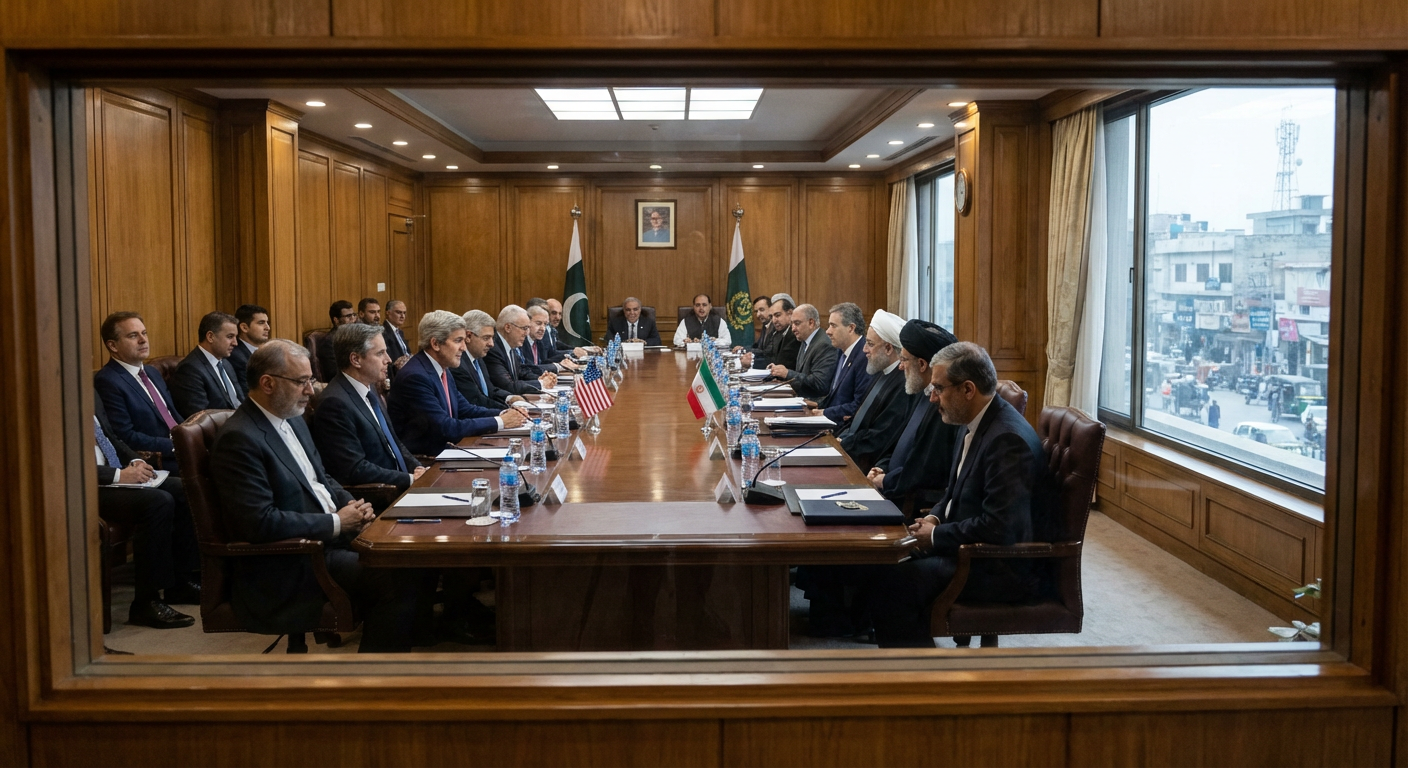
Delegations from the United States and Iran opened negotiations in Pakistan on Saturday, April 11, 2026, as efforts begin to reduce tensions after a five-week conflict in the Middle East. Iranian state media confirmed the start of the talks. The White House did not provide specific comments on the meeting.
The U.S. delegation is led by Vice President JD Vance. Iran’s delegation includes Foreign Minister Abbas Araghchi and Parliament Speaker Mohammad Bagher Ghalibaf. If the discussions proceed as direct, face-to-face engagement, officials noted they would mark the highest-level in-person contact between the two countries since Iran’s 1979 Islamic Revolution.
The talks are taking place under a ceasefire described as precarious, with disputes continuing over Israeli military operations in Lebanon and Iran’s stated control over the Strait of Hormuz. Pakistan’s Prime Minister Shehbaz Sharif called the moment “make or break,” underscoring the stakes attached to whether the ceasefire can hold while negotiations proceed.
A central U.S. objective is the full restoration of access through the Persian Gulf waterway that is critical for global oil and gas shipments. Iran’s military has said it intends to maintain control over the Strait of Hormuz. On Friday, only two ships were reported to have transited the strait, and U.S. officials attributed the reduced traffic to Iran’s reported difficulty in finding and neutralizing mines.
The conflict began in late February following U.S. and Israeli attacks on Iran, according to the account provided in the briefing. It has produced significant casualties and economic disruption across the region. The Human Rights Activists News Agency reported at least 1,701 civilian deaths in Iran as of Wednesday, including 254 children.
In Lebanon, the health ministry reported 1,953 deaths from fighting between Israel and Hezbollah. It said 357 of those deaths resulted from Israeli strikes on Wednesday. Public messaging from both sides has also signaled mistrust, with each country expressing skepticism about the other’s position in the negotiations.
U.S. officials and President Trump have argued that Iran’s leverage in the talks is largely tied to its control over international waterways. The immediate uncertainty is whether the ceasefire can be sustained while disagreements persist over Lebanon and the Strait of Hormuz, and whether the talks develop into direct engagement at the senior level described by officials.