Iran gas discovery adds 7.5 Tcf to strained supply system
Iran said a 7.5 trillion-cubic-foot gas discovery could expand reserves, but sanctions, war damage and winter demand cloud development.
Omar Farouk ·
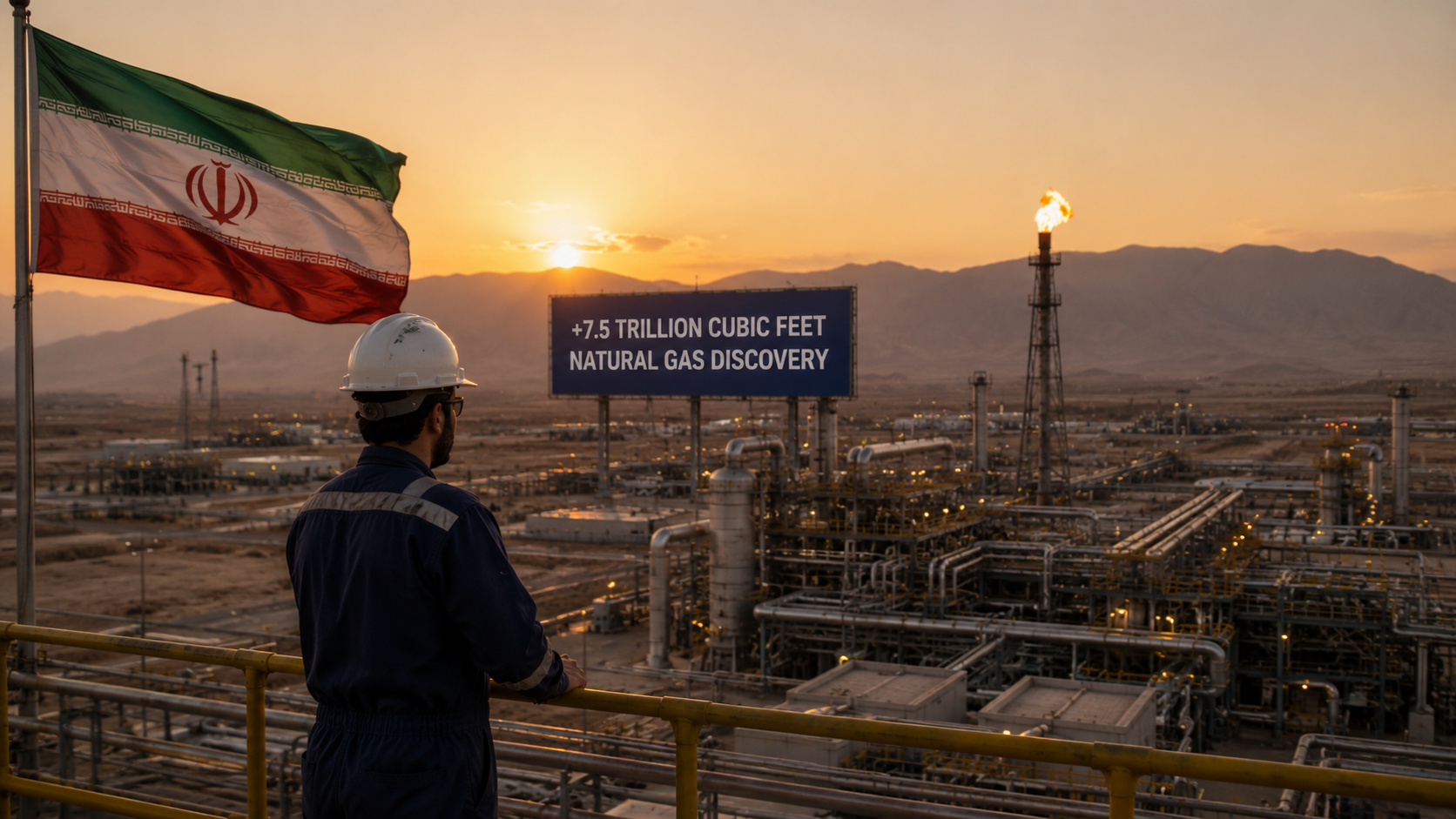
Iran said its gas discovery holds more than 7.5 trillion cubic feet as sanctions, war damage and winter shortages squeeze supply.
Oil Minister Mohsen Paknejad told state television on Sunday that roughly 5.7 trillion cubic feet in southern Fars province is recoverable. He compared that volume with 15 years of production from one phase of South Pars, the gas field Iran shares with Qatar and describes as the world's biggest.
Paknejad said the discovery also contains gas condensates worth "tens of billions of dollars" and that Iran plans to develop the resources "as soon as possible." He did not provide a development budget, a production start date or details on how the work would be financed.
Fars find meets damaged supply
The announcement comes after months of conflict involving the US and Israel disrupted Iran's energy system, according to Iranian officials. Attacks that began in late February cut about one-quarter of the country's daily gas production capacity, including strikes on energy infrastructure at South Pars.
Some capacity has since returned, but the government has warned of winter shortages and urged households to reduce consumption. That leaves the Fars discovery politically useful for Tehran, while doing little to solve the near-term fuel balance before colder weather increases demand.
Sanctions slow development clock
Iran's energy sector was constrained before the fighting by Western sanctions, underinvestment and recurring power cuts. Those limits matter because a discovery becomes supply only after drilling, processing, transport links and sales arrangements are in place.
The condensate element could add to the project's value if it can be extracted and marketed. Paknejad's description of condensates worth "tens of billions of dollars" remains an official estimate, and the ministry has not released field-level data to support the valuation.
South Pars is the reference point because it is central to Iran's gas output and a shared reservoir with Qatar. By comparing the Fars recoverable volume with 15 years from one South Pars phase, Paknejad framed the find as a long-duration reserve addition rather than an immediate production fix.
Winter demand sets the test
If repairs at damaged facilities hold and winter conservation reduces peak consumption, the discovery gives Iran's oil ministry more room to present a medium-term supply plan. Under that path, global gas markets would see little immediate change, while Iranian service companies could gain future work tied to appraisal and field preparation.
If shortages intensify instead, the new field does not offset the near-term loss of productive capacity. The macro effect would remain local rather than global, but Iran's industrial users and power sector could face tighter allocations, and energy-sector investment plans would compete with emergency repairs.
A third path depends on sanctions and equipment access. If restrictions continue to limit financing and technology, the Fars discovery may remain a reserve statement for years; if access improves, development could strengthen Iran's domestic gas base and increase competition for regional engineering, drilling and processing contracts.
The main open questions are the field's verified reserve profile, the cost of bringing gas to market and the pace at which South Pars capacity can be restored. Until those figures are published, the discovery is best read as a strategic resource claim, not a supply increase.