Iran closure claim tested as Qatar LNG tankers transit Hormuz
Qatar LNG tankers sailed into the Strait of Hormuz as shipping traffic dropped after Iran again declared the waterway closed, according to tracking data.
Omar Farouk ·
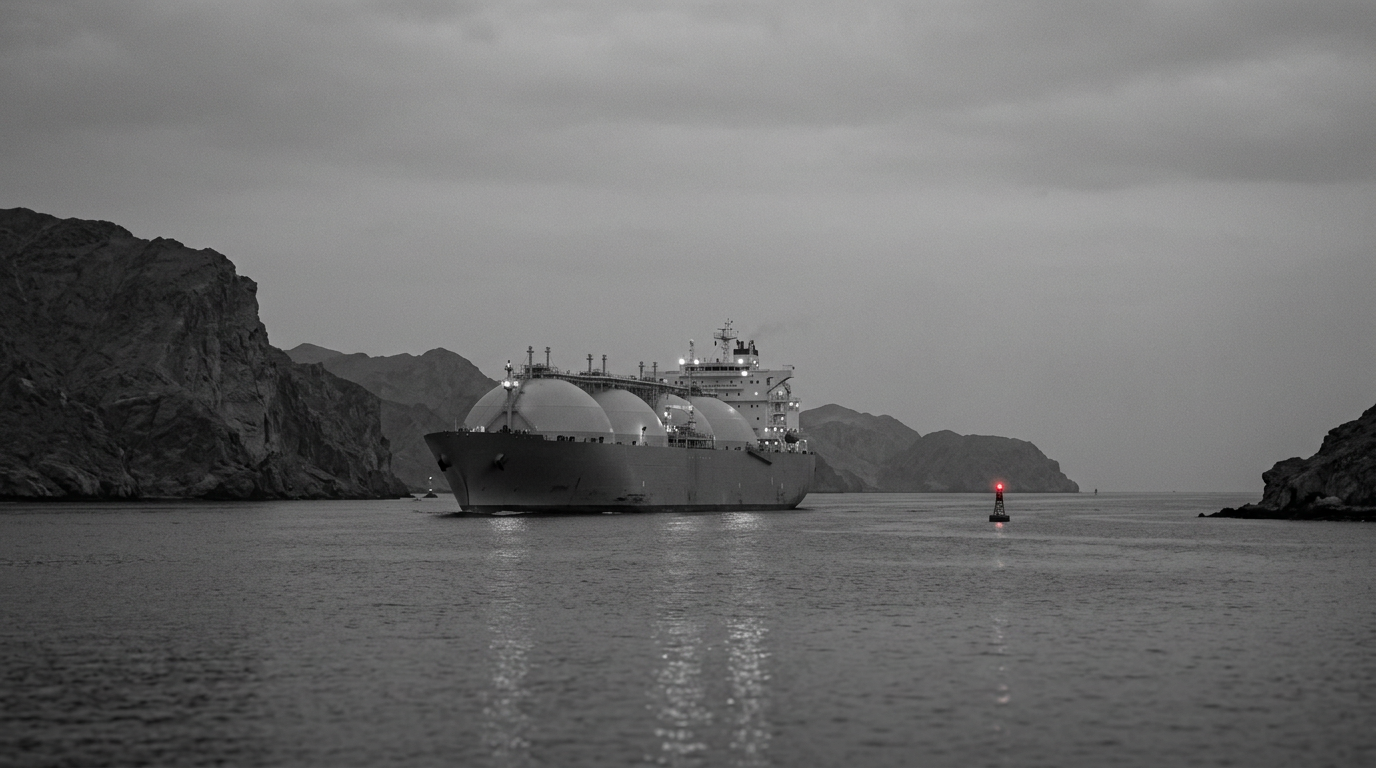
Qatar LNG shipments showed new movement through the Strait of Hormuz on Monday, even as vessel counts fell after Iran said the passage was again closed.
Shipping-tracking data indicated four liquefied natural gas carriers controlled by Qatar were heading into the strait. The vessels were identified as Wadi Al Sail, Mekaines, Al Sadd and Mesaimeer.
Analytics firm Kpler recorded the four tankers entering via the Iranian route on Monday. The route choice marked their first such transit path since the U.S.-Israeli war with Iran began on Feb. 28, according to the dataset.
Tankers move as ship traffic drops sharply
Overall traffic through the strait appeared to decline over the weekend and into Monday. Kpler data showed five vessels transited on Sunday, down from 26 ships recorded a day earlier.
The Sunday crossings included three Very Large Crude Carriers, each carrying about 2 million barrels of Saudi crude and fuel oil, according to Kpler. One of those cargoes was listed as bound for Japan.
Separately, LSEG ship data showed the Marshall Islands-flagged dry bulk vessel Summit Success entered the Gulf on Monday. Dry bulk ships typically carry commodities such as grain, coal, or ore, and their movements can signal wider confidence in maritime access beyond energy shipments.
Tracking firms cautioned that counts based on transponder signals may understate real traffic. Some vessels can reduce visibility by switching off transponders, meaning more ships could be moving than publicly tracked data suggests.
Ceasefire extension and renewed shutdown claim
The new ship movements came after a rapid shift in Iranian signaling around Hormuz. Iran lifted what shipping data suggested had been an effective blockade last week following agreement with the United States to extend an April ceasefire for 60 days to make room for peace talks.
On Saturday, however, Iran’s Islamic Revolutionary Guard Corps said the waterway was closed again. The statement was framed as a response to Israeli strikes in Lebanon, according to the report.
The Strait of Hormuz is a narrow maritime corridor linking the Gulf with the Gulf of Oman and the wider ocean. Any restriction—whether enforced, threatened, or only declared—can immediately affect ship operators’ routing decisions, insurance calculations, and willingness to load cargoes.
What the latest transits may signal for LNG and crude flows
QatarEnergy’s LNG exports have been heavily constrained since the war began on Feb. 28, the report said. The company did not immediately respond to a request for comment about the Monday tanker movements.
The decision by multiple LNG carriers to enter Hormuz despite the renewed closure declaration suggests at least some operators are testing conditions in real time rather than treating statements as absolute constraints. At the same time, the steep day-to-day fall in Sunday ship counts points to elevated caution across parts of the market.
Energy shipments are especially sensitive to perceived disruption risk because cargo values are high and schedules are tightly linked to downstream power generation and refining needs. The appearance of VLCCs carrying Saudi crude and fuel oil indicates that some crude flows continued, even as the overall number of transits dropped.
In the near term, shipping watchers will focus on whether more LNG and crude carriers follow the Qatari-controlled vessels through the strait and whether transit volumes stabilize. Another key signal will be whether transponder-off behavior increases, which can complicate assessments of how open the waterway remains in practice.