Investors push SpaceX shares lower as IPO volatility bites
SpaceX shares fell as much as 4.6% premarket Monday after a volatile debut, following an 8% two-day drop despite gains since the $135 IPO.
Jason Kwon ·
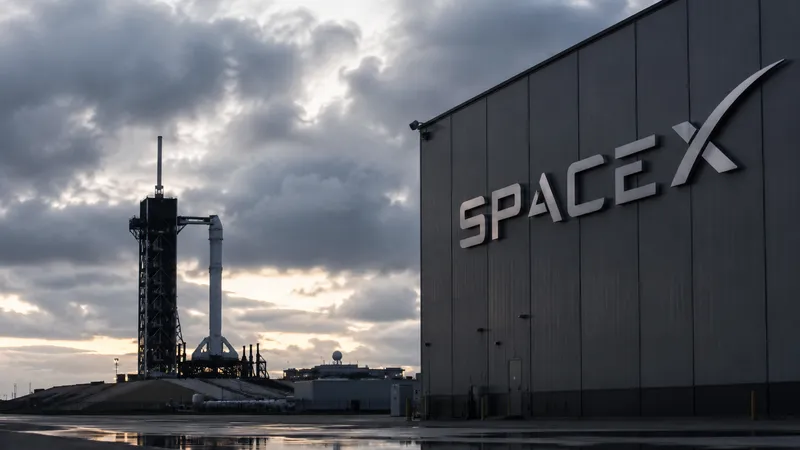
SpaceX shares slid as much as 4.6% in premarket trading on Monday, extending a pullback that began before U.S. markets shut for the Juneteenth federal holiday.
The move put the stock on track for a third consecutive session of declines as trading resumed after the long weekend. Premarket action can be thin, but the direction reinforced the choppy tone that has defined the company’s first days as a public listing.
Before the Friday closure, SpaceX shares had already fallen more than 8% across Wednesday and Thursday. Monday’s early drop followed that two-day slide rather than reversing it.
Low float meets retail demand in the first week
The stock’s behavior has looked less like a mature mega-cap and more like a newly listed name with limited supply. On the first day of trading, only 4.2% of total shares outstanding were available to trade, a setup that can amplify price swings.
That small tradable portion is commonly described as “low float,” and it often produces volatility when buy and sell interest collide in a narrow market. Add heightened retail participation, and intraday moves can become exaggerated even when the underlying fundamentals have not changed.
SpaceX’s early trading has reflected that dynamic, with sharp swings around sessions rather than a steady trend. The premarket dip on Monday fit the same pattern: a big headline percentage move on relatively constrained liquidity.
Even after pullback, the IPO is still up sharply
Despite the recent declines, SpaceX shares remained substantially above the offer level as of Thursday’s close. The stock finished that session 37% higher than its $135 IPO price.
At that Thursday close, SpaceX was valued at roughly $2.4 trillion in market capitalization. That scale, paired with the stock’s new-issue volatility, has made the listing a focal point for investors trying to price momentum versus durability.
With a small float and intense attention, the stock can trade more like a sentiment gauge than a conventional valuation exercise in the opening weeks. That can be especially true around non-trading days, when news flow and positioning build up and then meet the market at once.
The xAI deal ties SpaceX’s tape to the AI IPO pipeline
SpaceX’s public debut has also been watched as a proxy for how markets might treat other AI-heavy names. The company strengthened that link in February by acquiring Elon Musk’s xAI, folding artificial intelligence more directly into its corporate story.
That acquisition has turned SpaceX’s listing into a kind of real-time pricing test for AI exposure inside a newly public vehicle. Investors looking beyond rockets are also effectively trading a view on how public markets are rewarding AI narratives right now.
The spillover matters because other major AI developers are lining up potential debuts. Anthropic PBC and OpenAI both plan to pursue initial public offerings as soon as this year, making SpaceX’s post-IPO behavior a reference point for demand, risk appetite, and how much volatility investors will tolerate.
For now, the key data points are straightforward: a 4.6% premarket drop Monday, more than an 8% decline across Wednesday and Thursday, and a stock still up 37% versus the $135 IPO price as of Thursday’s close. With only 4.2% available to trade on day one, the next sessions will likely keep reflecting float constraints as much as fundamentals.
Investors will be watching whether the selling pressure fades as the market digests the initial surge of interest, or whether volatility persists as a feature of the trade. Any shift in tradable supply, retail activity, or broader sentiment toward AI-linked listings could quickly show up in SpaceX shares’ day-to-day moves.