Creators staged Polymarket wins on lookalike sites, WSJ says
Polymarket marketing videos promoted staged winning bets on copycat sites, with a report finding about $1.9 million in displayed wagers were not real.
Atlas Newsdesk ·
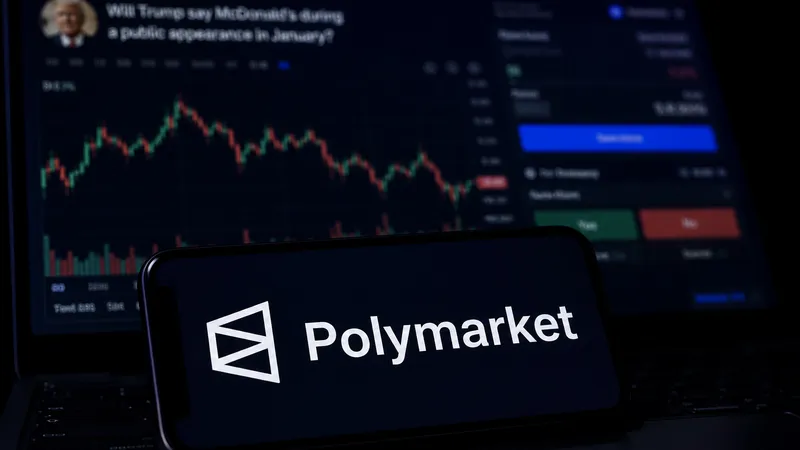
Polymarket marketing videos that appeared to show big winning trades were staged on copycat websites, according to a Wall Street Journal investigation that reviewed 1,105 clips.
The report found that none of the roughly $1.9 million in “bets” displayed across those videos were genuine trades on Polymarket’s public ledger.
Investigation details staged “wins” and lookalike domains
The Journal said it examined videos posted between December and mid-May from 10 creators who were promoted as part of the campaign. About 70% of the videos reviewed showed a bet being placed or settled, yet the publication reported it could not match any of those trades to real on-chain activity.
Instead, many clips were recorded on dummy pages designed to resemble the Polymarket interface. One domain cited in the report was “poiymarket.com,” a lookalike name intended to be visually similar to the real site.
Across 118 of the reviewed videos, creators celebrated about $900,000 in purported winnings that the Journal described as fabricated. It also reported that if the same wagers had been made on the real platform, they would have resulted in losses of more than $166,000.
The investigation included an example tied to a January clip in which a creator claimed to win $100,000 after Donald Trump appeared to say the word “McDonald’s.” The Journal reported Trump did not say it publicly that month and that the referenced video segment was older.
On Polymarket’s live market data, the Journal reported that more than 50 accounts took the same position and that all of them lost. That contrast, it said, underscored the difference between the on-chain market outcome and the staged result presented in the promotional content.
Why the allegations clash with Polymarket’s core message
Polymarket has positioned itself around transparency, arguing that real trades can be independently verified. The platform’s markets are settled on the Polygon blockchain and denominated in USDC, making positions and transactions publicly viewable.
Market outcomes are typically resolved through UMA’s permissionless oracle system, where participants can propose or challenge results by posting a bond reported as $750. That structure is designed to allow open auditing of both trades and resolution mechanics.
The marketing approach described by the Journal flips that pitch: staged trades presented on sites with no verifiable ledger trail. If trades are simulated off-chain, viewers cannot check wallet activity, transaction hashes, or market resolution events to confirm authenticity.
The Journal also reported that creators were largely college-age and were paid around $2,000 to $3,000 per month. It said they were instructed not to disclose that they were being paid, while a hired marketing firm worked to amplify distribution.
The videos were reportedly pushed past 140 million views, giving the campaign scale even as the underlying “wins” were not backed by real positions. The publication framed the pattern as another test of user trust after a prior market resolution dispute that had already drawn scrutiny from users.
Regulatory backdrop adds pressure during US re-entry
The report lands as Polymarket’s relationship with US regulators remains a central issue. In 2022, US authorities fined Polymarket $1.4 million over allegations it operated an unregistered market and required the company to wind down non-compliant activity.
Against that backdrop, allegations of deceptive promotional tactics could complicate efforts to rebuild credibility with users, counterparties, and compliance observers. It may also increase attention on how prediction-market products are advertised, especially when claims of easy profits are circulated at scale.
Next steps will likely hinge on whether Polymarket or affiliated agencies acknowledge the campaign mechanics described in the investigation, and whether platforms hosting the content demand clearer disclosures. Separately, market participants will watch for any additional reporting that ties specific domains, contractors, or payment records to the staged clips.