IBM shows quantum advantage with new validation method
IBM claims quantum advantage using its 156-qubit Heron processor and a new method to validate results without classical benchmarking.
Jason Kwon ·
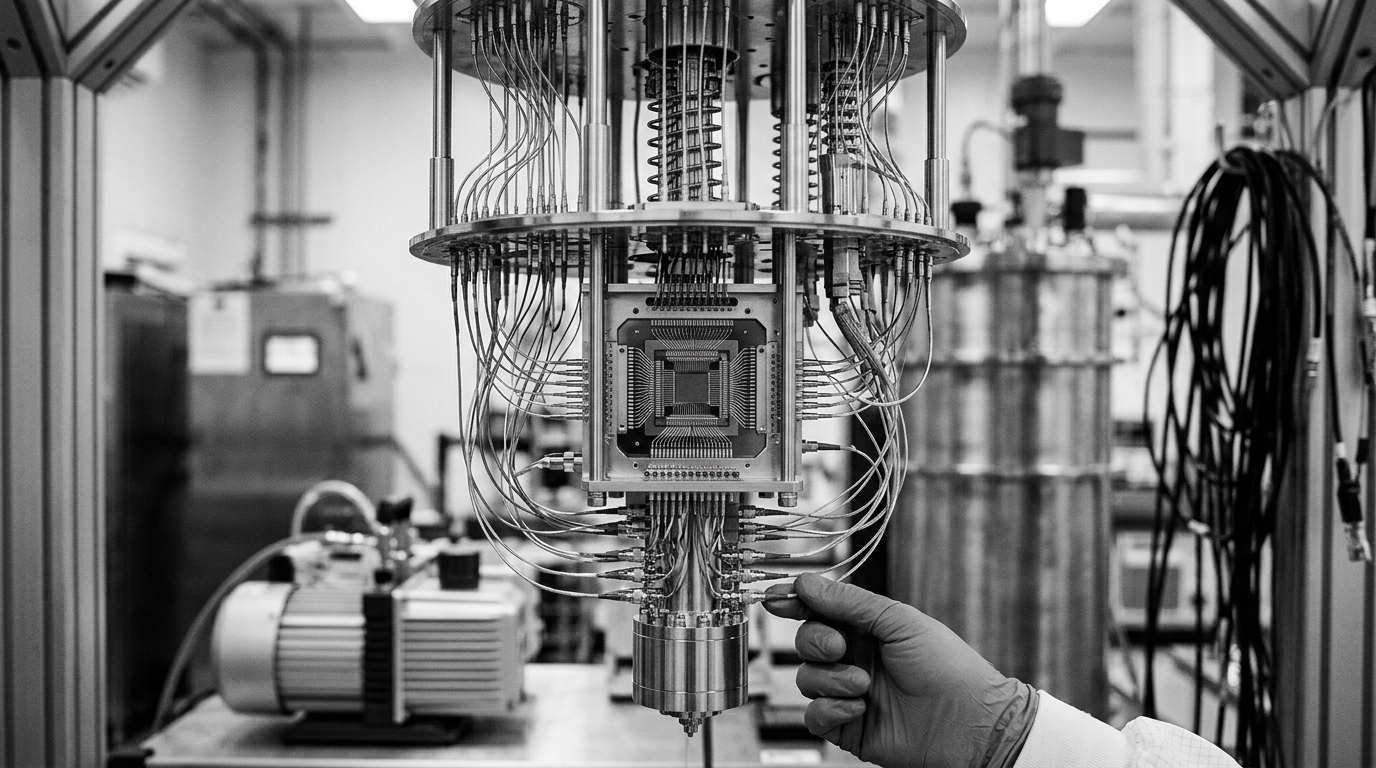
IBM said it has completed quantum calculations that go beyond what classical supercomputers can process, and introduced a new way to check the results without using traditional benchmarking against classical runs.
The company used its 156-qubit Heron processor to execute highly complex tasks that it described as previously out of reach for classical computing systems. Officials said the work demonstrates a verifiable quantum computational advantage and addresses a long-standing issue in assessing advanced quantum hardware once classical simulation becomes impractical.
Heron results target a core verification barrier
A persistent challenge in quantum computing has been A persistent challenge in quantum computing has been confirming whether outputs remain structurally correct after a machine surpasses the mathematical and computational limits of conventional hardware. IBM said that, at that point, the industry can no longer rely on classical simulation as a practical tool for validating answers. In many earlier demonstrations across the sector, verification depended on directly comparing quantum outputs with classical calculations. IBM said this comparison-based method breaks down as problem sizes and circuit complexity increase, creating a bottleneck for enterprise commercialization where customers and auditors need defensible performance claims. Benchmark-free validation and auditability IBM reported that its latest results introduce independent validation techniques designed to test the accuracy of quantum outputs without requiring a classical reference point. The company described the approach as an operational step toward making quantum advantage claims auditable in real-world settings where standard benchmarking tools are no longer sufficient.
Officials said the announcement marks a shift away
Officials said the announcement marks a shift away from purely theoretical demonstrations toward repeatable performance that can be checked independently. They added that removing dependence on a “classical crutch” could help redirect broader industry debate toward practical commercial utility, particularly as systems move into environments that demand clear evidence of correctness.
Error mitigation and the limits of today’s platform
IBM linked the milestone to improvements in hardware reliability and its error mitigation protocols, which it said are critical prerequisites for institutional-scale adoption. The company highlighted relevance for areas that rely on high-complexity modeling, including materials science and advanced cryptography.
At the same time, IBM said the current platform is not fully production-ready and remains in an experimental phase. Its engineering team said the next focus is extending benchmark-free validation methods to much larger qubit arrays while preserving computational accuracy as test environments and workloads become more complex.
IBM noted that scaling is difficult because larger quantum systems become more sensitive to systemic errors, and external verification becomes harder as complexity grows. Industry observers said broader application of the validation techniques across different task types will be a key near-term measure of hardware success, while researchers, institutional investors, and prospective enterprise users watch for repeatability and strict error mitigation as circuit complexity rises.
Implications
Country Impact: IBM said its method is intended to make quantum advantage claims auditable without relying on classical simulation. That could affect how institutions evaluate claims of performance once classical verification is not feasible.
Industry Impact: IBM positioned benchmark-free validation as a response to a commercialization bottleneck created by scaling circuit complexity. It also linked the milestone to error mitigation and reliability improvements and highlighted relevance for materials science and advanced cryptography.
Market Impact: Officials framed the development as a shift toward repeatable, independently checkable performance rather than purely theoretical demonstrations. Industry observers said that if validation without classical simulation holds across more task types, future quantum advantage claims could be easier for independent auditors to scrutinize.