NY22:43
    LDN03:43
    HKG10:43
    TYO11:43
    Gold4,527+1.29%
    Bitcoin77,940+1.80%
    Gold4,527+1.3%
    Bitcoin77,940+1.8%
    LATEST NEWS
    UAE Advisor: Iran Policy "Failed42 minutesGaza Aid Group Nears Collapse Amid Funding Shortfall42 minutesBezos Defends Amazon's Melania Filmabout 1 hourUK Radio Station Erroneously Reports King's Deathabout 1 hourAIPAC Conceals Election Spendingabout 1 hourBolivian President Announces Cabinet Reshuffleabout 1 hourTrump's $1.8B Settlement Funds 'Anti-Weaponization' Programabout 1 hourLaGuardia Airport Runway Shut Down After Sinkholeabout 1 hourVergi Hamlesi: Yurt Dışı Gelire 20 Yıllık İstisnaabout 1 hourAT&T Stadium to use blackout curtains for 2026 World Cup matchabout 2 hoursU.S. and Taiwan Double Down on Chips to Secure AI Supply Chainsabout 2 hoursHudson Institute: Don’t Let Short-Term Frustrations Drive U.S. Policyabout 2 hoursGuide to Washington’s Top Free Attractions: Museums, Monuments, and Parksabout 2 hoursDC State Advisory Panel on Special Education schedules public meeting April 23about 2 hoursAnupama Dathan listed on Georgetown McCourt School directoryabout 2 hoursUAE Advisor: Iran Policy "Failed42 minutesGaza Aid Group Nears Collapse Amid Funding Shortfall42 minutesBezos Defends Amazon's Melania Filmabout 1 hourUK Radio Station Erroneously Reports King's Deathabout 1 hourAIPAC Conceals Election Spendingabout 1 hourBolivian President Announces Cabinet Reshuffleabout 1 hourTrump's $1.8B Settlement Funds 'Anti-Weaponization' Programabout 1 hourLaGuardia Airport Runway Shut Down After Sinkholeabout 1 hourVergi Hamlesi: Yurt Dışı Gelire 20 Yıllık İstisnaabout 1 hourAT&T Stadium to use blackout curtains for 2026 World Cup matchabout 2 hoursU.S. and Taiwan Double Down on Chips to Secure AI Supply Chainsabout 2 hoursHudson Institute: Don’t Let Short-Term Frustrations Drive U.S. Policyabout 2 hoursGuide to Washington’s Top Free Attractions: Museums, Monuments, and Parksabout 2 hoursDC State Advisory Panel on Special Education schedules public meeting April 23about 2 hoursAnupama Dathan listed on Georgetown McCourt School directoryabout 2 hours
    Global Affairs

    US, Iran Hold Highest-Level Talks Since 1979

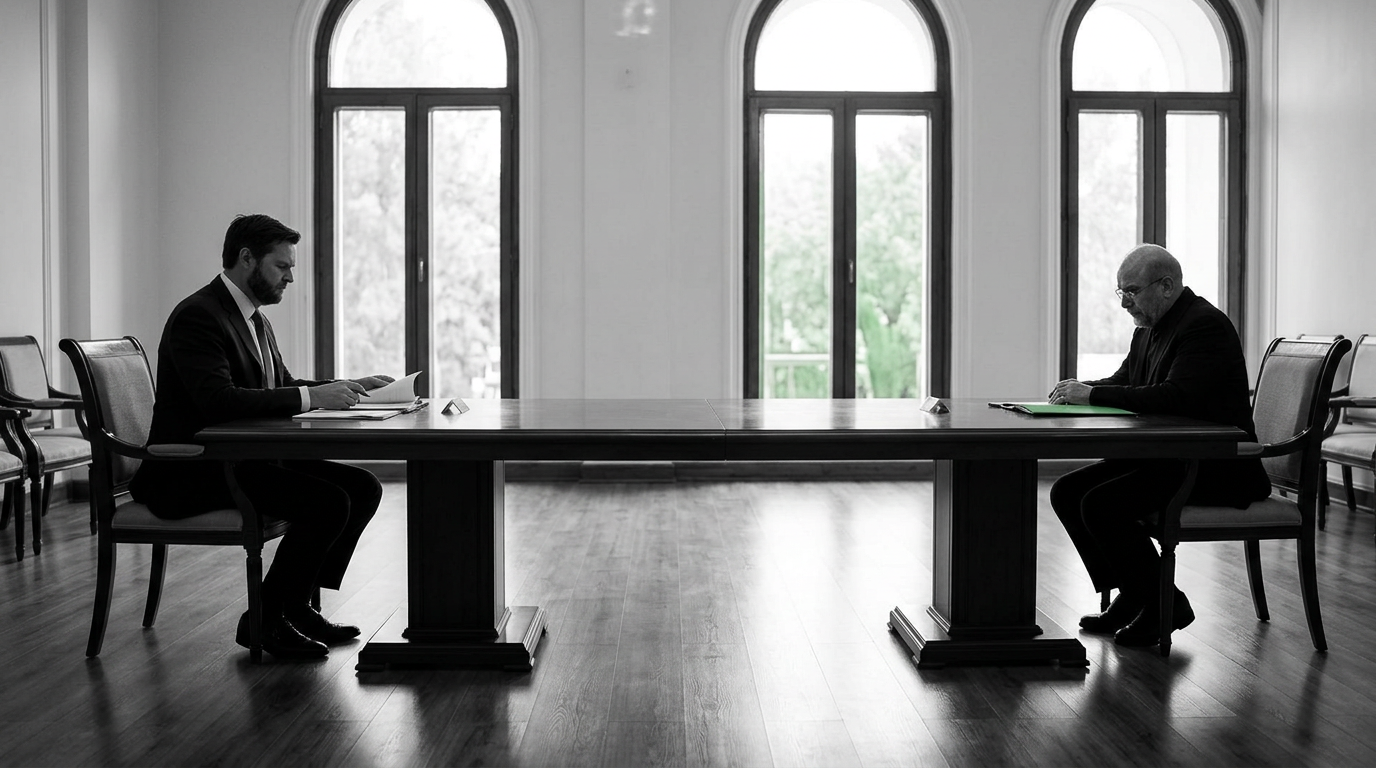
    US-Iran talks in Islamabad brought JD Vance and Mohammad Bagher Ghalibaf together in the highest-level direct contact since 1979.

    Published11 Apr 2026, 07:31:08
    US, Iran Hold Highest-Level Talks Since 1979
    A360
    Key Takeaways✦ Atlas AI
    01

    US Vice President JD Vance and Iranian Parliamentary Speaker Mohammad Bagher Ghalibaf held the highest-level direct talks since 1979 in Islamabad, signaling a potential shift towards diplomatic engagement despite ongoing regional hostilities.

    02

    This high-level direct engagement, involving top officials rather than special envoys, indicates a more serious commitment to de-escalation and reflects Iran's preference for formal diplomatic channels with the US administration.

    03

    The talks' success is challenged by Iran's focus on ballistic missile capabilities and Strait of Hormuz control, alongside historical mistrust and differing negotiating styles, making any lasting agreements difficult to achieve.

    Atlas AI

    Atlas AI

    Islamabad hosted an unusually senior US-Iran contact as US Vice President JD Vance met Iran’s Parliamentary Speaker Mohammad Bagher Ghalibaf, in what was described as the highest-level direct engagement between the two countries since 1979. The meeting took place against the backdrop of a contested ceasefire and continuing regional hostilities, underscoring how diplomacy is unfolding alongside active security tensions.


    Officials framed the encounter as a potential opening toward diplomatic engagement despite long-standing mistrust. The timing—amid an unstable ceasefire and broader conflict dynamics—highlighted the difficulty of separating political dialogue from immediate battlefield and regional pressures.


    Earlier US efforts produced limited movement during the Obama and Biden administrations, according to the account of prior diplomacy referenced in the source material. In contrast, this Islamabad engagement involved higher-ranking officials, which was presented as a sign of greater commitment to de-escalation than previous formats that relied more heavily on special envoys.


    Iran’s preference for formal, direct channels was a central feature of the current contact. Iran has insisted on engaging directly with a formal US administration official rather than special envoys, reflecting a strategic preference for established diplomatic pathways and clearer lines of authority.


    The US delegation’s composition also carried signaling value in the way it was characterized. Vice President Vance was described as being perceived as a skeptic of the current military campaign, a detail that may be read as pointing to a more nuanced US approach within the administration’s broader posture, even as the wider regional environment remains volatile.


    Negotiating approaches have historically diverged, with Iran often favoring indirect talks. Oman has frequently served as a facilitator in past indirect discussions, but those channels have faced obstacles, including the influence of Iranian hardliners and what was described as inconsistent record-keeping by US special envoys, complicating continuity across rounds of engagement.


    Security realities are shaping the agenda and constraints for any future understandings. Recent conflicts have intensified Iran’s focus on ballistic missile capabilities and on control over the Strait of Hormuz as both a national security priority and a source of economic leverage, factors that the source material said would complicate any potential agreements.


    For global stakeholders, the setting matters as much as the substance: the Strait of Hormuz is a critical maritime chokepoint for energy and trade flows, and heightened tensions there can reverberate across global markets. At the same time, the durability of a contested ceasefire and the persistence of regional hostilities remain key uncertainties that could limit how far high-level engagement can translate into sustained diplomatic progress.


    Share

    Related Articles

    Atlas360

    Sign up for Atlas Daily

    The daily global news briefing you can trust.

    every weekday·Read it now

    or
    Sign in

    Already subscribed? Sign in and we won't show you this message again.