

HIIT preserves lean mass in 123 older adults losing fat
University of the Sunshine Coast researchers said moderate training cut fat but also produced a small lean-mass decline over six months.
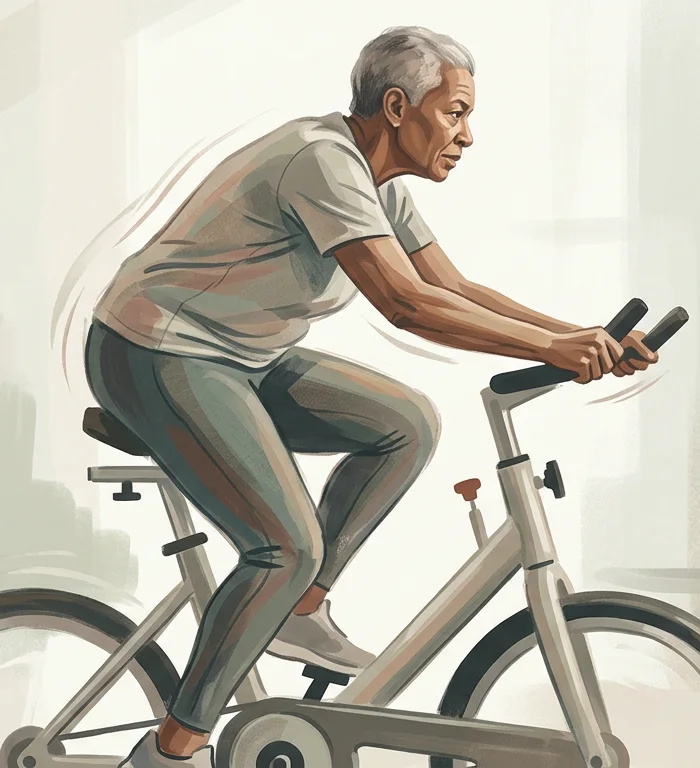
High-intensity interval training preserved lean tissue while reducing fat in a six-month trial of 123 healthy older adults published Oct. 9 by ScienceDaily, citing University of the Sunshine Coast research in Maturitas.
Evidence grade: Moderate (consistent observational data or small trials). The result matters because the moderate-intensity group also lost fat over six months, but the researchers reported a small decline in lean muscle, unlike the HIIT group.
The trial included adults with an average age of 72 and an average body mass index of about 26kg/m2, which the researchers described as normal for people older than 65. Participants came from the Greater Brisbane area and were described as healthy.
“We found that high, medium and low intensity exercises all led to modest fat loss but only HIIT retained lean muscle,” said lead author Grace Rose, an exercise physiologist at the University of the Sunshine Coast, in the ScienceDaily article.
High-intensity interval training, or HIIT, alternates brief hard efforts with easier recovery periods. In this study, the high-intensity sessions involved effort where breathing was heavy and conversation was difficult, according to Mia Schaumberg, associate professor of physiology and a study co-author.
For half a year, volunteers trained in a gym under supervision three times a week. Each session lasted 45 minutes, and participants were assigned to high-intensity intervals, moderate exercise or a low-intensity comparison group.
Researchers assessed body composition at the start, at three months and at six months. They used a scanning method to estimate fat and lean tissue across the body.
Both the high- and moderate-intensity groups had bigger fat-mass reductions than the low-intensity group, according to the ScienceDaily article. The distinction was lean tissue: moderate training reduced fat but also coincided with a small lean-mass decline, while HIIT did not show the same loss.
The study also reported improvements in visceral adipose tissue for the high- and moderate-intensity groups. Visceral fat is fat stored deeper in the abdomen around internal organs, rather than directly under the skin.
The study cannot show that HIIT directly improved strength, mobility or independence. The scans measured lean tissue, which includes muscle but also water and other tissues, and the ScienceDaily article did not report absolute fat-mass changes, confidence intervals, funding or declared conflicts for the Maturitas study.
The finding applies most directly to healthy adults similar to the trial population: older adults around their early 70s who can complete supervised gym sessions. It does not establish that inactive people, people with medical conditions or frailer adults would get the same balance of benefit and risk from demanding intervals.
Other 2026 research cited in the article gives a more cautious picture. A review in the Journal of Clinical Medicine examined 25 reports with about 2,818 participants and found consistent cardiovascular-fitness benefits from interval training, but did not establish that HIIT was always better than moderate exercise.
Another 2026 randomized trial in older adults living with HIV found that both HIIT and continuous moderate exercise, paired with resistance training, reduced fat and increased lean mass, with no statistically significant difference between the groups. That suggests workout design, resistance training and participant characteristics may affect results.
For readers, the practical point is narrower than “HIIT is best.” This trial suggests that, in supervised older adults, higher-intensity intervals may reduce fat while preserving lean tissue better than moderate aerobic work alone, but it does not replace broader guidance that combines aerobic exercise, strength work and balance training.
Source: ScienceDaily Health article, Oct. 9, 2026.
Atlas360 reports health research and does not provide medical advice.
More stories
- Wall squats may lower blood pressure after four weeks
- 8-hour eating windows beat controls by 5 pounds in TRE trials
- Researchers link diabetic ulcers to stalled immune repair
- Loneliness and isolation linked to 5.8 fewer healthy years
- Weiss warns of breast cancer care gap after treatment
- Bangladesh measles outbreak claims 1,147 lives, WHO says
- Vitamin D2 supplements lower vitamin D3 in trial review
- Sugar intake linked to deeper antibiotic gut disruption
- RJ Mitte’s death puts cerebral palsy mental health risks in focus
- Viola Davis describes shingles pain as 9 out of 10