Haaland, Messi, and Mbappe Seize World Cup Spotlight With Same-Day Goals
Three of football’s defining forwards scored on the same World Cup matchday, giving the tournament a reminder of its old magic and new order.
Mehmet Şahinoğlu ·
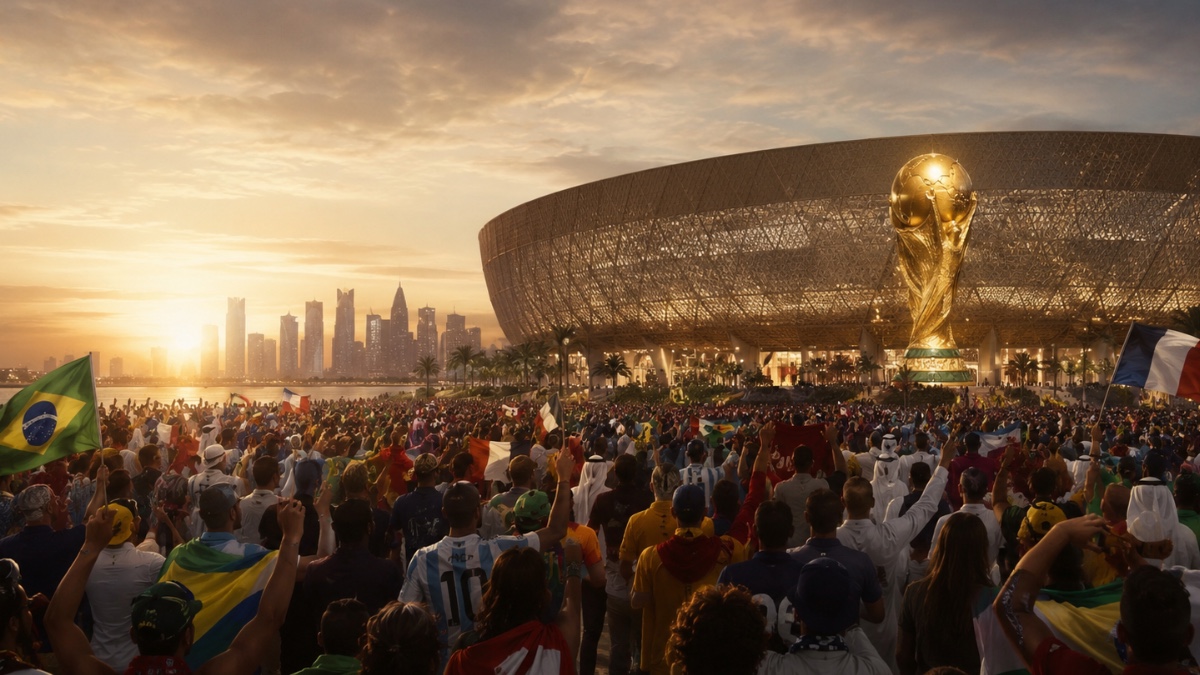
Erling Haaland, Lionel Messi and Kylian Mbappe all scored on a World Cup matchday that felt less like a schedule of fixtures and more like a curated exhibition of modern attacking greatness. Haaland delivered the force, Messi supplied the touch, and Mbappe brought the acceleration that has made him the most dangerous player in tournament football over the past decade.
It was not simply that all three found the net. It was the way each goal seemed to carry the signature of the player who scored it. Haaland’s was direct and punishing, the kind of finish that turns half-chances into inevitability. Messi’s was measured and almost quiet, a goal built on timing rather than power. Mbappe’s came with the familiar burst that makes defenders look as if they have made the wrong decision before they have even moved.
Haaland’s World Cup Moment
For Haaland, the goal carried a different weight. The Manchester City striker has spent much of his international career outside the tournament spotlight, watching the World Cup become a stage for others while his club form made him one of the sport’s most feared forwards. His finish gave Norway not only a moment of belief, but also the sense that its entire attacking plan can bend around one simple idea: get the ball near Haaland and the game changes.
That has always been the promise with him. He does not need much possession, many touches, or a long build-up to impose himself. In a tournament where matches often become tight and cautious, Haaland’s value is obvious. He shortens the distance between pressure and reward.
Messi Still Finds Space
Messi’s goal felt different because Messi’s game is different now. He no longer needs to dominate every phase to shape a match. Instead, he waits for the opening, reads the defender’s balance, and chooses the moment that still belongs to him.
His finish was another reminder that age has changed the rhythm of his football but not the intelligence behind it. Argentina continue to manage his minutes, his movements and his influence, but the danger remains. When Messi is near the box, the game still slows down for him in a way it does for almost no one else.
Mbappe Raises the Pace
Mbappe’s goal brought the sharpest sense of inevitability. France can look controlled, patient and even restrained, but once Mbappe gets space behind a defensive line, the match changes temperature. His goal was the kind that has become almost routine in appearance and still devastating in effect.
For opponents, that is the problem. There is no comfortable way to defend him. Sit deep and France can circulate the ball until a gap opens. Push higher and Mbappe turns the field into a sprint he is likely to win. His scoring touch keeps France among the teams no one will want to face when the tournament tightens.
A Tournament of Contrasts
The shared scoring night also framed a wider story about where elite football stands. Messi represents the old mastery, the player whose genius was built on imagination, balance and control. Haaland represents the modern penalty-box machine, a forward engineered for efficiency and volume. Mbappe sits somewhere between eras, blending classic superstar flair with the physical explosiveness of the contemporary game.
That contrast is part of what made the night feel bigger than the results. The World Cup has always been about countries, but it is also where individual legacies are sharpened. A single goal can shift a group, rescue a campaign or add another layer to a career already loaded with meaning.
Defenders Get No Rest
For coaches, the message was less romantic. This is a tournament in which the margins are too thin to offer elite forwards repeated chances. Haaland, Messi and Mbappe do not need games to be open for long. They need one lapse, one loose pass, one defender stepping late.
That puts pressure on every tactical plan built around containment. Teams can prepare for patterns, study tendencies and crowd dangerous zones, but the best forwards still distort preparation. They force opponents to think about them even when they are not touching the ball.
The Standard Has Been Set
The forward implication is clear: if this World Cup is going to be decided by moments, the players most capable of producing them have already arrived. Haaland gives Norway a route into matches it might otherwise struggle to control. Messi keeps Argentina connected to the emotional and technical identity that carried it before. Mbappe makes France look dangerous even when it is still searching for fluency.
The uncertainty is whether any of them can keep doing it as the tournament becomes heavier. Knockout football is less forgiving, legs get tired, and opponents become more specific in their plans. But on this night, the World Cup belonged to three forwards from three different footballing worlds — and all three reminded everyone why the sport still turns around goals.