Iran World Cup debut triggers complex emotions for diaspora
The Iran World Cup debut in Los Angeles unleashed intense political protests and emotional reunions as a U.S.-Iran peace deal was announced.
Atlas Newsdesk ·
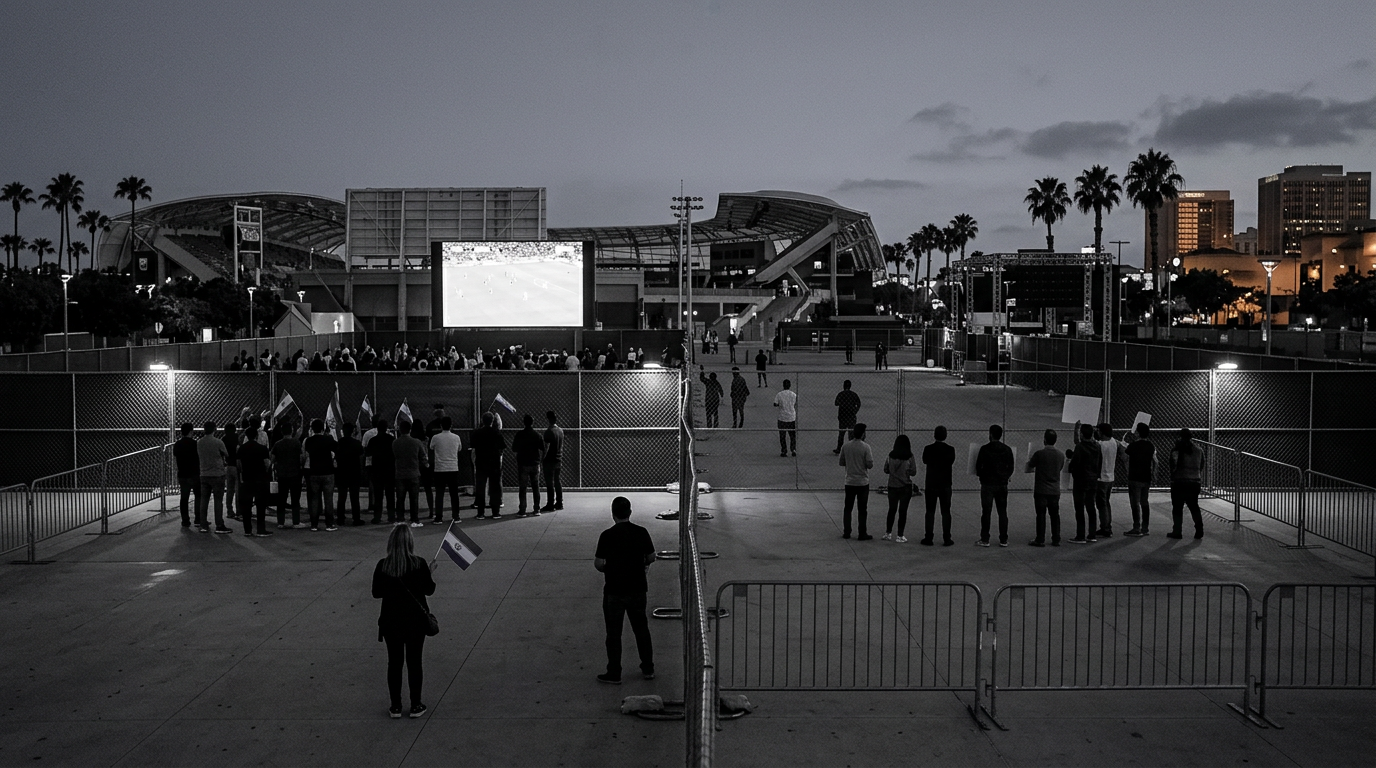
The Iran World Cup debut in Los Angeles unleashed intense political protests and emotional reunions as a U.S.-Iran peace deal was announced. Thousands of Iranian Americans converged on the local stadium, showcasing deep political divisions within the diaspora. The event highlighted how sports and global diplomacy frequently collide on the international stage.
Diplomacy Meets the Football Pitch
The Iranian national team arrived in California on Monday afternoon, traveling from their training facility in Tijuana, Mexico. Their arrival directly coincided with the announcement of a landmark treaty effectively ending the U.S.-Iran war.
This sudden geopolitical shift transformed the atmosphere surrounding the opening Group G fixture against New Zealand. Fans heading to the stadium faced a whirlwind of major news, mixing sporting anticipation with geopolitical relief.
Los Angeles represents the primary hub for the global Iranian diaspora, hosting hundreds of thousands of expatriates. Many families in this community originally fled to the United States following the Islamic Revolution in 1979.
Protests and Symbolic Defiance Outside
Prior to kickoff, several hundred demonstrators staged a rally near the stadium gates. The crowd voiced strong opposition to the current government in Tehran, holding signs condemning domestic crackdowns on civil rights.
Many activists brandished the pre-revolutionary lion-and-sun flag, an emblem that remains a potent symbol of resistance. Security teams at the venue allowed these flags and themed shirts past checkpoints despite official political bans.
Governing body FIFA maintains strict guidelines regarding political messaging inside World Cup stadiums. However, officials did not issue specific directives targeting the pre-revolutionary Iranian design before the match.
A Fragmented Fanbase Navigates Tension
The decision of whether to support the national team has polarized the Southern California diaspora. Some residents boycotted the sporting event entirely to avoid appearing supportive of the ruling regime in Tehran.
Others entered the arena with the explicit intention of protesting from the stands, planning to boo the public anthems. They argued that the national team represents the oppressive state rather than the diverse Iranian populace.
Conversely, many sports fans hoped to separate athletics from the ongoing political turmoil entirely. They viewed the team as a unifying cultural force that transcends current geopolitical hostilities.
Broader Implications for Global Sports
The intersection of international diplomacy and global soccer will likely persist throughout this tournament. This tense opening match highlights how easily athletic arenas can transform into platforms for geopolitical dissent.
The newly signed peace agreement between Washington and Tehran adds an unprecedented layer of complexity to the event. Observers will closely monitor the team's behavior and fan reactions in future group stage games.
Ultimately, the tournament forces the diaspora to confront their complex relationship with their homeland. For many, the soccer field remains the ultimate stage for both cultural pride and political struggle.