
Gulf wealth funds deploy 25 billion dollars in early 2026 despite regional conflict
Gulf sovereign wealth funds have deployed approximately $25 billion in the first quarter of 2026, demonstrating resilience despite regional conflict.
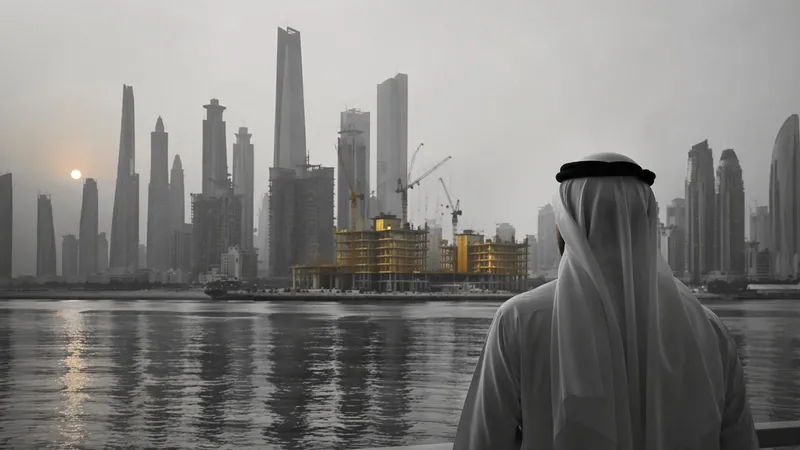
Gulf sovereign wealth funds entered 2026 with momentum—and, so far, they’ve refused to flinch.
Despite nearly a third of the first quarter unfolding under the shadow of regional war, the largest state investors in Saudi Arabia, the UAE, and Qatar deployed close to $25 billion in fresh capital, according to Global SWF data first reported by Semafor. On the surface, it looks like continuity. Underneath, the picture is far less certain.
The immediate takeaway is resilience. The deeper story is optionality.
Business as Usual, With a Clock Ticking
The sheer scale of Gulf capital helps explain the steadiness. Sovereign wealth funds across Saudi Arabia, Abu Dhabi, Kuwait, and Qatar now control roughly $5 trillion—an amount projected to more than triple by mid-century.
That size creates inertia. Allocations don’t turn on a dime, and neither do relationships. Deals in motion before the conflict—particularly in US technology, infrastructure, and financial services—are still closing.
But that doesn’t mean strategy is unchanged. It means the adjustment hasn’t fully shown up yet.
If the conflict extends, capital deployment abroad will slow. That’s not speculation—it’s pattern recognition. During COVID, Gulf funds pivoted quickly from global expansion to domestic stabilization. The same playbook is now back on the table.
The Real Trade-Off: Global Returns vs. Domestic Stability
What happens next hinges on how aggressively governments tap their sovereign funds.
Two paths are emerging:
First, balance-sheet support. Funds like ADIA and KIA could be leaned on to plug fiscal gaps as growth slows and tourism revenue collapses. That means fewer allocations to private markets and less appetite for long-duration global bets.
Second, strategic intervention. Capital may be redirected toward sectors directly hit by the conflict—aviation, logistics, and increasingly, defense. Domestic military platforms like EDGE (UAE), SAMI and SAFE (Saudi Arabia), and Barzan (Qatar) are likely to see more funding.
Both paths point to the same outcome: less capital available for outbound investment and for the long-term diversification agendas that have defined Gulf strategy for the past decade.
The US Question Isn’t Really a Question
There’s a narrative gaining traction that Gulf funds might reduce exposure to the US in response to geopolitical tensions.
It doesn’t hold up.
The reality is structural, not political. The US remains the only market with the depth, liquidity, and technological leadership to absorb tens of billions at scale. There is no credible alternative ecosystem—not in Europe, not in Asia, and certainly not in emerging markets.
You don’t reallocate that kind of capital based on sentiment. You do it when there’s somewhere better to put it. Right now, there isn’t.
So while rhetoric may shift, capital flows are unlikely to follow.
Opportunistic Capital Is the Wild Card
If there’s one area where behavior could diverge, it’s in distressed investing.
Dislocation creates entry points, and some Gulf funds—particularly PIF and Mubadala—have shown they’re willing to move aggressively when valuations reset. During the pandemic, Saudi Arabia’s PIF deployed capital into beaten-down global equities. Mubadala is now positioned to do something similar across private markets.
If volatility deepens, expect selective acceleration, not blanket retrenchment.
A Different Kind of Crisis
What makes this moment distinct is the nature of the shock.
Previous downturns hitting Gulf economies were typically driven by falling oil prices or global liquidity crunches. This time, the disruption is physical and regional. Energy flows are constrained. The Strait of Hormuz—arguably the most critical artery in global oil markets—is compromised.
That changes the equation.
The World Bank now expects Gulf growth to slow sharply, with some economies contracting. Tourism losses alone could reach $32 billion. Unlike past crises, the wealth is still there—but access to it, and the channels through which it circulates, are under pressure.
The Pipeline Isn’t Empty—Yet
For now, deals continue to mirror pre-war patterns.
Over the past five years, roughly 60% of Gulf sovereign investments abroad have targeted financial services, infrastructure, and technology—sectors that remain intact in current allocations. Recent activity tied to AI firms, gaming companies, and media assets suggests continuity rather than retreat.
Private capital flows reinforce the point. Abu Dhabi-linked investors are still writing large checks—into US energy infrastructure, consumer tech, and European hospitality.
That tells you something important: this isn’t a freeze. It’s a pause with momentum.
The Real Inflection Point
The trajectory from here depends less on markets and more on duration.
If the conflict resolves quickly and energy flows normalize, Gulf states will return to surplus mode—and face the same fundamental challenge they’ve always had: where to deploy excess capital at scale.
If it drags on, the shift inward becomes unavoidable.
Either way, the current stability shouldn’t be mistaken for permanence. It’s a lagging indicator.
The adjustment is coming. The only question is how sharp it will be—and who feels it first.
More stories
- IRGC says tanker explodes near Hormuz mine route
- Take-Two faces $30 million GTA 6 leak threat
- TG Therapeutics leads Valneva on 12 of 14 measures
- Pune police detain 92 over election-roll protest
- Tesla takes 90% of output from Arizona solar project
- New Horizon posts $4.1 million Q1 loss as R&D rises
- Brazil Inflation Forecast Rises Amid Energy Price Shock
- Goldman sees tech stock rebound as yields pressure eases
- North Sea Drilling Push: UK Eyes Tax Overhaul
- UK Factories Face Soaring Costs, Growth Stalls
Latest news
- Berlin health summit puts US pandemic strategy under congressional pressure
- US disables cargo ship in Iran blockade breach
- Ronaldo Ranks Third in Football's 1,000-Game Club
- Republicans Prepare Bill to Curb Trump Russia Deal
- Nollywood Star Urges Investment in Ghanaian Actor LilWin
- Marvels' Box Office Flop Still Pivotal for MCU's Future
- Hefner's Ex-Wife Defends Legacy Amid Film Controversy
- Fatal shooting incident reported in Istanbul's Bagcilar district