Guinness names Jonathan tortoise Icon at age 194
Jonathan tortoise has turned 194 and received a Guinness World Records Icon designation, extending his status as the oldest known living land animal.
Sofia Reyes ·
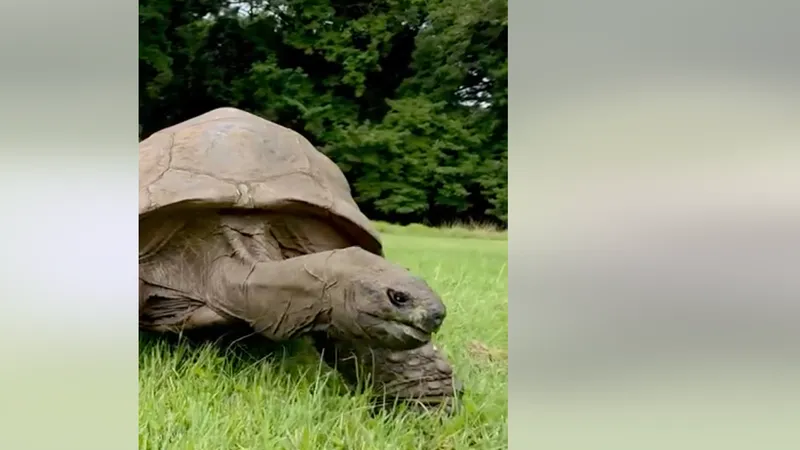
Jonathan tortoise has turned 194 and received a Guinness World Records Icon designation, extending his status as the oldest known living land animal.
Guinness World Records confirmed the recognition on June 17, citing updated verification of Jonathan’s age and history. The Seychelles giant tortoise lives on St. Helena, a remote South Atlantic island and British Overseas Territory.
Guinness recognition extends a long-running record
Guinness said Jonathan is believed to have been a mature adult when he arrived on St. Helena from the Seychelles in 1882. Because he was described as fully grown at the time, record-keepers estimate he was at least 50 years old on arrival.
That benchmark places his birth year at 1832 at the latest, which supports the current age estimate of 194 years. Guinness added that some researchers think he may be older, though the organization uses the conservative date range to keep the record anchored to documented evidence.
The Icon designation is used by Guinness to spotlight record-holders with unusually broad public recognition or longstanding achievements. In Jonathan’s case, the organization framed the award as a marker of exceptional longevity and a way to highlight the continuity of the record itself.
How Jonathan’s age is estimated
Unlike many modern record-holders, Jonathan’s early life predates consistent civil records, veterinary documentation, and photographic archiving. As a result, age verification relies heavily on historical references around his transfer to St. Helena and descriptions of his condition at the time.
Guinness said the key detail is that Jonathan was already “full-grown” when he arrived in 1882. Giant tortoises typically take decades to reach full adult size, and the 50-year minimum age assumption is intended to avoid overstating the record.
By setting a latest-possible birth year rather than a precise date, Guinness treats the record as an evidence-based estimate. The approach is common for exceptionally old animals, where early documentation can be incomplete but later records are consistent.
Why the record draws attention beyond trivia
Jonathan’s lifespan spans major historical periods, from the early 19th century through the present day, making him a rare living link across generations. For St. Helena, the tortoise has also become a distinctive part of the island’s identity, drawing interest to a location better known historically as Napoleon Bonaparte’s last place of exile.
From a wildlife context, the record underscores the remarkable life expectancy possible in some tortoise species when threats are limited and long-term care is stable. Seychelles giant tortoises, like other large island tortoises, are often cited as examples of slow growth, late maturity, and long lifespans compared with many mammals.
The Icon announcement may also increase attention on record verification standards for animal longevity. Guinness’ emphasis on conservative dating signals that future claims will likely face the same requirement: tying age estimates to verifiable historical anchors rather than anecdotal reports.
Next steps will center on continued monitoring and documentation of Jonathan’s condition as the record persists. Guinness did not announce a change in criteria, but the updated recognition suggests the organization will keep revisiting the evidence base as long as Jonathan remains alive.