Gaza Building Collapse Kills 20, Traps Dozens
A seven-story apartment building in Gaza collapsed overnight, killing at least 20 Palestinians, including six children, and leaving dozens trapped beneath…
Lauren Collins ·
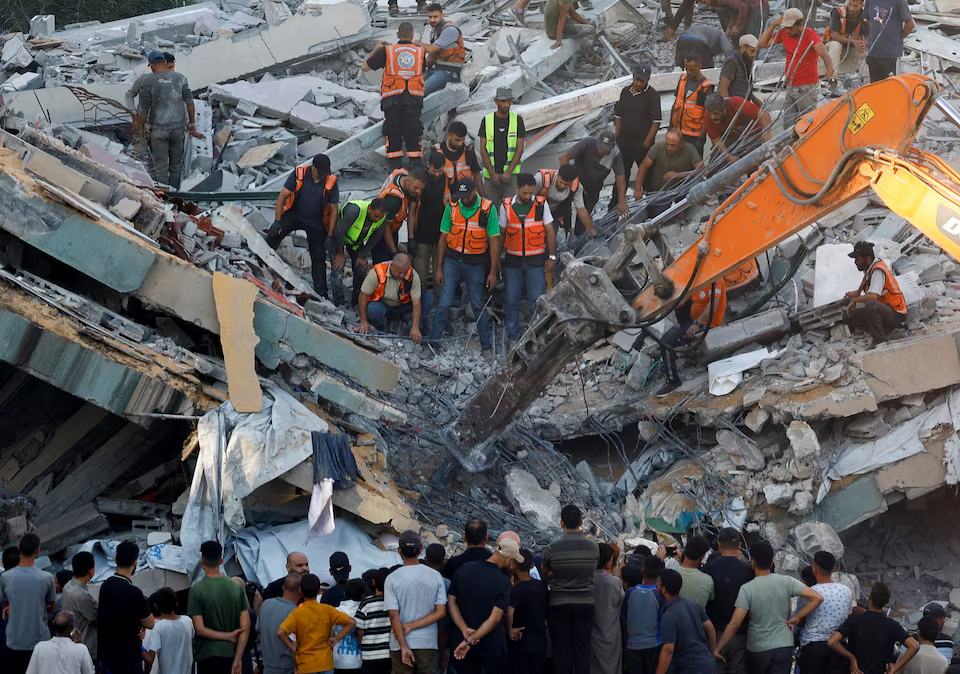
A seven-story apartment building in Gaza collapsed overnight, killing at least 20 Palestinians, including six children, and injuring 14 others. Rescue workers are searching for nearly 100 more people believed to be trapped under the debris following the incident in Gaza City.
The collapse underscores the precarious living conditions for tens of thousands of residents in approximately 2,000 buildings damaged by Israeli airstrikes across the Gaza Strip. Emergency teams continue to dig through the rubble, with reports of voices still audible from beneath the debris.
Fatal Collapse Amid Structural Risk
Gaza City's civil defense director, Raed Al-Dahshan, confirmed that at least 10 families resided in the collapsed structure. The fatalities include six children, with rescue operations facing significant challenges due to a severe lack of heavy machinery.
Alessandro Mrakic, head of the U.N. Development Programme's Gaza office, stated that U.N. agencies and Egypt's relief agency are assisting, but rescuers are often forced to dig with their bare hands. Mrakic highlighted that approximately 400 buildings in Gaza are currently at risk of collapse, a situation exacerbated by the approaching winter rains.
Equipment Shortages Hamper Efforts
Palestinian and United Nations officials attribute the scarcity of essential rescue equipment to Israeli restrictions on Gaza. Israel maintains that these curbs are necessary to prevent dual-use equipment from reaching militant groups.
Ramiz Alakbarov, the U.N. Humanitarian Coordinator for the Occupied Palestinian Territory, stressed the urgent need for safer housing alternatives, noting that families should not face life-threatening risks simply to find shelter. The United Nations estimates that the conflict has generated about 61 million tons of wreckage, which could take up to seven years to clear.
Post-Ceasefire Instability Persists
The recent collapse occurs more than a year after a U.S.-backed ceasefire was implemented in October 2025, halting large-scale fighting. However, the agreement has not stopped all Israeli strikes, and progress toward a lasting peace remains limited.
Gaza health officials report over 1,300 Palestinian deaths, predominantly civilians, since the ceasefire took effect. The Israeli military has confirmed the deaths of four of its soldiers during the same period. Hamas accuses Israel of violating the ceasefire terms and undermining peace efforts, while Israel contends Hamas has breached the deal.
Living in Damaged Structures
Despite warnings from local rescue services about collapse risks, many families continue to inhabit partially damaged buildings. Residents have previously cited the absence of new tents and the need for protection against harsh weather as reasons for returning to unsafe structures.
The ongoing vulnerability of damaged buildings underscores the broader humanitarian crisis in Gaza. Without sufficient reconstruction aid and essential equipment, the risk of similar tragedies remains high, particularly as winter weather approaches.