G20 meeting exposes Russia rift as US pushes growth agenda
G20 finance talks in Asheville were strained by Russia's return, disputed press access and a U.S. push on growth, debt and China trade.
Mateo Fernandez ·
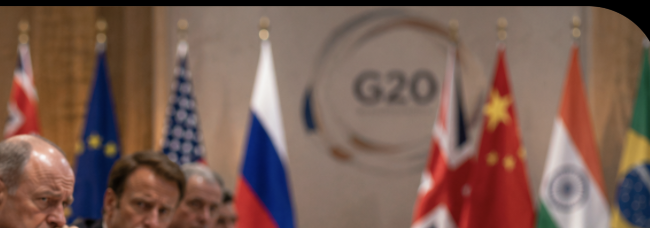
G20 finance talks opened in Asheville with Russia present for the first time since its 2022 invasion of Ukraine. Press limits added tension.
The two-day meeting in North Carolina began Monday under U.S. Treasury Secretary Scott Bessent, who sought to focus ministers on growth as the main response to heavy public debt. The agenda also covered energy pressure linked to the Iran war, China's goods surplus and the investment cycle around artificial intelligence.
Russia returns to the table
Russian Finance Minister Anton Siluanov's appearance marked the first in-person Russian attendance at the finance track since the invasion of Ukraine in 2022. Some European officials objected after seeing him seated with other G20 finance leaders.
Polish Finance Minister Andrzej Domanski said Russia's presence was difficult to accept, while acknowledging that the host country controls invitations. "We do not trust Russia. They lie constantly and you need to be really, really cautious while discussing with them," Domanski said, adding that Moscow was the aggressor in Ukraine.
Siluanov also met Bessent bilaterally, according to Russia's finance ministry, which said the discussion covered financial cooperation within the G20 framework. A U.S. official said the meeting focused on President Trump's peace plan for Ukraine, not wider economic normalization.
German Finance Minister Lars Klingbeil said Europe was preparing another sanctions package against Russia and described Siluanov's treatment at the meeting as a "quite troubling" signal. European officials also opposed joining the customary group photograph with Siluanov; officials said the image was ultimately taken without him.
Bessent presses growth over debt
Bessent framed stronger output as the route out of debt burdens accumulated after the 2007–2009 financial crisis and the COVID-19 pandemic. Global debt reached a record of nearly $353 trillion earlier this year, a level he cited as a financial-stability concern for governments already facing higher borrowing costs.
"The world is awash in debt post-GFC, post-COVID, and the only way for us to get out of this is to grow our way out of this," Bessent said at the start of the meeting. He said he expected many leaders to be receptive to that argument.
The Treasury invited private-sector figures into some sessions, reflecting the Trump administration's view that deregulation, more energy production and innovation can lift trend growth. Bessent told participants that barriers included excessive regulation, weak investment incentives, fragmented internal markets and gaps in labor skills and mobility.
Federal Reserve Chairman Kevin Warsh, attending his first international economic policy meeting since taking office in May, linked the growth discussion to AI investment. "If I were to try to characterize this moment, it would be one of a global investment surge," he said, arguing that stronger investment demand had changed the savings conditions that previously kept capital idle.
Press limits widen the dispute
The Treasury's decision to deny credentials to some journalists drew criticism from European officials at the meeting. Klingbeil said the press had a legitimate interest in reporting openly on the summit and called exclusions of individual reporters or whole teams "unacceptable."
A Treasury spokesperson said more than 300 media representatives were covering the event and that access carried a responsibility to report factual information consistent with established journalistic standards. The dispute added a governance issue to a meeting the U.S. had intended to center on economic policy.
Trade imbalances were set to move higher on the agenda Tuesday, with Bessent saying he would press G20 members to reassess their terms of trade with China. He said the global economy could not absorb "a China with a $1.2 trillion trade surplus" and argued that Beijing needed to shift from exports toward domestic consumption.
The scenarios now turn on whether ministers can keep the agenda on growth or remain split over Russia and access rules. If the growth track holds, the macro effect would be pressure for supply-side reforms, the Treasury would gain support for its debt argument, and AI, energy and capital-goods sectors could receive a stronger policy tailwind. S. role as G20 host could face more European scrutiny, and the finance track would have less room for coordination on China, debt and investment flows.