FIFA ban decision draws Klaveness ethics complaint plan
FIFA ban scrutiny intensified after NFF president Lise Klaveness said she will seek a formal ethics complaint over Folarin Balogun's reprieve.
Mehmet Şahinoğlu ·
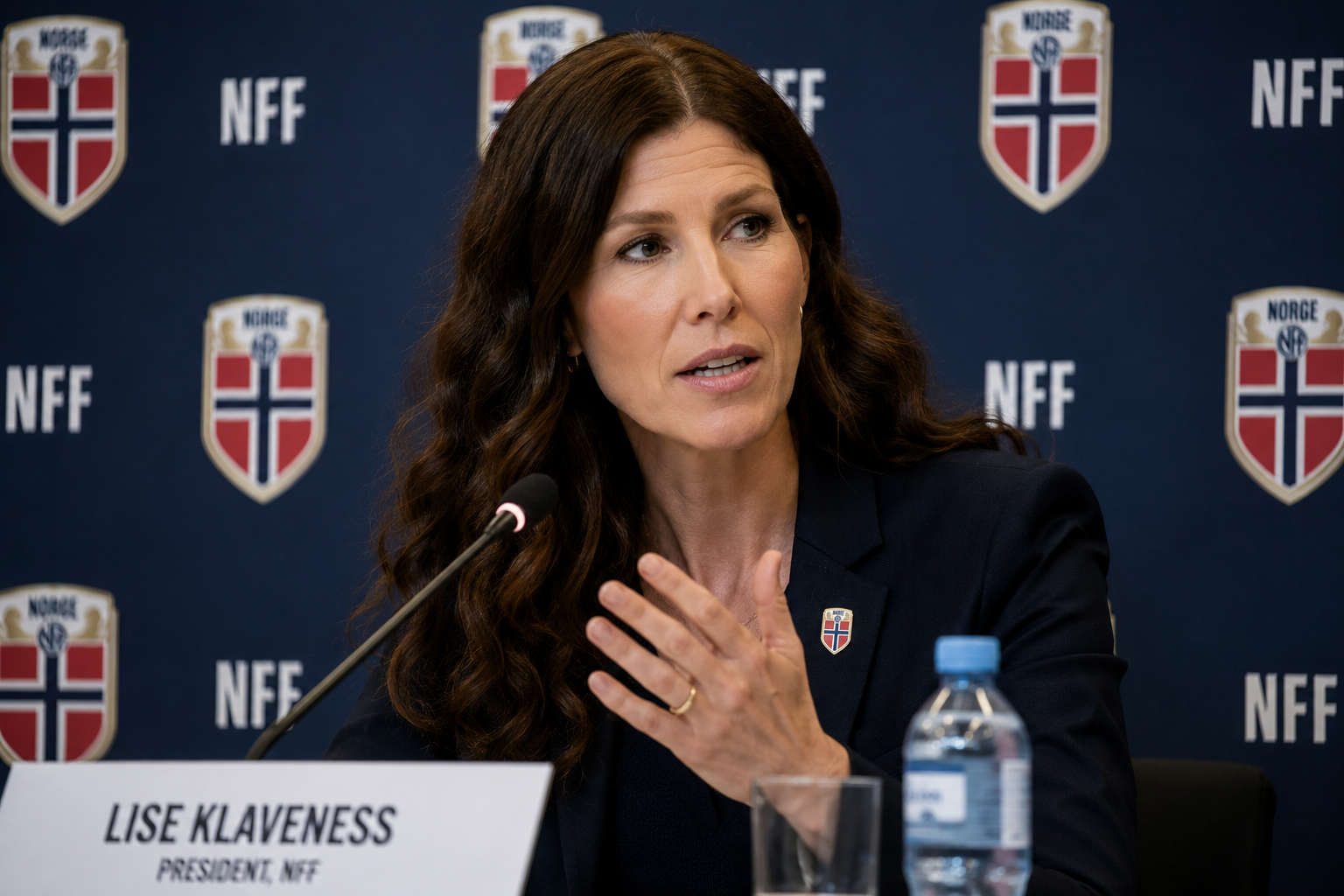
FIFA ban scrutiny intensified after NFF president Lise Klaveness said she will seek a formal ethics complaint over Folarin Balogun's reprieve.
Klaveness, who leads the Norwegian Football Federation, said she will ask her board to pursue the case after FIFA's disciplinary committee suspended Balogun's one-match World Cup sanction. Her intervention turns a red-card decision into a governance test for football's ruling body.
Balogun played after red card
Balogun, the United States forward, had received a red card in the match against Bosnia-Herzegovina. Under the usual disciplinary route, that dismissal brought an automatic one-match ban.
FIFA's disciplinary committee suspended the sanction, allowing Balogun to feature in the United States' last-16 victory against Belgium. The sporting effect was immediate: a player who had been ordered off in the previous match was cleared for a knockout fixture.
Klaveness has framed the decision as bigger than one player or one match. In her view, the case cuts into the credibility of rules that teams, coaches and federations expect to apply evenly during a World Cup.
Trump call raised pressure questions
The political layer came before the Belgium match, when U.S. President Donald Trump told reporters he had asked FIFA president Gianni Infantino to review the red card. Trump later said FIFA had made a "great decision."
The decision followed a phone call between Trump and Infantino, according to the account provided in the source material. Infantino has said FIFA's judicial bodies act independently, a position now facing direct public pressure from a national federation president.
Klaveness did not describe the matter as a routine disciplinary disagreement. "When you bend a rule like this, you're on a slippery slope that will put the whole game at risk. It is a worry for the game when you compromise fundamental rules of the game," she said.
She also called for FIFA's leadership to acknowledge fault rather than defend the process. "First of all, it should not have happened. It is very important now to have honest communication around it. We all know that this verdict was influenced from external forces and did not have the proper process," Klaveness said.
FIFA process faces board test
The next step sits first with the NFF board. If the board backs Klaveness, the issue would move from a public challenge to a formal ethics complaint inside football's governance system.
That would not automatically change the result of the Belgium match or Balogun's eligibility in that game. It would, however, force attention onto how FIFA handled the red-card review, who was involved, and whether the disciplinary track was insulated from outside influence.
For FIFA, the risk is institutional rather than tactical. If the governing body maintains that its judicial bodies acted alone, it will need a process clear enough to withstand questions from member associations and the wider football community.
For the United States, the issue is tied to a result already banked: Balogun played and the team advanced. Yet the case could keep the team and player attached to a controversy over how that availability was secured.
Integrity question moves forward
If the NFF complaint is filed and accepted, the case could become a formal review of FIFA's disciplinary safeguards. The mechanism would be procedural: records, decision timelines and communications would matter more than match opinion.
If FIFA instead closes ranks around the independence argument, the immediate match outcome is likely to remain untouched while the reputational argument sharpens. In that scenario, the sport's wider concern would be whether future red-card decisions invite pressure from governments, federation chiefs or other powerful figures.
If Infantino concedes an error, as Klaveness wants, FIFA could limit the dispute by separating the sporting result from the process failure. The open question is whether such an admission would satisfy member associations or invite further demands for disciplinary reform.
Klaveness's final demand was direct: "We need our leader in FIFA to say that this was an error." The board decision in Norway will decide whether that demand stays as criticism or becomes a case file.