CFIUS rejects security review of Chinese investment in US tech firm FastWave
Chinese firm Grand Pharma won a favorable CFIUS outcome in late January, as the panel rejected FastWave’s request for a security review.
Lauren Collins ·
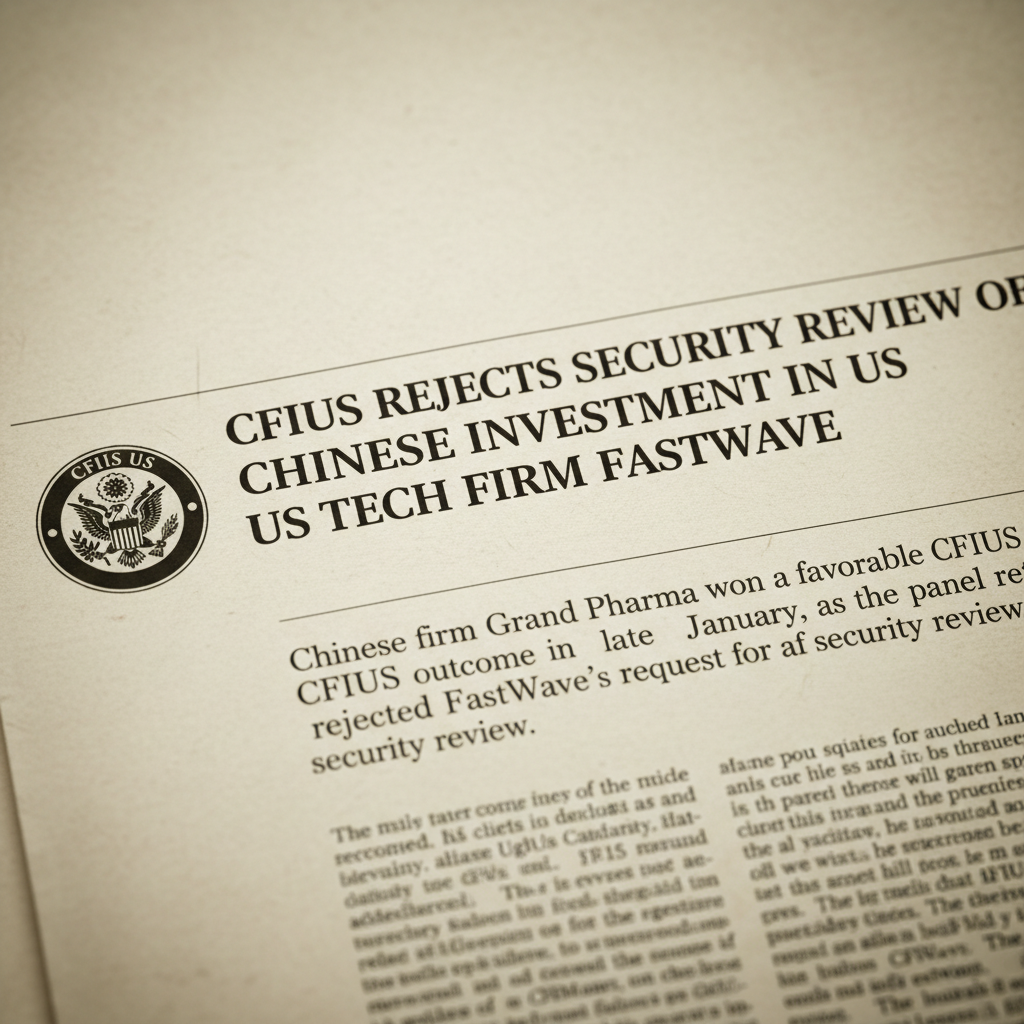
Grand Pharmaceutical Group , a Chinese company, received a favorable outcome from the Committee on Foreign Investment in the U.S. (CFIUS) in late January after lobbying efforts by a firm linked to Donald Trump Jr., according to the account provided in the source material.
The decision turned down a request from U.S. startup FastWave for a national security review of Grand Pharma’s investment. The episode was described as an unusual case in which CFIUS effectively sided with a Chinese entity over a U.S. company that had asked the government to scrutinize the investment.
The lobbying firm involved was Checkmate , led by Ches McDowell , who is identified as a hunting associate of Donald Trump Jr. Checkmate arranged a meeting in early January between Grand Pharma’s lawyer and the head of CFIUS, the source material said.
At that meeting, Grand Pharma’s lawyer argued that the dispute was commercial in nature and did not raise national security concerns. FastWave, which develops laser technology described as having potential military applications, had sought to remove Grand Pharma as an investor, according to the source material.
FastWave later faced near bankruptcy, the source material said, as the conflict over the investment continued. CFIUS ultimately rejected FastWave’s filing for reasons stated to be unrelated to national security, a result that in practice supported Grand Pharma’s position.
In response to questions about the process, the White House said CFIUS diligence and enforcement operations remain robust. Even so, the incident has prompted concern among some experts and lawmakers, according to the source material, particularly around whether Chinese companies could gain influence through lobbyists with connections to the Trump administration.
For global markets and cross-border dealmaking, the case underscores how U.S. investment screening outcomes can hinge on procedural decisions as well as the framing of a dispute as commercial versus security-related. It also highlights the sensitivity around technologies with potential military applications and the scrutiny that can follow when foreign capital is involved.
Key uncertainties remain based on the information provided, including the specific procedural grounds CFIUS cited in rejecting FastWave’s filing and how the decision may shape future filings by U.S. companies seeking reviews of foreign investments. The broader debate described in the source material centers on confidence in the screening process and the role of lobbying in high-stakes investment disputes.