

European automakers face Chinese brands’ 9.6% sales share
RTE data review shows Chinese-owned brands gaining fastest in EVs, while US tariffs add pressure to European groups’ restructuring plans.
Chinese-owned car brands sold about 725,000 vehicles across the EU, European Free Trade Area and UK in the first eight months of 2026, taking 9.6% of sales, an RTE article published Oct. 17 said.
The advance matters because their regional share was just over 6% in 2025, while European manufacturers are cutting costs as they fund electric-vehicle investment, face lower-priced Chinese rivals and contend with US tariffs, the article said.
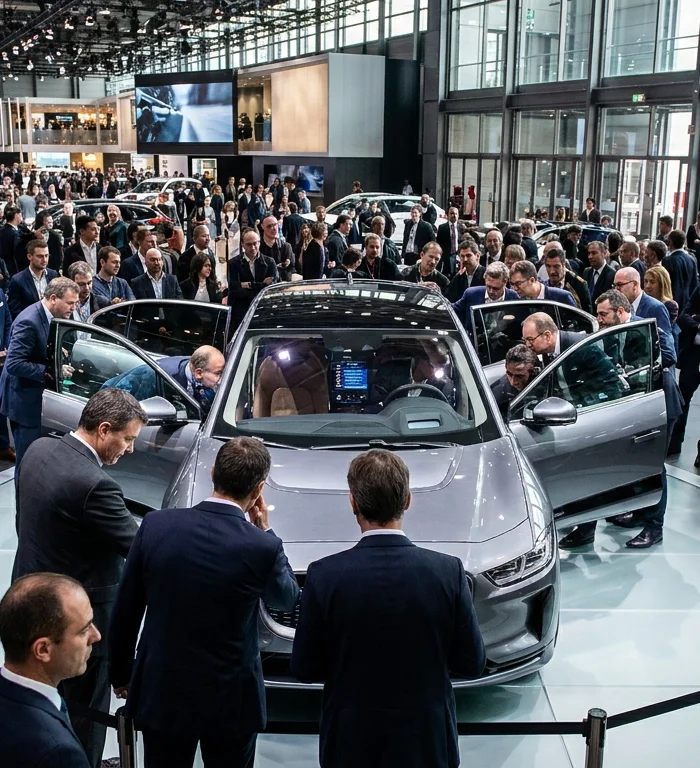
The pressure was visible at the Paris Motor Show, where nearly one third of the 64 manufacturers exhibiting this week were Chinese-owned, according to RTE. The event has long been a showcase for Europe’s car industry.
Ireland illustrates the speed of the shift. Chinese-owned brands registered a little more than 10,000 cars from January through September 2026, out of about 128,000 total registrations, giving them 8.3% of the new-car market, RTE said, citing the Society of the Irish Motor Industry. That compared with 5% in the same period of 2025 and less than 4% in January-September 2024.
BYD, which entered Ireland in 2023, had just over 4,400 registrations in the first nine months of 2026, RTE said. MG, Chinese-owned for more than two decades, had a little more than 2,800, while Volvo had just over 2,000.
The EV segment shows a larger foothold. Chinese-owned brands accounted for about 17.8% of Irish electric-vehicle sales so far in 2026, up from 13.6% in the same period of 2025, according to RTE’s reading of SIMI figures.
European carmakers are responding with restructuring plans. Volkswagen recently agreed with unions to cut 50,000 jobs, on top of a previously announced 50,000 reduction, RTE said. The article said the combined cuts exceed 15% of Volkswagen’s workforce and form part of a plan to lower costs by 20% in coming years, a gap it sees versus Chinese competitors.
Other groups are also seeking savings. Stellantis aims to reduce costs by €6 billion by the end of 2028, including factory-efficiency measures and potential disposals of less productive sites, RTE said. Jaguar Land Rover is cutting thousands of UK jobs under a £1.7 billion cost programme, while BMW is targeting middle-management reductions and production investment.
The rise of Chinese brands has also become a trade-policy issue. RTE said European concern partly reflects claims that Chinese carmakers benefited from substantial state subsidies, allowing them to expand capacity and sell at prices European producers struggle to match. China and its automakers deny receiving unfair advantages, according to the article.
Chinese companies argue their cost edge comes from earlier focus on EVs and more efficient production, RTE said. BYD’s model includes vertical integration, meaning it makes many components itself, and the article said it also owns a cargo ship used to transport vehicles.
European carmakers have reasons to be cautious about punitive action, RTE said, because many operate joint ventures in China and could be exposed if Beijing retaliated. The article also said European officials have security concerns about data gathered by connected vehicles, while Chinese companies routinely deny their cars create such risks.
Cost targets ahead
Stellantis’s dated checkpoint is the end of 2028, when the company aims to have delivered €6 billion of cost reductions, RTE said. The observable measure is whether the group reports the targeted savings through factory-efficiency measures, asset disposals or other cost actions.
Volkswagen’s schedule is less precise in the RTE article. The group’s checkable items are whether it implements the reported 50,000 job cuts agreed with unions, delivers the planned 20% cost reduction in coming years and decides whether to close or repurpose factories.
Future registration data will show whether Chinese-owned brands keep building from a 9.6% regional share in January-August 2026 and a 17.8% share of Irish EV sales so far this year.
More stories
- CoreWeave gains ARK backing as borrowing concerns persist
- Meta credits Apple for 816bn-parameter AI model on Mac Studio
- UBS raises Microsoft target to $675 before earnings
- US households face Iran war costs as fuel bills stay high
- Aemet warns of 300 l/m² from Storm Adam
- UN envoy presses Cyprus leaders on measures after two-year impasse
- S&P 500 falls 1.1% as tech shares extend sell-off
- Albanian students challenge Rama after 152 arrests
- ECB digital euro expands as Pontes opens bank settlement
- Paramount settlement talks center on $1.5 billion pledge
Latest news
- Wall squats may lower blood pressure after four weeks
- 8-hour eating windows beat controls by 5 pounds in TRE trials
- Researchers link diabetic ulcers to stalled immune repair
- Loneliness and isolation linked to 5.8 fewer healthy years
- Weiss warns of breast cancer care gap after treatment
- DeepSeek updates AI model as speed and cost rivalry grows
- CoreWeave bond yields hit 15% as AI funding doubts deepen
- Egypt offers Saudi defense help, seeks parliament's role