Europe diesel prices fall as Trump Demands EU release reserve stocks
Diesel prices fell as Europe weighed a 50 million-barrel reserve release sought by President Trump before a G7 leaders call.
Atlas Newsdesk ·
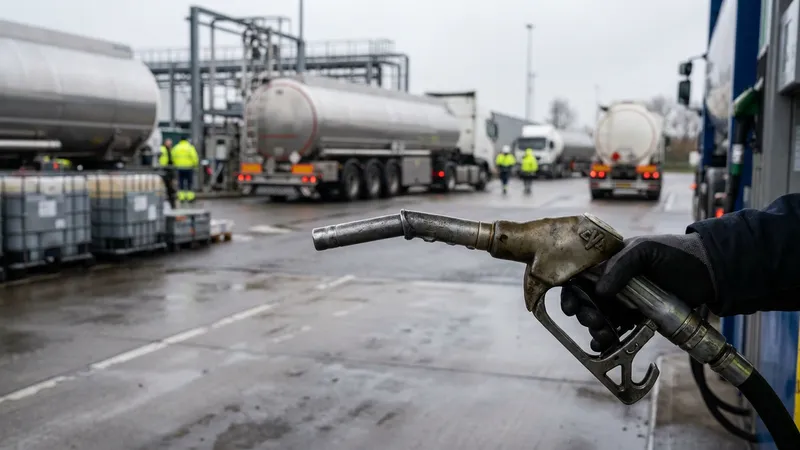
Diesel prices fell Friday as Europe weighed a 50 million-barrel reserve release sought by President Trump. G7 leaders were set to discuss the demand.
Europe’s benchmark diesel futures contract dropped as low as $1,364 a tonne, equal to about $185 a barrel. The move was close to 6%, compared with recent diesel prices above $200 a barrel in the US, Europe and Asia.
The talks followed pressure from President Trump, who has asked Europe to put at least 100 million barrels of diesel onto the market, according to two diplomats familiar with EU discussions. The diplomats said Trump also threatened to restrict US diesel exports if Europe did not act.
France floats 50 million barrels
EU officials were considering a French counterproposal under which European countries would release 50 million barrels of diesel, the diplomats said. Members of the International Energy Agency would add a separate 50 million barrels of crude oil.
No final figure had been agreed before the G7 call, according to diplomats and officials involved in the discussions. The unresolved split between diesel and crude matters because diesel is already a refined product, while crude must still pass through refineries before it reaches drivers and freight operators.
The reserve debate follows a March commitment by Europe to release 73 million barrels of refined fuels as part of a 400 million-barrel strategic stock draw coordinated by the International Energy Agency. Fatih Birol, the IEA’s head, has said the US has largely completed its part of that program, while some European countries have not met their obligations.
EU resists an export ban
European officials are wary of using emergency stocks while the duration of the conflict with Iran remains unclear. They are also resisting the idea that Washington should set the terms for a European reserve release.
Anna-Kaisa Itkonen, a Commission spokesperson, said, "We fully reject a [US] ban on diesel. A ban would not be beneficial to anyone. It would undermine our trust in the US as a reliable partner." She declined to comment on the French proposal.
French President Emmanuel Macron called for a remote G7 meeting as soon as possible to coordinate a response, according to an Élysée official. Macron spoke with Trump overnight and argued that G7 governments had a shared interest in acting together without restricting exports, the official said.
The pressure on diesel markets extends beyond the US-Europe dispute. Refining disruptions linked to the Iran conflict, Russia’s war in Ukraine and China’s limits on fuel exports have tightened availability across major consuming regions.
China quotas tighten supply
Beijing had not granted its largest refineries October fuel export quotas except for shipments to Hong Kong and Macau. That decision removed a potential source of additional supply at a time when governments were already drawing on emergency tools.
Retail fuel prices show how the refinery squeeze is reaching consumers. The RAC said the UK diesel price surpassed £2 a litre on Friday for the first time, a threshold that raises costs for motorists, delivery fleets and businesses moving goods by road.
If Europe releases 50 million barrels of diesel and IEA members add 50 million barrels of crude, the immediate effect would be to increase prompt supply and ease pressure on buyers competing for cargoes. For refiners, the mechanism would be different: more crude helps only if processing capacity and export logistics can turn it into usable fuel quickly.
If the US instead restricts diesel exports, the market effect would run through trade flows rather than inventories. Europe could face tighter import options, US refiners could lose overseas buyers, and global fuel costs could stay elevated for transport-heavy industries until reserve releases or new refinery output offset the disruption.