Shell CEO Warns of European Fuel Rationing by April Amid Hormuz Transit Shutdown
Europe fuel rationing could arrive by April if Hormuz stays shut, Shell’s CEO warned, as oil swings near $100 and jet fuel doubles.
Lauren Collins ·
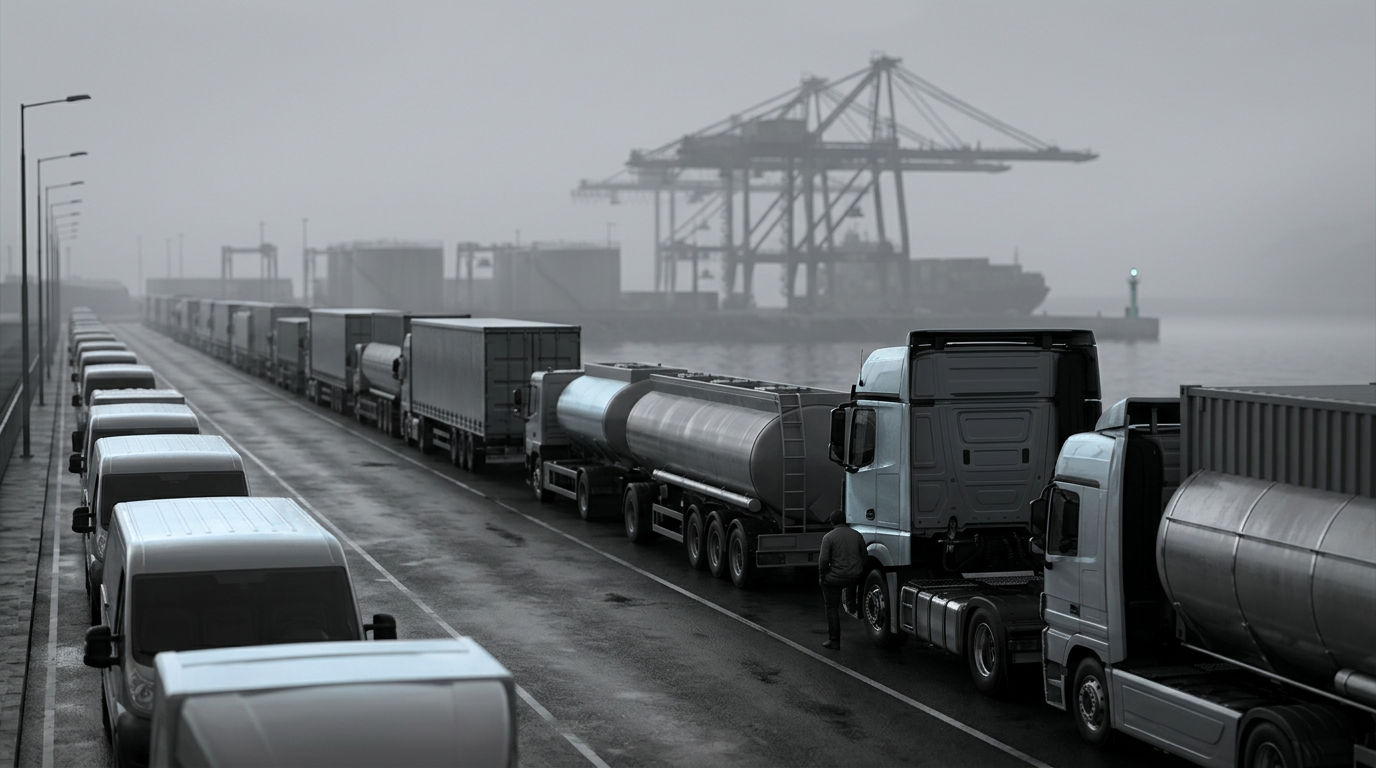
Europe could face fuel rationing as soon as April if oil and gas tankers remain unable to transit the Strait of Hormuz, Shell CEO Wael Sawan said at an energy conference in Houston, Texas. The warning comes as a global supply disruption enters its fourth week, with price moves already rippling across refined products and crude markets.
While the duration of any shipping interruption is not confirmed, the comments underscore how quickly a chokepoint constraint can translate into shortages for importing regions. Several Asian countries have already implemented energy rationing during the current episode, highlighting that the strain is not limited to Europe.
What changed in markets
Refined fuels have reacted sharply. Jet fuel prices have doubled during the disruption, and diesel and petrol are expected to face additional upward pressure as the summer driving season approaches in the United States and Europe.
Crude has been volatile. Oil touched $114 per barrel earlier in the week before easing to around $100 per barrel after reports that a U.S. peace plan was sent to Iran.
Policy signals and supply concerns
In Germany, Economy Minister Katherina Reiche warned that supply could become scarce by late April or May and said higher gas imports are needed. Her remarks align with the broader concern that inventories and alternative supply routes may not be sufficient if the disruption persists.
The immediate policy challenge for European governments is balancing affordability with physical availability, particularly if refined products tighten further. The source material does not specify which countries might ration first, what products would be prioritized, or what emergency measures are being prepared.
Why it matters now
Executives are increasingly framing the risk as macroeconomic, not only operational. BlackRock CEO Larry Fink said a prolonged shortage could tip the global economy into recession, especially if oil reaches $150 per barrel.
Fink described a wide range of possible outcomes, from a resolution that could pull oil back to $70 per barrel to a scenario where prices stay above $100 and recession risks intensify. These are scenarios and not forecasts, and the source does not provide probabilities or timing.
Risks, unknowns, and near-term watchpoints
The key uncertainty is whether shipping through the Strait of Hormuz remains constrained into April, and for how long. Another open question is how quickly additional gas imports can be arranged and whether refined-product markets—especially jet fuel and diesel—tighten further as seasonal demand rises.
For investors and policymakers, the episode is a reminder that energy shocks can transmit globally through prices even when physical shortages are regional. With crude still near $100 per barrel after a sharp pullback, markets appear to be weighing both escalation risk and the possibility of de-escalation tied to diplomatic efforts.