Supreme Court Sees Spike in Emergency Appeals
Supreme Court emergency appeals are rising, with mail-in voting and White House infrastructure disputes moving quickly amid wider court reform debate.
Atlas Newsdesk ·
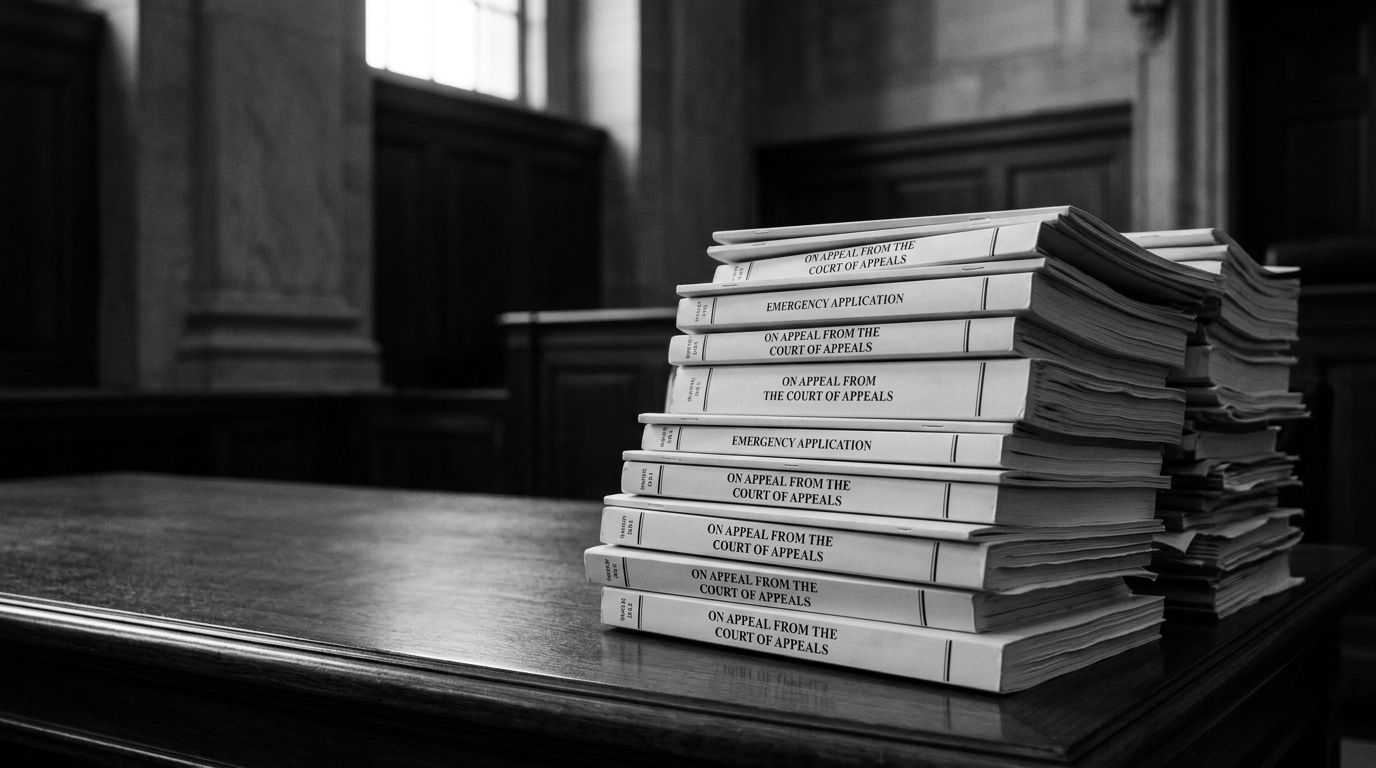
The U.S. Supreme Court is confronting a sharp rise in emergency filings, increasing the pace and pressure on its fast-moving “shadow docket” as major disputes reach the justices on accelerated timelines. Officials have sought urgent intervention in cases tied to mail-in voting rules and White House infrastructure projects, putting high-stakes questions before the court without the longer schedule typical of merits cases.
The surge is unfolding as scrutiny of the institution intensifies. According to the source material, legislative proposals to expand the number of justices, impose term limits, and require an ethics code have gained visibility following recent rulings involving voting rights and executive authority. The court is not described as endorsing or rejecting those ideas, but the debate forms part of the broader environment in which emergency requests are now arriving.
In the current period described by the source Emergency filings push disputes onto the “shadow docket” In the current period described by the source The emergency docket has become a central route for litigants seeking immediate relief when disputes carry operational consequences. In the current period described by the source, urgent requests from the executive branch have included prominent fights over mail-in voting regulations and federal infrastructure initiatives linked to the White House. Because emergency applications move quickly, they can place consequential policy questions before the justices with less time and fewer procedural steps than standard merits review. The source material frames the moment as one where workload pressures and political attention are both rising at the same time. Circuit splits increase the chances of Supreme Court review Beyond emergency requests, the source highlights divisions in federal appellate courts on administration-related policies that leave different legal rules in place across the country. Those splits often raise the likelihood the Supreme Court will be asked to provide a single national answer. That degree of disagreement typically increases pressure for One major example involves mandatory detention policies affecting noncitizens. The source says the 1st Circuit recently joined a growing number of appellate courts in rejecting mandatory detention in this context, a step that produced a 7-2 circuit split. That degree of disagreement typically increases pressure for Supreme Court review, although the source notes that the timing and the specific procedural vehicle remain uncertain.
Voter-roll access dispute remains active in lower courts
In a separate case In a separate case, the source reports that the 6th Circuit declined to rehear a challenge involving the Department of Justice’s access to state voter rolls. The source says the administration has repeatedly lost in lower courts on this issue.
At the same time, the source points to emerging judicial support within the 6th Circuit, a development it says increases the likelihood that the voter-roll access fight could reach the Supreme Court for a final decision. Even with heightened emergency activity and deepening circuit conflicts, key unknowns remain: which disputes will be taken up on the merits, and how quickly the court will respond when urgent applications land.