DR Congo to Accept US Deportees Amid Diplomatic Push
DR Congo will accept US-deported third-country nationals this month, with costs covered by Washington and cases reviewed individually.
Cuneyd Erdogan ·
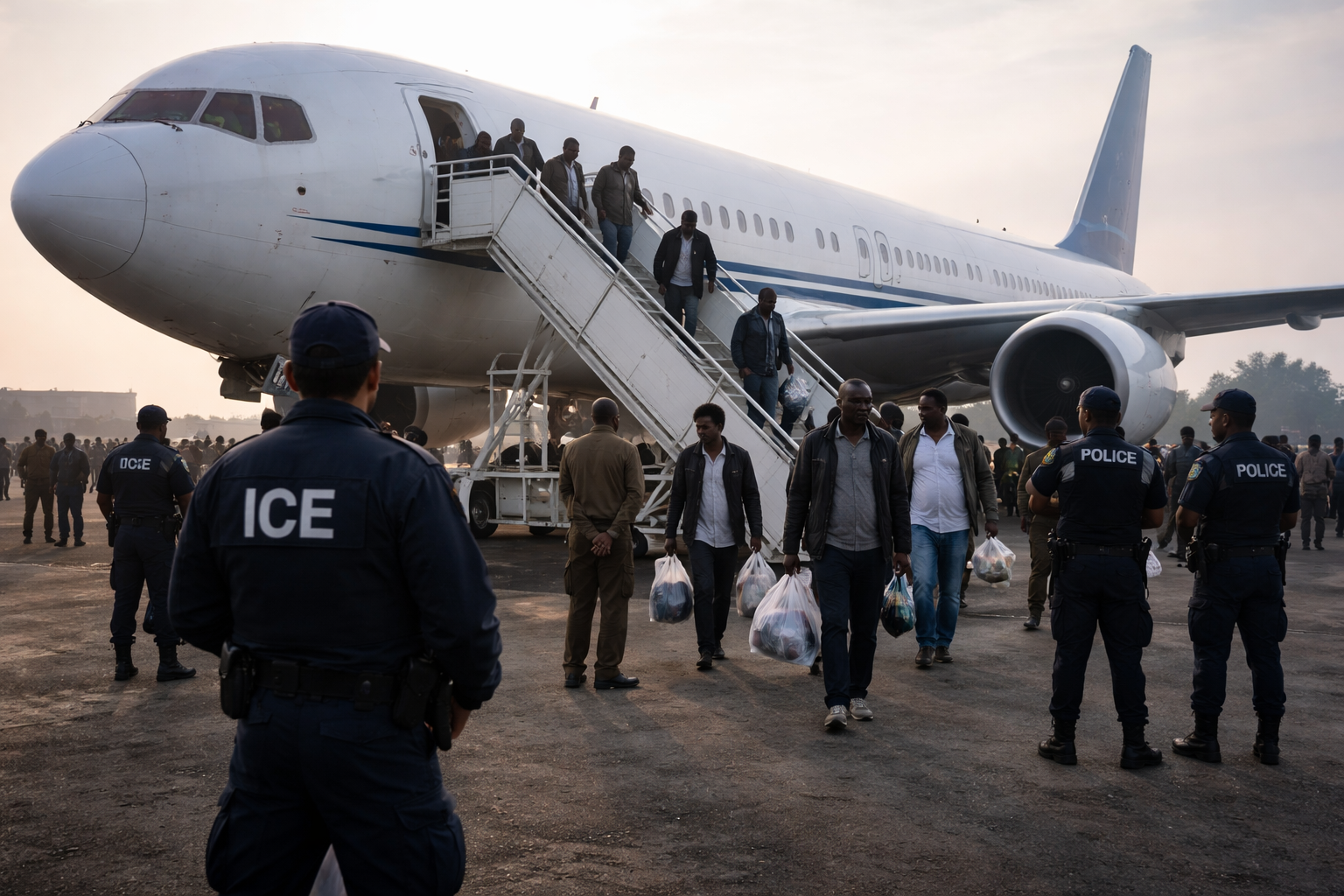
The Democratic Republic of Congo will begin accepting third-country nationals deported from the United States this month , according to a government statement confirming a new arrangement between Kinshasa and Washington. Officials said the United States will pay all costs linked to the transfers, placing the DRC among a small group of African countries cooperating with the U.S. on immigration enforcement.
Kinshasa stressed that the program is not designed to create a route to permanent settlement inside the country. The government said the stay would be temporary, and it also rejected the idea of automatic group transfers. Instead, officials said each person would be reviewed individually, indicating a case-by-case process rather than a blanket acceptance of deportees.
S. backing on regional security. S. administration. Officials have framed the deportation arrangement as part of a wider strategic alignment, with the DRC seeking greater leverage in addressing conflict and instability in its eastern provinces, where Rwandan involvement has been described as a persistent source of tension.
Officials also linked the evolving relationship to economic priorities, including the DRC’s critical minerals sector. The peace accord referenced by Kinshasa is described as multifaceted and includes provisions that would open a path for American corporate investment in the country’s mineral resources. The statement highlighted cobalt and coltan as examples of materials central to global supply chains for electronics and electric vehicle manufacturing.
What it means is that the DRC’s decision to accommodate U.S. deportation policy could strengthen its standing as a strategic partner at a time when Washington is focused on both migration management and resilient supply chains. For global markets, the emphasis on cobalt and coltan underscores how diplomatic engagement can intersect with competition for inputs used across technology and energy-transition industries.
At the same time, key uncertainties remain. The government said there will be no automatic group transfers and that each case will be reviewed, but it did not provide further operational details in the statement. The rollout will be watched closely as an indicator of how far the U.S.-DRC relationship is deepening and how it may shape U.S. diplomatic engagement in central Africa’s security landscape.