National Guard deployment in D.C. faces legal fight
National Guard deployment in D.C. continues a year on, as courts weigh legality and officials dispute crime data, costs, and troop limits.
Atlas Newsdesk ·
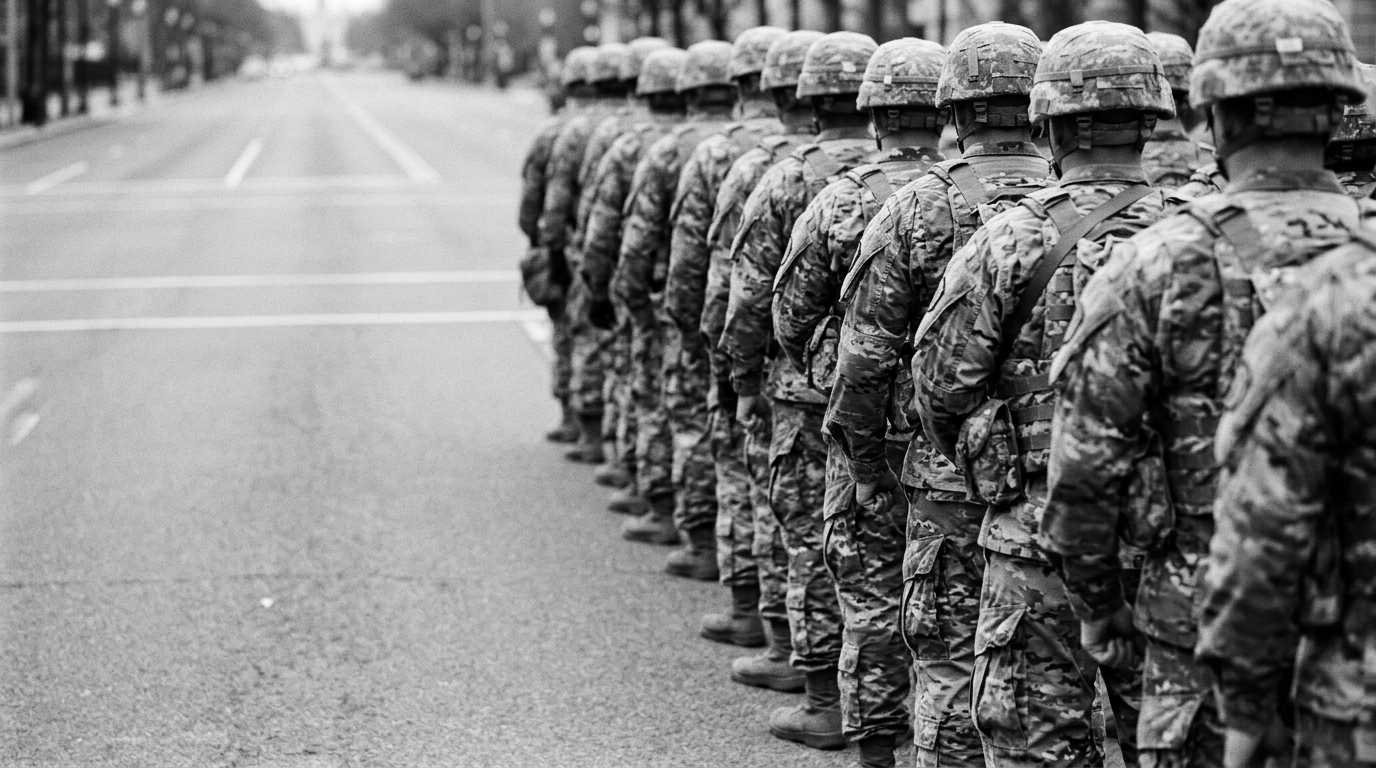
One year after President Donald Trump directed the Washington National Guard to operate in Washington, D.C., the mission remains active amid continuing legal and political disputes over its purpose, limits, and measurable results under federal law.
The deployment began in August 2025 under the Safe and Beautiful Task Force. Officials said 4,636 troops are still assigned, and estimated costs have reached $1.4 billion.
Competing claims over whether crime fell President Donald Competing claims over whether crime fell President Donald Trump The administration has argued that the continued military presence has contributed to an 88 percent reduction in crime, a statistic it has cited as a core rationale for extending the operation. An independent analysis by the Niskanen Center disputed that conclusion, saying the deployment has not produced a meaningful change in violent crime. The analysis also said violent crime was already trending downward before the Guard mission began. The source material describes no shared, agreed dataset between the administration and outside analysts. With measurements and baselines not aligned, the size of any change and whether it can be credited to the Guard deployment remain under debate in public statements and in court.
Posse Comitatus questions and unclear boundaries
Attorney General Brian Schwalb and Mayor Muriel Bowser Legal opposition has centered on whether the mission crosses restrictions on using the military for domestic law enforcement. Critics, including D.C. Attorney General Brian Schwalb and Mayor Muriel Bowser, have said the operation violates the Posse Comitatus Act by putting military personnel in roles that resemble policing. The administration has maintained that the ongoing deployment is lawful and aimed at public safety in the nation’s capital. The source material does not describe rules of engagement or the specific authorities given to troops on the ground, and that lack of clarity has been part of the wider controversy about what the Guard can and cannot do while deployed. Patrol locations, surveillance tools, and Senate scrutiny Where troops are seen patrolling has become another point of contention. Critics have said the operation’s visible footprint is concentrated around tourist areas rather than neighborhoods with the highest violent-crime rates, prompting questions about how the mission’s day-to-day focus matches its stated objectives.
A February Senate report added further concerns, including warnings about potential politicization of the armed forces. The report also highlighted the use of advanced surveillance software to monitor civilian activity, intensifying arguments over oversight, privacy, and the use of military-linked tools in a domestic setting.
Courts keep the mission going as the case Courts keep the mission going as the case proceeds The Guard presence is continuing in part because of ongoing litigation. A federal judge initially ordered the mission to end in November, but a federal appeals court later issued a stay, keeping the deployment in place while the case moves forward.
With the mission’s legality still contested and effectiveness claims sharply disputed, the operation remains active without a definitive resolution on either the legal boundaries or the outcomes cited by supporters and opponents.