
Dalio says AI bubble faces risk from billionaire selling
Ray Dalio says an AI bubble could burst if wealthy investors sell assets, highlighting risks around concentrated stock holdings.
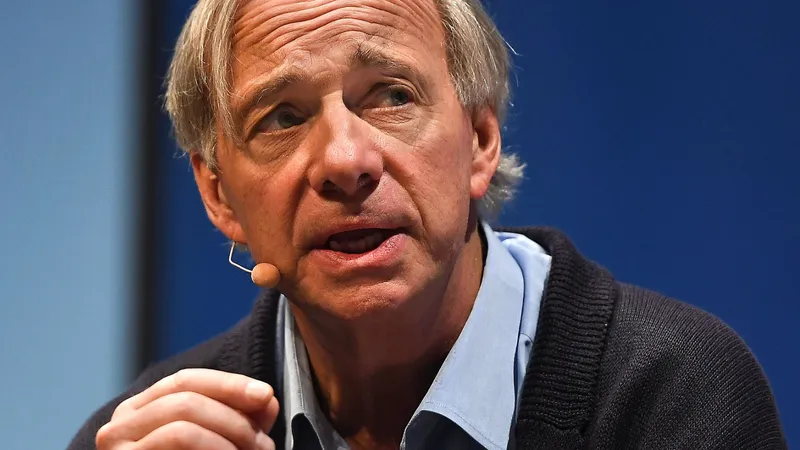
Ray Dalio says an AI bubble could burst if wealthy investors sell assets, highlighting risks around concentrated stock holdings.
The warning comes alongside concentration figures from Creative Planning: Nvidia, Apple and Microsoft together represent more than 21% of the S&P 500. That compares with a combined peak weighting of 13.4% for IBM, AT&T and ExxonMobil during the mid-1980s, according to the firm's comparison.
Speaking at a Singapore conference on October 7, the Bridgewater Associates founder described speculation surrounding artificial intelligence as approaching a potential breaking point. His remarks offered a possible trigger for a reversal, not evidence that wealthy shareholders had begun liquidating their investments.
Dalio links taxes to asset sales
Dalio's argument rests on the difference between owning valuable investments and having money available to spend. He suggested that obligations requiring wealthy people to convert holdings into cash, including a wealth tax, could help bring a speculative cycle to an end.
That is a conditional argument about selling pressure, rather than a warning tied to an identified legislative deadline. Dalio did not identify a particular wealth-tax proposal, jurisdiction or implementation date in the reported remarks, leaving the scale and timing of any tax-related sales unspecified.
The distinction matters for interpreting the warning: an investor's reported fortune is not necessarily cash that can be deployed without selling something. In Dalio's scenario, the vulnerability emerges when owners need buyers for assets whose valuations underpin their wealth.
Three companies carry greater index weight
Creative Planning's figures place the current leading trio above the historical comparison by more than seven percentage points. The firm characterized the S&P 500's concentration in its three largest constituents as the highest on record.
The comparison measures the weight of individual companies in the benchmark, not the proportion of their business attributable to artificial intelligence. It therefore provides context for the reach of a possible share-price reversal, but does not by itself establish that those companies are overvalued.
If Nvidia, Apple and Microsoft decline together while other constituents remain unchanged, their combined weighting would transmit those losses into the broader index. Concentration is consequently relevant to investors holding the benchmark, even if they have not separately selected an AI-focused portfolio.
Asset sales define the conditional paths
If the selling Dalio envisages materializes, the immediate question would be whether buyers absorb it without a sustained price decline. If prices instead fall and affected households reduce spending, that would create a possible channel from portfolio losses to the wider economy; his remarks supplied no estimate of that effect.
For Nvidia and its peers, a share-price decline would not, by itself, establish a deterioration in operating performance. A broader technology-sector reversal would require investors to distinguish pressure from shareholder sales from changes in businesses' revenues, costs or investment plans.
If wealthy holders face no new need to sell, Dalio's proposed trigger may not emerge, while the benchmark's concentrated exposure would remain. Assessing his warning therefore requires evidence of actual asset disposals, identifiable tax obligations and company performance, rather than treating a possible catalyst as an imminent event.
More stories
- Banks join AI earnings test as bond yields complicate bets
- Europe puts emerging-market debt defenses under scrutiny
- Zelensky offers refinery halt if Russia stops energy strikes
- Lyra tops Sonoma on 7 of 11 comparison metrics
- Babiš's ANO wins no first-round Czech Senate seats
- Turkey seeks 187.653 billion lira fund recoveries
- Russian diesel sanctions lift tests Trump's GOP support
- Putin says Russia can supply oil to US
Latest news
- Lebanon seizes 500 kg explosives tied by officials to Hezbollah
- Rwanda to Host Formula 1 Grand Prix by 2030, Bypassing South Africa
- Audi Invests in Swiss Campus for Formula 1 Team
- F1 Teams Divided Over Spending Rule Changes Amid Talent Drain Warning
- FIA Addresses F1 Power Unit Glitch After Malaysia Grand Prix
- Nintendo Life polls 673 readers on Ocarina pronunciation
- ODM power-sharing demand tests Ruto as Washington watches Kenya stability
- Turkey's science medals give Washington a new NATO tech problem