Cyclosporiasis outbreak puts produce safety in sharp focus
CDC figures show the cyclosporiasis outbreak has reached 34 states, with 1,645 confirmed cases reported since May 1.
Ayla Demirhan ·
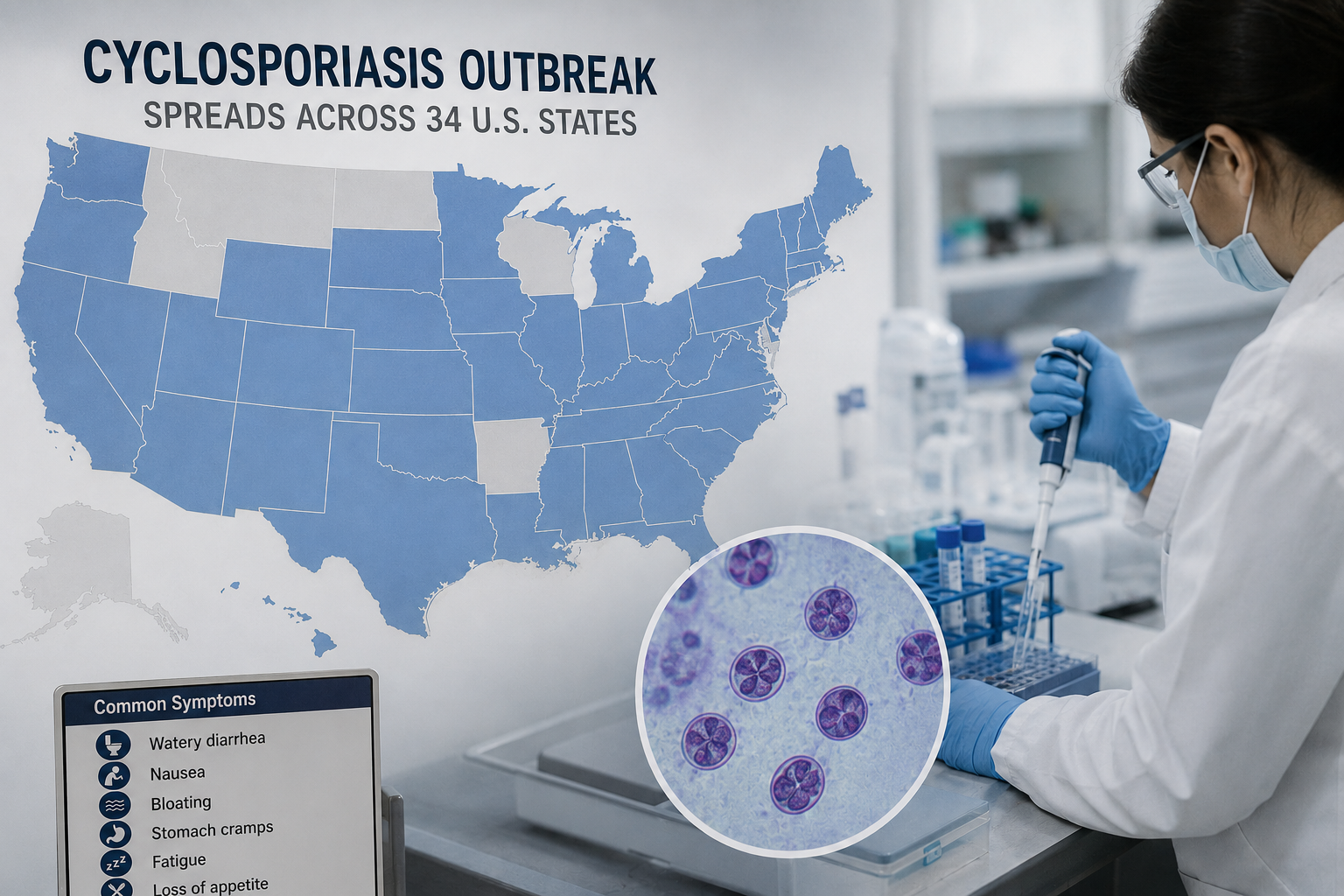
The cyclosporiasis outbreak has reached 34 states, with CDC figures putting confirmed illnesses at 1,645 since May 1. The source remains unidentified.
Cyclosporiasis is an intestinal infection caused by Cyclospora, a parasite linked to food or water contaminated with human feces. Symptoms usually begin about a week after exposure and can include appetite loss, stomach cramps, nausea and frequent diarrhea.
The illness is uncomfortable for many patients and can be disruptive because symptoms may persist long enough to force medical visits, missed work or changes in eating habits. Treatment is available, with Bactrim commonly used, but diagnosis can be slowed by testing that the source described as costly and requiring several days.
Leafy greens under scrutiny
Investigators have not identified the food item behind the current outbreak. Previous cyclosporiasis investigations have involved raspberries, basil, mesclun lettuce, snow peas and cilantro, placing both berries and raw greens under consumer scrutiny.
The International Fresh Produce Association, a global trade group, cited heavy rain and sewer overflows as possible contamination pathways in its discussion of the current outbreak. That matters because fresh produce often passes through farms, packing sites, distributors and retailers before reaching a refrigerator, making the original point of contamination difficult to isolate.
Unlike some bacterial risks, Cyclospora is not easily managed by a quick rinse at home. The source said food must be cooked to at least 158 degrees Fahrenheit to kill the parasite, a standard that offers little comfort to consumers buying salad greens or berries intended to be eaten raw.
Midwest cases stretch wider
The Midwest appears to be the main cluster based on tracked cases, according to the source. Yet the reported spread across 34 states shows why public health officials and food sellers face a broader tracing problem than a single local outbreak.
The confirmed case count also may understate the scale of illness. Some people recover at home without seeking care, while others may not be tested specifically for cyclosporiasis, leaving infections outside official totals.
CDC figures cited in the source list 1,645 confirmed cases since May 1, alongside more than 5,100 additional cases requiring further analysis. That gap between confirmed and unresolved reports is the central uncertainty for health officials, retailers and consumers trying to judge the true size of the outbreak.
Three paths for produce
If investigators identify one contaminated product or supplier, the response could narrow quickly through targeted recalls and advisories. The company or companies named would face the most direct hit through withdrawals, legal exposure and lost consumer trust, while the wider produce sector could contain damage by showing traceability records.
If the source remains unclear, the burden spreads across the raw produce category. Consumers may shift away from salads, herbs and berries toward cooked vegetables or other foods, while retailers may face more questions about sourcing, washing claims and supplier audits.
If case reviews show the outbreak is larger than confirmed data now indicate, public health agencies could intensify warnings and testing guidance. The global macro effect would be limited unless consumer demand shifts broadly across produce categories, but importers, growers and grocers would still face pressure to document sanitation controls.
The immediate indicators are the unresolved case total, any food item named by investigators and whether the state map keeps expanding. Until those pieces become clearer, the practical risk for shoppers centers on raw produce that cannot be cooked without changing what it is.