Legionnaires’ disease cases rise to 14 in Manhattan area
Legionnaires’ disease cases rose to 14 on Manhattan’s Upper East Side as city health officials test cooling towers for the source.
Ayla Demirhan ·
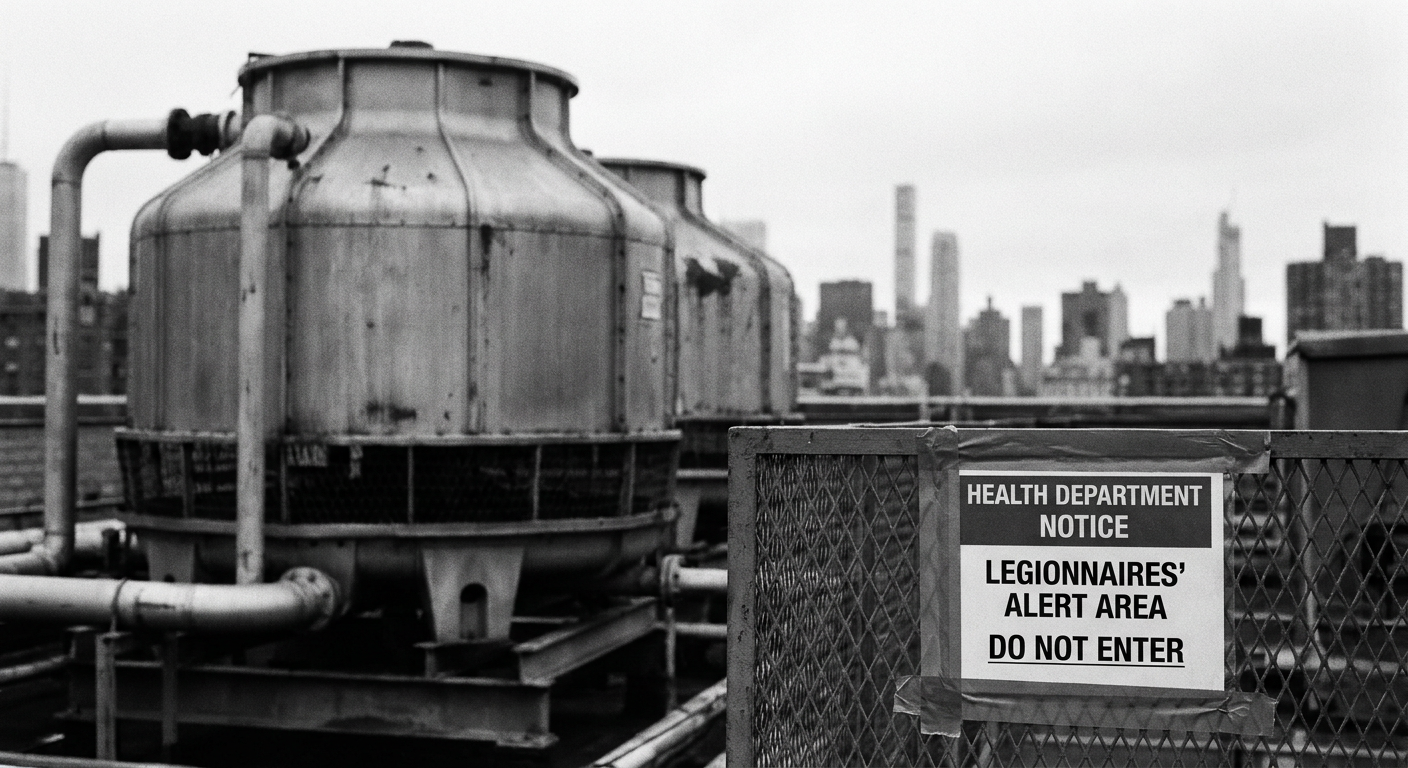
Legionnaires’ disease cases on Manhattan’s Upper East Side rose to 14 as New York City health officials search for the source.
Fourteen cases in three ZIP codes
The New York City Health Department said Sunday that the confirmed cases are concentrated in Carnegie Hill and Yorkville. The count has climbed from two cases reported Thursday, making the latest update a sharp expansion of the known outbreak.
The city’s health alert applies to people who have lived in, worked in, or visited ZIP codes 10028, 10128, and 10075 since late June. Officials said anyone in that group should contact a healthcare provider if they develop fever, cough, difficulty breathing, or other flu-like symptoms.
The department has not identified a single building or tower as the source. Its public guidance instead treats the area as an exposure zone while investigators work through possible sites.
Cooling towers face city testing
City investigators are focusing on cooling towers, the building equipment often placed on rooftops to support air-conditioning systems. The health department said the likely source is a tower contaminated with Legionella bacteria, but officials have not yet determined which one.
Cooling towers can release mist, and that mist can carry bacteria capable of causing the pneumonia-like illness when inhaled. The department said it will sample and test all cooling towers in the affected area as part of the investigation.
Legionnaires’ disease is not spread through ordinary person-to-person contact, according to the city. The department said the illness can be treated with antibiotics, but delayed care can make it dangerous.
“Legionnaires’ disease is deadly but can be effectively treated if diagnosed early,” NYC Health Commissioner Dr. Alister Martin said in a statement. He urged higher-risk residents to pay close attention to early symptoms and seek medical care promptly.
Older adults face sharper risk
Martin identified three groups that should be especially alert: people age 50 and older, smokers, and people with chronic lung conditions. Those risk factors matter because the disease can progress from flu-like symptoms into serious pneumonia.
The city said overall public risk remains low. Officials also said residents can continue to bathe, shower, cook, and use air conditioners, a practical point after an extreme heat wave over the weekend.
The direct effect for building owners and managers is operational rather than speculative: cooling towers in the area are now subject to sampling and testing. If a contaminated tower is found, the next step would be remediation under city health direction.
Cases, towers and next steps
If testing quickly identifies one contaminated tower, the public-health response can narrow from neighborhood-level alerts to targeted cleaning and follow-up monitoring. That path would limit broader disruption, keep the focus on the affected building system, and give other property operators a clearer compliance signal.
If new cases continue to appear before a source is confirmed, the city may have to widen testing or extend public messaging across nearby blocks. The mechanism is straightforward: more diagnoses can expand the suspected exposure map, increasing pressure on health staff and on building operators with similar equipment.
If no tower tests positive, uncertainty would persist for residents and officials because the exposure route would remain unresolved. For the wider real estate and building-services sector, the episode reinforces the importance of tower maintenance, documentation, and rapid access for health inspections.