Clorox’s 6% Yield: Value or Value Trap?
Clorox’s 6% dividend attracts investors, but weak volumes and operational risks suggest a slow recovery that could impact value-focused portfolios.
Jurgen Goldmeier ·
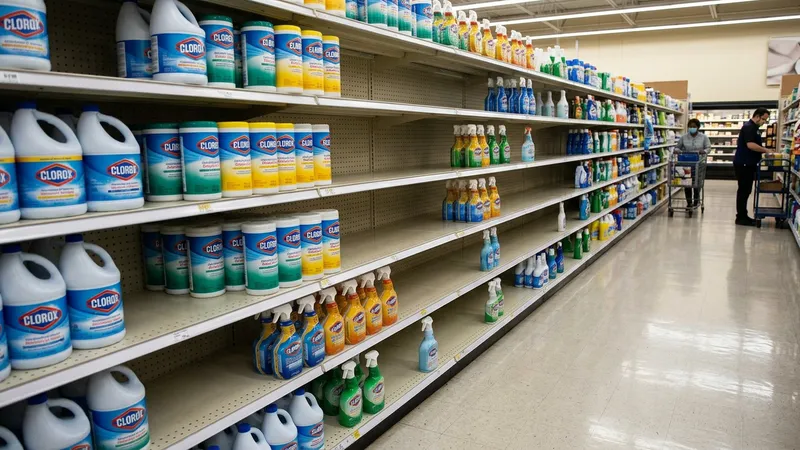
Clorox’s 6% Yield: Value or Value Trap? A 6% dividend yield and a forward price-to-earnings multiple of 14x position Clorox (CLX) as a statistical bargain in the consumer staples sector. Yet the stock trades near multi-year lows as the company struggles to recover from an August 2023 cyberattack that hammered its sales and supply chain. The question for the market is whether the attractive valuation compensates for a still-tenuous operational turnaround. ## Background Clorox is still digging out from the cyberattack that crippled its operations, causing a 16% year-over-year sales decline and a 10% volume drop in its most recent quarter. While the company reiterated its full-year guidance — a company's forecast for future performance — the print laid bare the challenge of regaining shelf space and consumer momentum. The company’s gross margin did improve to 40.0%, but that came against a backdrop of steep volume losses, not underlying strength. Consumer staples peers have navigated a tricky post-pandemic environment, balancing price increases against shoppers trading down to cheaper brands. The stock’s forward price-to-earnings multiple, a measure of its price relative to expected future earnings per share (EPS), is well below its historical average. A 6% yield on a blue-chip staple like Clorox is historically high, signaling that the market is pricing in significant risk to its earnings, not a return to stable growth. ## Why it matters The Clorox tape is a test case for value investing in the current market. Bulls see a classic deep-value play: a trusted brand with a high yield, temporarily depressed by a one-off event. The bear case, which has so far been the winning trade, is that the cyberattack permanently impaired its competitive position against rivals like Procter & Gamble and private-label producers. The high dividend could become a liability if cash flow does not recover quickly enough to fund it without adding debt or cutting investment. Investors positioned for a quick, V-shaped recovery in Clorox's volumes are on the wrong side of this trade. A slow grind back means capital is trapped in an underperforming stock while market breadth, or the number of stocks participating in a rally, remains narrow and focused elsewhere. A failure by a major staple to hold volume would be a negative read-through for the entire consumer defensive sector, suggesting pricing power has reached its limit. ## What to watch The key observable is the company’s next quarterly report, expected in early May 2024. The market will look past headline numbers for explicit guidance on volume recovery for the coming quarters. Any sign that the company is failing to recapture lost market share or is being forced to increase promotions, hurting margins, would validate the bear case. Conversely, a clear inflection in volume trends and confirmation of full-year guidance would suggest the turnaround is on track, forcing shorts to cover.