Chinese magnetic sensor claims 500m steel-hull detection
Chinese researchers report a dust-sized Hall-effect sensor with clearer signals; they cite a theoretical 500-meter steel-hull detection range.
Jason Kwon ·
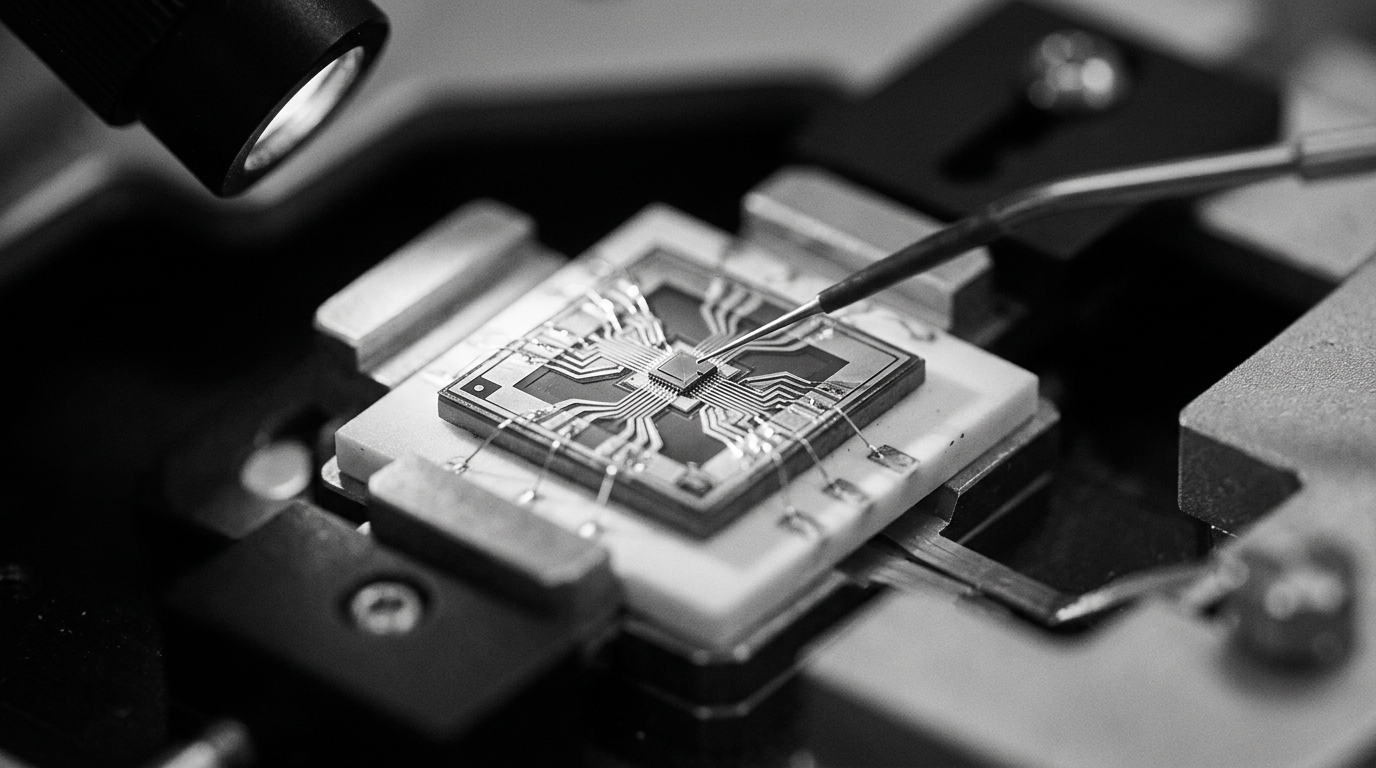
Researchers at the Chinese Academy of Sciences say they have developed a microscale Hall-effect magnetic sensor designed to improve signal clarity while staying extremely small, targeting a long-running noise limitation in miniaturised components. The work was carried out by a joint team from the Hefei Institutes of Physical Science and the Ningbo Institute of Materials Technology and Engineering, and the results were published in Physical Review Letters .
Hall-effect sensors are widely used because they can translate changes in a magnetic field into a small voltage, supporting fast and relatively low-cost measurement in mass-market and industrial equipment. The researchers listed common applications including smartphones, smartwatches, automotive wheel-speed detectors, and medical scanners.
Hall-effect sensors and the miniaturisation constraint
Engineers have long described a trade-off when shrinking Engineers have long described a trade-off when shrinking magnetic sensors: designs that push for smaller size and higher sensitivity can also amplify noise, making the output less reliable in practical conditions. In the researchers’ framing, this signal-to-noise constraint has been a bottleneck for compact components that still need to pick up weak magnetic-field changes. The team said its new device is intended to bypass historical signal-to-noise limits in this category of sensor hardware. They presented the approach as an attempt to ease the sensitivity-versus-noise dilemma that can appear when magnetic sensors are aggressively miniaturised for modern electronics. A dust-sized chip built to separate weak signals According to the researchers, the component keeps a microscopic footprint while improving the ability to distinguish faint magnetic signals from background interference. They described the resulting microchip as no larger than a grain of dust.
Chinese Academy
The core technical claim is that the sensor can register weak magnetic fields without producing the heavy noise that typically accompanies miniaturisation. The researchers said that if the behaviour holds through manufacturing and system integration, designers could potentially keep sensors small without sacrificing usable signal output.
The 500-meter steel-hull metric and what remains unproven
Alongside consumer and industrial uses, the team provided a long-range detection figure as a theoretical projection. The researchers said the sensor could, in theory, detect the faint magnetic signature of a large steel-hulled object—such as a submarine—from a distance of 500 meters.
They emphasised that this distance is a laboratory-stage theoretical estimate, not a demonstrated field capability. The same statements also noted that any commercial path would depend on whether the design can be manufactured at scale and integrated into existing mobile-device architectures.
For stakeholders, the near-term unknowns highlighted by the researchers are practical engineering hurdles rather than laboratory results alone: scalability, consistency in production, and compatibility with current device designs. Until those issues are resolved, the sensor’s most attention-grabbing range figure remains a projection rather than an operational feature.