China Halts Taiwan President Lai's First Africa Visit
China's diplomatic pressure grounded Taiwan President Lai's first trip to Africa, a move that revealed the limits of European support for the island democracy.
Lauren Collins ·
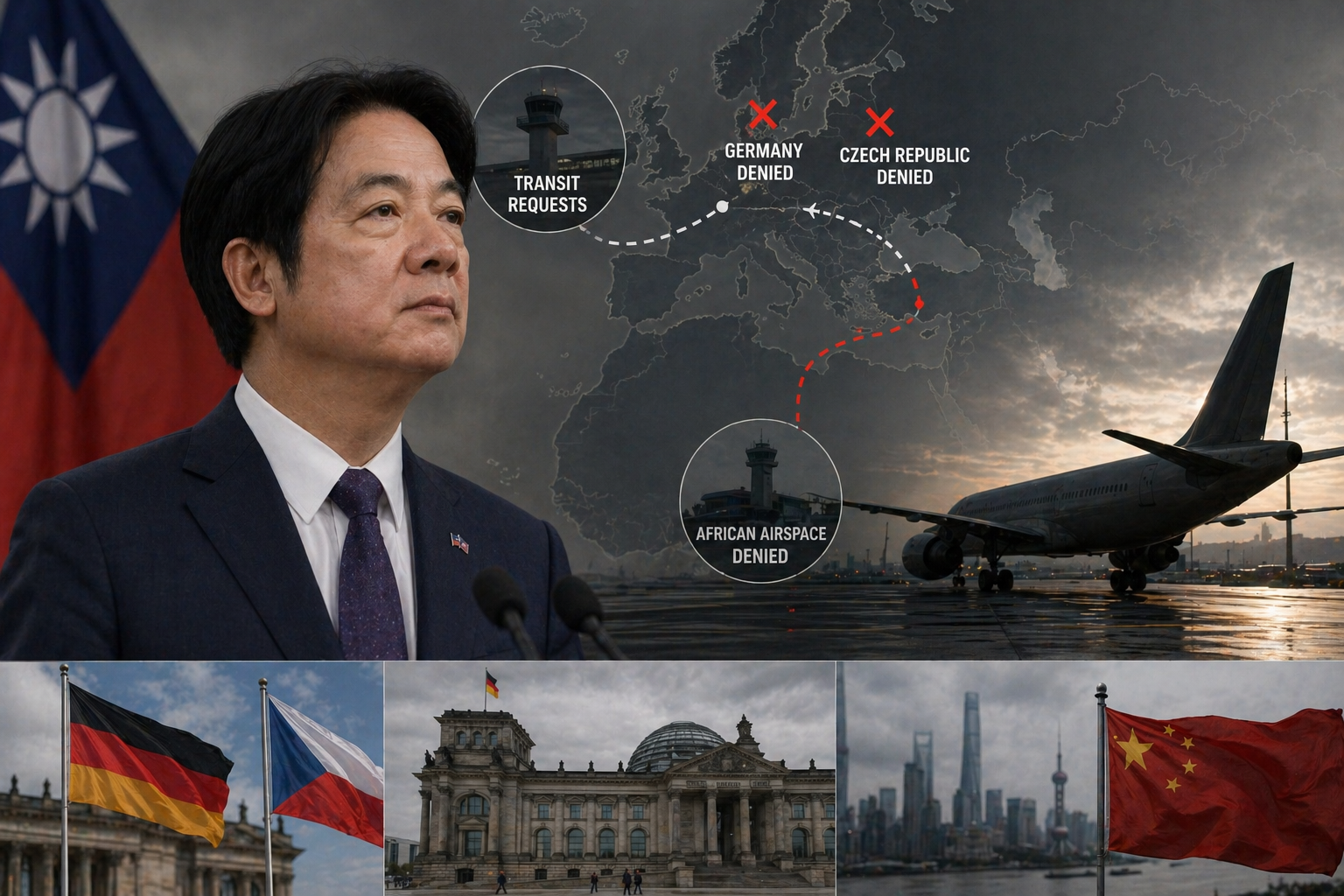
Diplomatic Blockade Halts Inaugural Trip
A coordinated diplomatic blockade attributed to Beijing has grounded Taiwan President Lai Ching-te, forcing the cancellation of his first presidential trip to Africa. Sources state the move successfully isolated the leader of the self-ruled democracy after several nations allegedly acted under Chinese pressure.
President Lai had planned a state visit to the Kingdom of Eswatini, Taiwan’s only remaining formal diplomatic partner on the African continent. The trip was thwarted when three nations—Mauritius, Seychelles, and Madagascar—revoked overflight permits for his official aircraft.
These countries control critical Flight Information Regions (FIRs) in the Indian Ocean, which are vast zones of administered airspace. By denying access to these FIRs, they effectively cut off the most direct flight paths from Asia to southern Africa, rendering the trip logistically impossible.
Europe Denies Emergency Transit Request
Following the airspace closures, Taiwanese officials launched a 48-hour effort to salvage the mission by securing a transit stop in Europe. Urgent requests were made to several countries, including Germany and the Czech Republic, to allow Lai's plane to refuel and continue its journey.
However, both European nations declined the request after internal deliberation. According to officials familiar with the discussions, Berlin determined that permitting an official Taiwanese aircraft carrying the president to land in Frankfurt would be diplomatically problematic.
Reports indicate that Beijing learned Germany was considering the request and subsequently contacted German officials to pressure them into denying the stopover. This intervention underscores China's proactive strategy to limit Taiwan's presence on the global stage.
Implications of a Deepening Isolation
The incident demonstrates the extensive reach of China's influence and its effectiveness in constraining Taiwan's international engagement. It serves as a significant diplomatic challenge for President Lai early in his tenure, whose Democratic Progressive Party is viewed by Beijing as advocating for formal independence.
The unwillingness of key EU states to assist Taipei also highlights a cautious European approach. While maintaining unofficial friendships with Taiwan, nations like Germany are simultaneously seeking to stabilize relations with Beijing and hedge against geopolitical uncertainty, particularly concerning potential shifts in U.S. foreign policy.