China Court Ruling Limits AI Job Termination Power
A landmark legal ruling in China protects an employee fired after AI automated his job, setting a new precedent for labor rights in the age of automation.
Jason Kwon ·
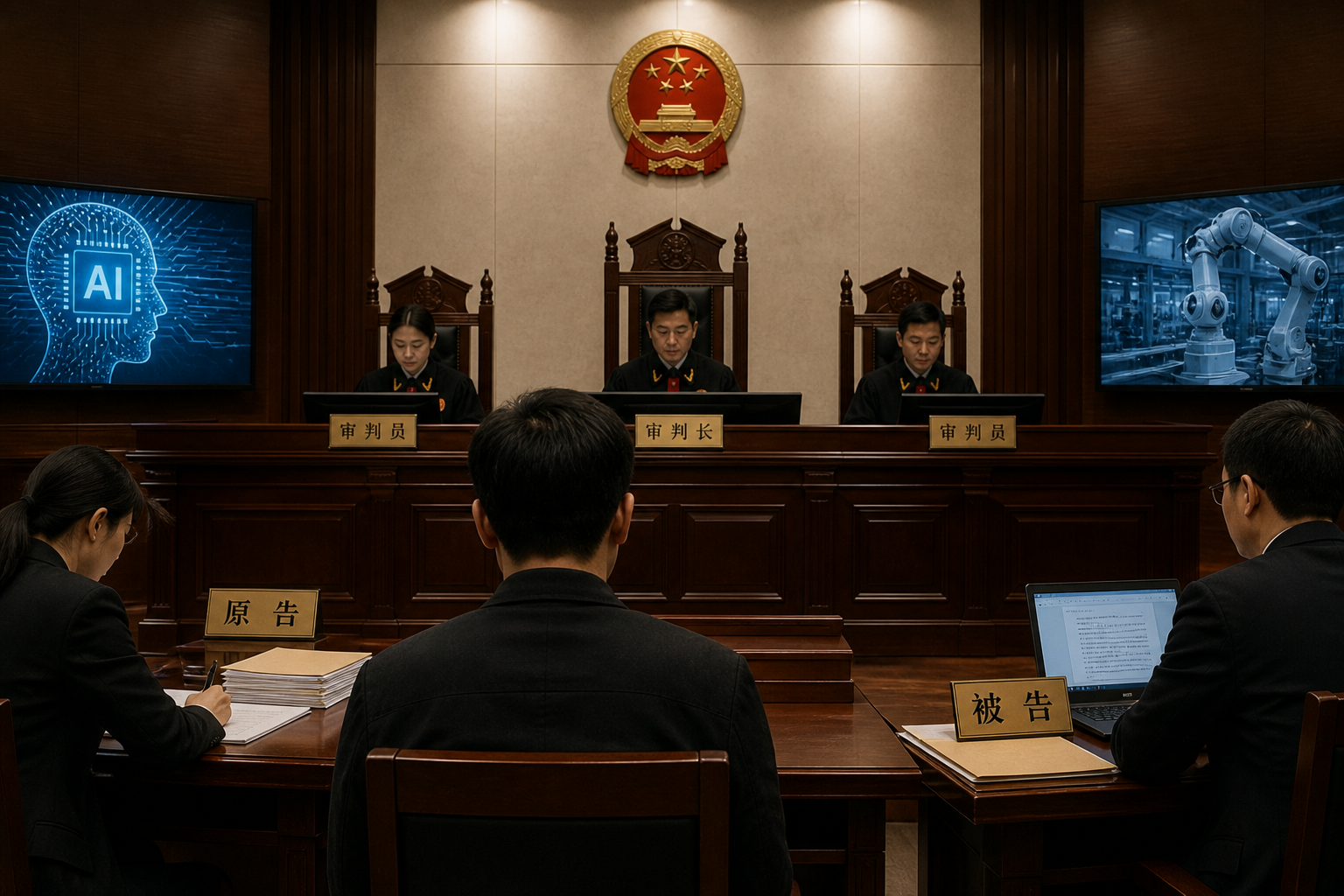
A landmark Chinese court ruling underscores the growing tension between AI progress and labor stability, prohibiting firms from firing staff to replace them with AI systems.
The decision, published by the Hangzhou Intermediate People’s Court on April 28, establishes a significant legal safeguard for workers. It directly addresses the conflict between the country's push for technological dominance and its concurrent need to maintain a stable labor market.
The Hangzhou Precedent
The case involved a quality assurance professional, identified only as Zhou, at an unnamed technology firm in eastern China. His core responsibilities included verifying the output accuracy of large language models.
After an AI system automated his primary duties, the company sought to demote Zhou, a move that included a 40% reduction in his salary. When the employee refused the reassignment, he was terminated.
The company justified its action by pointing to staffing reductions made possible by artificial intelligence. However, after the dispute went through arbitration and entered the court system, the judiciary found the termination to be illegal and required a compensation package for Zhou.
Legal Framework vs. Tech Ambitions
In its published statement, the court clarified that technological progress is not, by itself, a legally sufficient reason for a company to unilaterally terminate an employment contract. The ruling emphasized that the company's circumstances did not meet the necessary legal standard.
Legally permissible grounds for termination, such as major business downsizing or severe operational difficulties making it “impossible to continue the employment contract,” were not present. The firm could not prove that these conditions had been met.
This legal stance highlights a major policy challenge for Beijing. The Chinese Communist Party is driving a national strategy to lead the world in AI, yet it must also prioritize social stability amid a slowing economy and elevated youth unemployment, making job preservation a critical goal.
A Pattern of Worker Protection
The Hangzhou ruling is not an isolated event. It builds upon a precedent set in December by another Chinese court, which similarly found that AI implementation was not a valid reason for a mapping company to dismiss an employee.
Together, these cases suggest the emergence of a judicial trend in China that prioritizes worker protections in the face of rapid automation. The rulings signal to employers that efficiency gains from AI cannot come at the expense of legal labor obligations.
As a result, companies in China looking to integrate AI must now carefully navigate these legal constraints. The long-term effects on the pace of AI adoption and corporate strategy remain to be seen, as firms must now balance innovation with a legal landscape that favors labor law compliance.