China AI education plan sets five-year rollout in schools
China AI education plan sets a five-year push to embed AI learning across all school stages while officials weigh innovation gains against job stability.
Ayla Demirhan ·
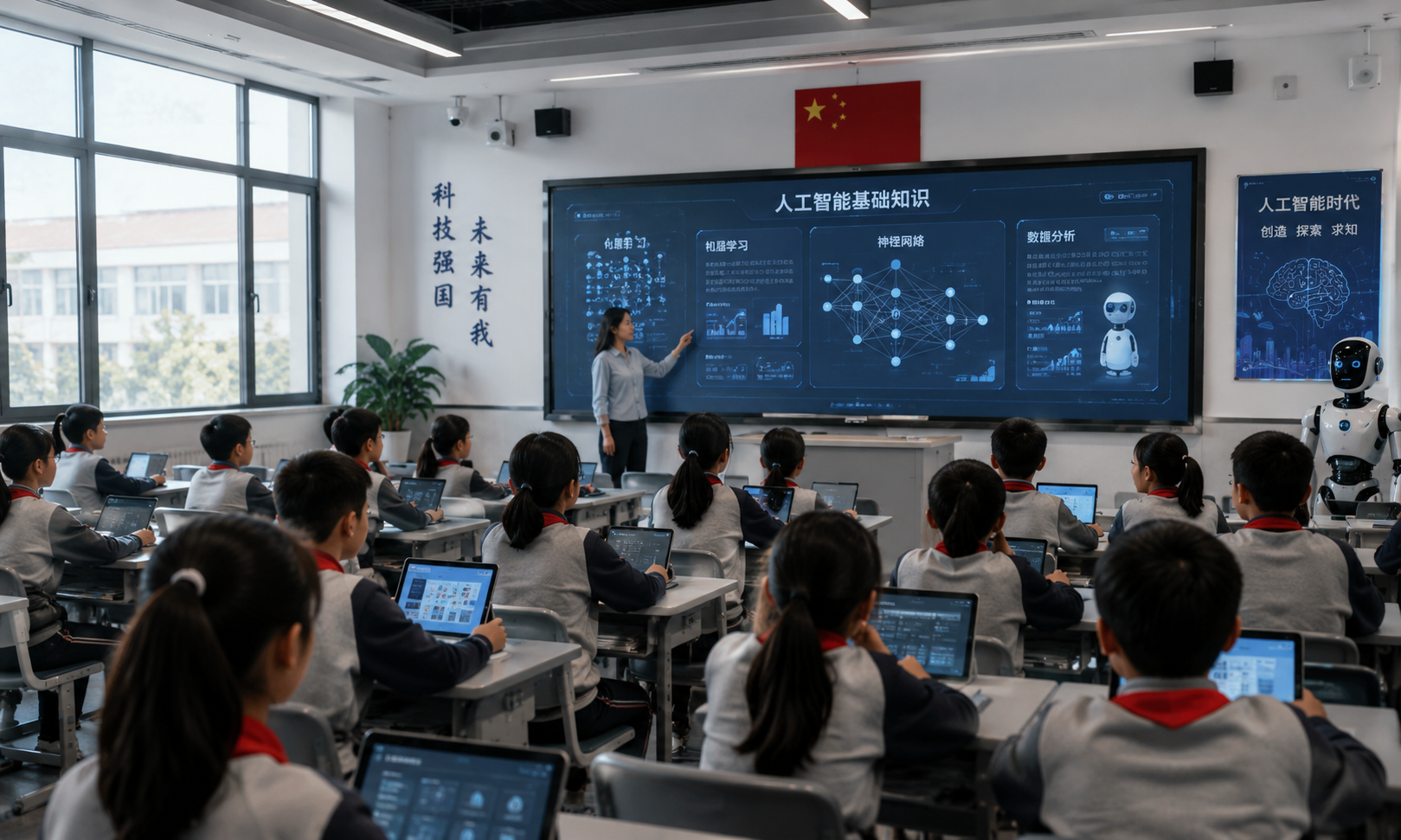
China AI education plan outlines a five-year push to weave artificial intelligence into classrooms from early years to higher education. The State Council says the goal is to raise AI literacy and problem-solving skills nationwide.
The blueprint, released Monday, positions AI competence as a baseline capability for students and directs local governments to carry out the program. The initiative fits President Xi Jinping’s longer-running drive to build leadership in advanced technologies as the economy seeks new sources of growth.
A nationwide blueprint aimed at AI literacy
According to the State Council’s plan, authorities are instructed to expand AI education “throughout all educational stages” and strengthen students’ ability to identify and solve problems using AI-related knowledge. While the document is framed as an education policy, it also signals how closely talent development is being tied to national technology priorities.
The five-year timeframe suggests an effort to standardize curricula and teaching capacity rather than rely on pilot programs. It also places pressure on provinces and cities to translate central guidance into classroom instruction, teacher training, and assessment standards.
Xi has repeatedly emphasized the need to cultivate high-tech talent, and the new plan echoes that theme by treating AI as a foundational skill. China, the world’s second-largest economy, has been searching for fresh growth drivers amid a changing external environment and domestic structural challenges.
Tech competition and export controls shape the backdrop
The education push comes as Beijing tries to improve its position in so-called frontier technologies, where competition with the United States has intensified. In recent years, Western governments have tightened export restrictions on certain advanced chips and other high-end hardware, increasing the importance China places on domestic capabilities.
Against that backdrop, policymakers have highlighted the need to nurture homegrown companies and research strengths that can thrive despite constraints on access to leading-edge components. Expanding AI skills across the workforce pipeline, starting in schools, is one lever the government can pull to support that objective over the medium term.
Education reforms alone do not resolve hardware bottlenecks, but they can influence the supply of engineers, product builders, and applied AI users. By framing AI as a universal competency, the plan signals that adoption is expected beyond elite research programs and into broader segments of society and industry.
Balancing productivity gains with employment stability
China’s leaders are also attempting to manage the labor implications of AI deployment. Officials have emphasized the potential for productivity improvements while remaining sensitive to social stability concerns, particularly in a labor market described as fragile and marked by elevated youth unemployment.
The Ministry of Education has previously called on universities to provide AI training that improves students’ employability, reflecting a policy link between digital skills and job outcomes. The new State Council blueprint extends that emphasis by treating AI literacy as part of general education rather than a niche specialization.
Recent court decisions add another layer to the government’s balancing act. In several cases, Chinese courts have found that employers cannot dismiss workers solely to replace them with AI systems, underscoring an official preference for technological upgrading that does not translate directly into abrupt job losses.
For businesses, these signals point toward a policy environment that encourages AI adoption while discouraging labor practices perceived as overly disruptive. For schools and universities, the plan implies rising demand for instructors, teaching materials, and standards that can deliver practical AI understanding at scale.
Implementation details, including how AI content will be taught at different ages and how teacher capacity will be expanded, will likely determine the program’s impact. Observers will also watch how local governments roll out the directive and whether employment protections keep pace with workplace automation.