California wildfire crews strained amid federal staffing cuts
California wildfire crews face overlapping incidents in heat and dry weather, as officials cite federal staffing reductions adding new pressure.
Atlas Newsdesk ·
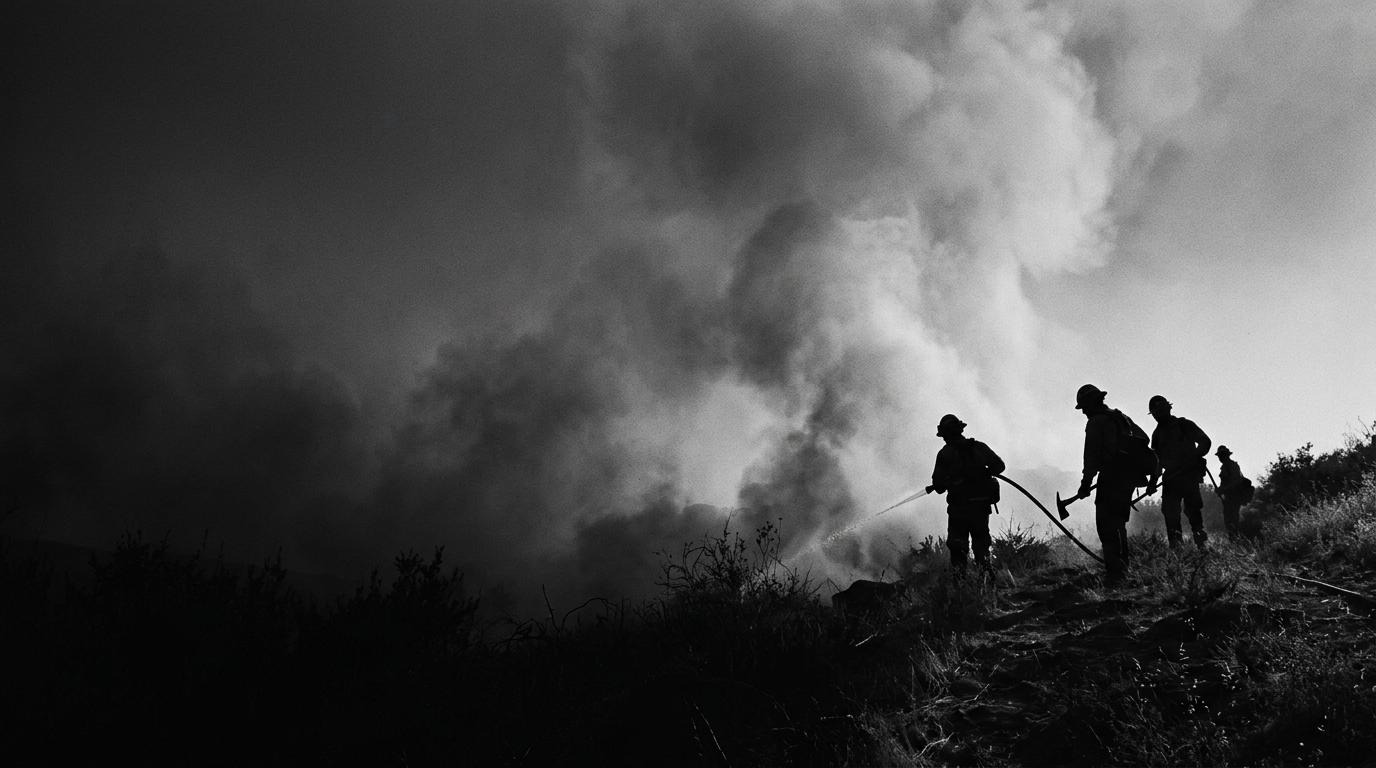
Firefighting crews in California are working across multiple active wildfires as persistent heat and dry conditions raise the risk of fast-moving, high-intensity fire behavior, officials said. At the same time, federal staffing reductions at agencies that support wildfire response are adding pressure to operations that are already stretched, according to officials and a federal employees group.
Officials pointed to two incidents as examples of the range of demands now competing for people and equipment: the Timber Fire in Big Sur and the Bug Fire near Reno. They said crews are balancing containment efforts in difficult terrain and weather, managing large burn footprints, and protecting nearby communities while several incidents draw from the same resource pool.
Timber Fire in Big Sur shows slow progress Timber Fire in Big Sur shows slow progress on the line Timber Fire As of Saturday, the Timber Fire had burned 4,655 acres and was 12 percent contained, officials said. They described the low containment figure as a sign of continuing difficulty securing parts of the fire line under current weather and fuel conditions. Officials said priorities have broadened beyond perimeter work toward protecting threatened areas as active fires persist. They added that community defense can require sustained staffing, specialized equipment, and tightly coordinated deployment, particularly when multiple incidents are competing for the same crews. Bug Fire near Reno expands evacuations and structure protection Officials said the Bug Fire near Reno has burned 93,381 acres and reached 58 percent containment. The fire has displaced at least 4,000 residents, increasing pressure on emergency systems as evacuations continue, officials said. Crews are also working to protect thousands of Crews are also working to protect thousands of structures in high-risk zones, officials said. They said this type of work can involve long operational periods and careful coordination as conditions shift, especially during hot and dry stretches that can speed up spread and increase intensity.
Federal workforce reductions add constraints for fire agencies
The Federation of Federal Employees said the current workload is unfolding alongside labor disruption within the federal workforce linked to wildfire response. The group said budget reductions and layoffs directed by the Department of Government Efficiency have removed more than 6,000 personnel from the U.S. Forest Service. Critics also cited administrative changes that include the Critics also cited administrative changes that include the closure of 57 research laboratories. They argue those closures weaken long-term preparedness by cutting research capacity used for planning, risk assessment, and improving response capability.
Nationwide fire numbers highlight a wider resource squeeze
Beyond California, officials reported 125 new fires nationwide and said about 29,363 personnel are currently deployed. Officials said the combination of reduced federal staffing and increasingly severe fire seasons is creating operational uncertainty for crews spread across many incidents.
Officials said containment has improved on some fires, but cautioned that conditions can change quickly. They also said it remains unclear how long resource constraints will last as the season continues.