Bulgarian election yields decisive win for Radev's party
Bulgarian election projections show Radev’s party winning 129 seats and 44% of votes, potentially ending years of instability and reshaping policy.
Lauren Collins ·
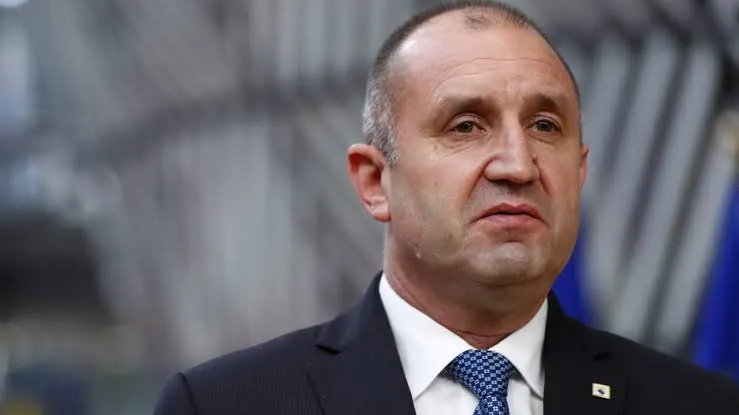
Projections from the polling firm Alpha Research show former President Rumen Radev’s Progressive Bulgaria party on course for an outright majority in Bulgaria’s general election, a result that could break a cycle of repeated votes and interim rule. The estimates put the party at 129 seats in the 240-seat parliament, based on an expected 44 percent share of the vote.
Bulgaria has held its eighth general election since 2021, reflecting prolonged difficulty in producing a durable governing coalition.
The projected outcome is a major setback for former Prime Minister Boyko Borissov, described as Radev’s main rival in the campaign. Borissov conceded soon after the projections were released. Alpha Research’s estimates indicate Progressive Bulgaria finished roughly 30 percentage points ahead of its closest competitor, giving it a margin rarely seen in Bulgaria’s fragmented party landscape.
If confirmed, an absolute majority would allow Radev’s party to govern without coalition partners, a significant change after years in which successive elections failed to generate stable parliamentary arithmetic. The country’s recent political period has been marked by caretaker administrations and stalled policymaking, including delays around budgets and legislation.
With 129 seats projected, Progressive Bulgaria would have the votes needed to pass key measures on its own, removing a central obstacle that has repeatedly derailed previous governing efforts.
Speaking in Sofia after the projections, Radev framed the result in broad terms, calling it a “victory of hope over distrust” and a “victory of freedom over fear.” He also pointed to corruption as a long-running issue his administration intends to confront. Observers are expected to focus on whether a single-party majority can translate into the political stability that has eluded Bulgaria through seven earlier electoral cycles.
The vote also carries implications beyond domestic governance, particularly for Bulgaria’s positioning inside the European Union and NATO. Radev has repeatedly opposed sanctions on Russia and has argued against providing military assistance to Ukraine. With a clear parliamentary majority, his government would have the capacity to formalize a shift in foreign policy consistent with those views.
Such a reorientation could strain relations with partners in Brussels and Washington, D.C., and may complicate efforts to maintain a unified Western approach to the war in Ukraine. The next immediate signals are expected to come from the formation of the new cabinet and its first policy decisions. EU and NATO counterparts are likely to watch closely in the coming weeks for concrete steps that clarify Sofia’s direction.