Brussels ties EU enlargement plans to checks on entrants
The European Commission proposed EU enlargement safeguards covering new members' voting rights for 15 years after they join.
Lauren Collins ·
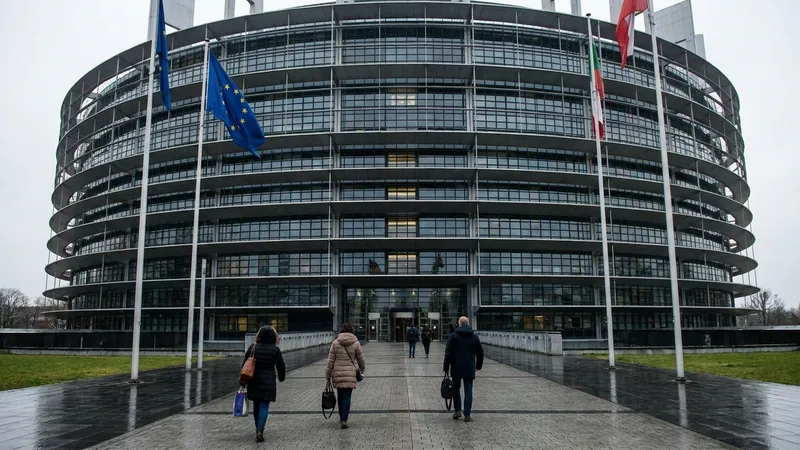
The European Commission proposed EU enlargement safeguards covering new members' voting rights for 15 years after they join.
The package, presented on October 6, 2026, also proposes restrictions on agricultural funding for Ukraine and broader access to selected EU activities before accession. These measures address different parts of the membership debate: political compliance, spending commitments and the pace of economic integration.
The Commission’s proposals need approval from the EU’s 27 existing members before taking effect. They are preparations for a larger union, rather than decisions admitting any candidate or fixing an accession date.
Voting safeguards extend beyond admission
Under the Commission’s proposed mechanism, other member governments would be able to suspend an entrant’s voting rights if it ceased respecting EU values within its initial 15 years of membership. The measure would therefore extend scrutiny into the period after a country has secured admission.
The distinction is central to the proposal: satisfying accession requirements would not end the possibility of political penalties. If governments approve the safeguard, new members would face a defined period during which backsliding could affect their participation in EU decisions.
European Commission President Ursula von der Leyen said in a written statement that candidate countries’ progress on reforms required corresponding preparations within the union. She identified institutional adjustments, policy changes and budget planning as parts of that work.
Ukraine farming support faces limits
The Commission also proposed limiting assistance for Ukraine’s extensive agricultural industry. That places the treatment of Ukrainian farming alongside political safeguards in the effort to address existing members’ concerns about enlargement costs.
Ukraine is pursuing EU membership as part of a peace settlement following Russia’s invasion in 2022. Its candidacy brings security considerations into the accession debate, while the farming proposal addresses the financial terms of eventual participation.
If governments adopt restrictions on agricultural assistance, Ukraine’s farmers would enter under the resulting funding limits rather than an unrestricted commitment. The practical effect would depend on the size and design of those restrictions, details needed to assess consequences for producers and the EU budget.
Sector access precedes full membership
A separate Commission proposal would expand the existing approach of admitting candidates gradually to selected programs and economic activities. The areas identified include transport and energy, alongside defense and digital activities, allowing integration to proceed without waiting for full membership.
Access would remain conditional, according to the Commission’s plan. Candidates would need to satisfy requirements for each arrangement and align with the union’s broader strategic priorities; progress in one area would not itself amount to admission to the EU.
Montenegro, Albania, Moldova and Ukraine are among the countries covered by the enlargement preparations. Their prospective membership makes the distinction between intermediate access and full institutional participation relevant to governments and businesses considering future links with the union.
If existing members approve expanded sector access, candidates could deepen selected economic relationships while accession negotiations continue. If approval stalls, the proposed additional routes would remain unavailable; the immediate decision is whether governments accept the Commission’s combination of earlier integration, political safeguards and spending constraints.