Bill Gates says AI could aid 1 billion deaths without laws
Bill Gates said AI could enable mass-casualty attacks, adding pressure on policymakers and labs to define mandatory safeguards.
Jason Kwon ·
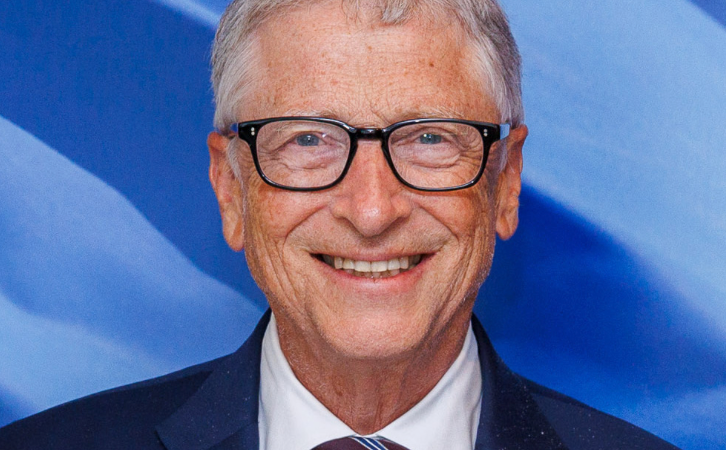
Bill Gates said AI could help cause 1 billion deaths, escalating pressure for mandatory safeguards. He said self-regulation is not enough.
The Microsoft Corp. co-founder made the warning in an excerpt from a television interview scheduled to air this weekend. Gates said there has never been a weapon as powerful as “the combination of people with ill intent using the latest AI tools.”
Gates puts number on risk
Gates described AI as “powerful enough” to drive events that could produce mass casualties. His remark gave a numerical frame to a debate that has often stayed inside technical circles and company policy teams.
The statement also moved him into a louder group of technology figures pressing for tighter oversight. Their concern is not only that AI systems will improve, but that people could use them to attack institutions that depend on software, communications networks and public trust.
Gates has made that case before. In an August essay, he wrote that bad actors could use more capable AI systems for cyberattacks, fraud, disinformation and other large-scale harm aimed at hospitals, financial institutions, power grids and government systems.
Anthropic staff add pressure
The warning follows public dissent from workers inside leading AI labs. Jacob Coxon, an employee at Anthropic PBC, left his job earlier this month and accused Anthropic and OpenAI of “gambling with our lives” by “racing toward super-intelligent AI.”
Another Anthropic employee said he believes there is a greater-than-10% chance that AI eliminates all humans within the next decade. That claim is an individual assessment, not a measured forecast, and the source material gives no second independent corroboration for it.
The comments have pushed a long-running dispute about AI safety further into public view. The central split is over whether the industry can control its own systems quickly enough, or whether governments need to set binding rules before more capable models are deployed.
Executives debate the throttle
Anthropic Chief Executive Officer Dario Amodei has urged a slowdown in AI development. OpenAI CEO Sam Altman and Elon Musk supported that proposal, according to the source material.
Gates argued that voluntary restraint will not carry enough force on its own. “You need law enforcement and the politicians to get into the discussion about what safeguards and monitoring look like,” he said. “And that has to be a required thing.”
The practical burden would fall on companies building frontier models, cloud infrastructure providers and customers using AI in sensitive systems. Required monitoring could mean more compliance work, more documentation and more limits on who can access the most capable tools.
Three paths for AI rules
If lawmakers move toward mandatory monitoring, the global macro effect would run through a slower but more controlled rollout of AI in high-risk sectors. For Anthropic, OpenAI and other labs, that would add legal constraints but could also create clearer standards for selling AI to governments and regulated industries.
If the industry relies mainly on voluntary safeguards, the macro channel would be faster AI diffusion with more pressure on cybersecurity and infrastructure controls. For the companies named in the debate, that path preserves development speed but keeps employee dissent and political scrutiny close to the business model.
If AI capabilities advance before rules are set, governments may focus first on the use cases Gates identified: cyberattacks, fraud, disinformation and threats to hospitals, financial firms, power grids and public systems. The open question is whether policymakers can define enforceable safeguards without giving the largest developers a permanent regulatory advantage.