Australian Coal Mines Exceed Emissions Limits
Australian coal mines exceeded safeguard emissions caps last financial year; most complied via offsets as total emissions rose 0.5%.
Atlas Newsdesk ·
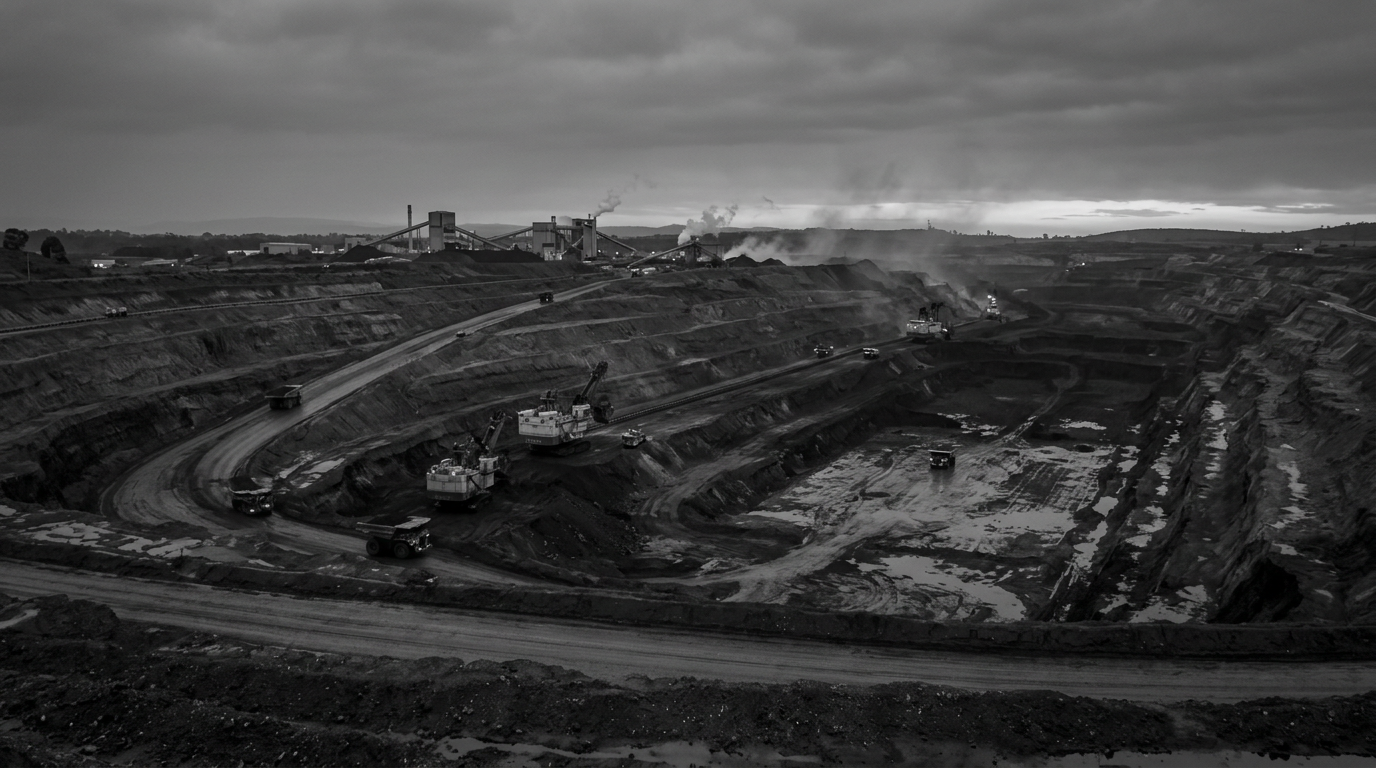
New government data shows Australia’s coal mines, taken together, exceeded their emissions limits in the last financial year under the safeguard mechanism, the policy framework intended to curb industrial greenhouse gas pollution. The figures indicate that about 80% of the nation’s coal mines released more emissions than their site-specific limits allowed, even as the Albanese government has pledged major pollution reductions to meet legislated climate targets.
In aggregate, emissions from coal mines rose slightly over the period. Total reported emissions increased from 31.63 million tonnes to 31.78 million tonnes, a 0.5% rise. The data also notes that the closure of one mine following a fire helped limit the overall increase.
Although many individual mines exceeded their direct caps, they still met their compliance requirements under the safeguard mechanism by buying carbon offsets. These offsets are designed to represent emissions reductions achieved elsewhere, allowing facilities to balance out excess emissions without necessarily cutting pollution at the mine site. As a result, mines were able to continue operating while relying on offset purchases rather than delivering equivalent on-site reductions.
Experts and environmental groups cited in response to the data argued that heavy dependence on offsets can slow direct decarbonisation at the source. They raised particular concerns about land-based offsets, saying this approach may not match scientific recommendations on how to address climate change and could delay the operational changes needed to reduce emissions from coal extraction itself.
Their position emphasised that cutting emissions where they are produced is central to credible progress.
Climate Change Minister Chris Bowen said total on-site emissions covered by the scheme, excluding offsets, fell by 2.3%, or 3.2 million tonnes. However, he noted that the comparison is influenced by a change in coverage, with 11 fewer facilities included in the scheme than in the previous year. That shift makes it harder to interpret how much of the reported reduction reflects operational improvements versus changes in which facilities were counted.
The data highlights a key uncertainty for policymakers and markets: the extent to which compliance is being achieved through offset transactions rather than direct emissions cuts at high-emitting sites. With coal mining a significant industrial activity in Australia, the balance between on-site reductions and offset use remains central to how the safeguard mechanism is functioning in practice and how progress toward legislated targets is being measured.