Australia Funds Drones with New A$15B Defense Plan
Australia commits A$15 billion over 10 years to develop military drones & uncrewed systems, marking a significant shift in defense strategy.
Atlas Newsdesk ·
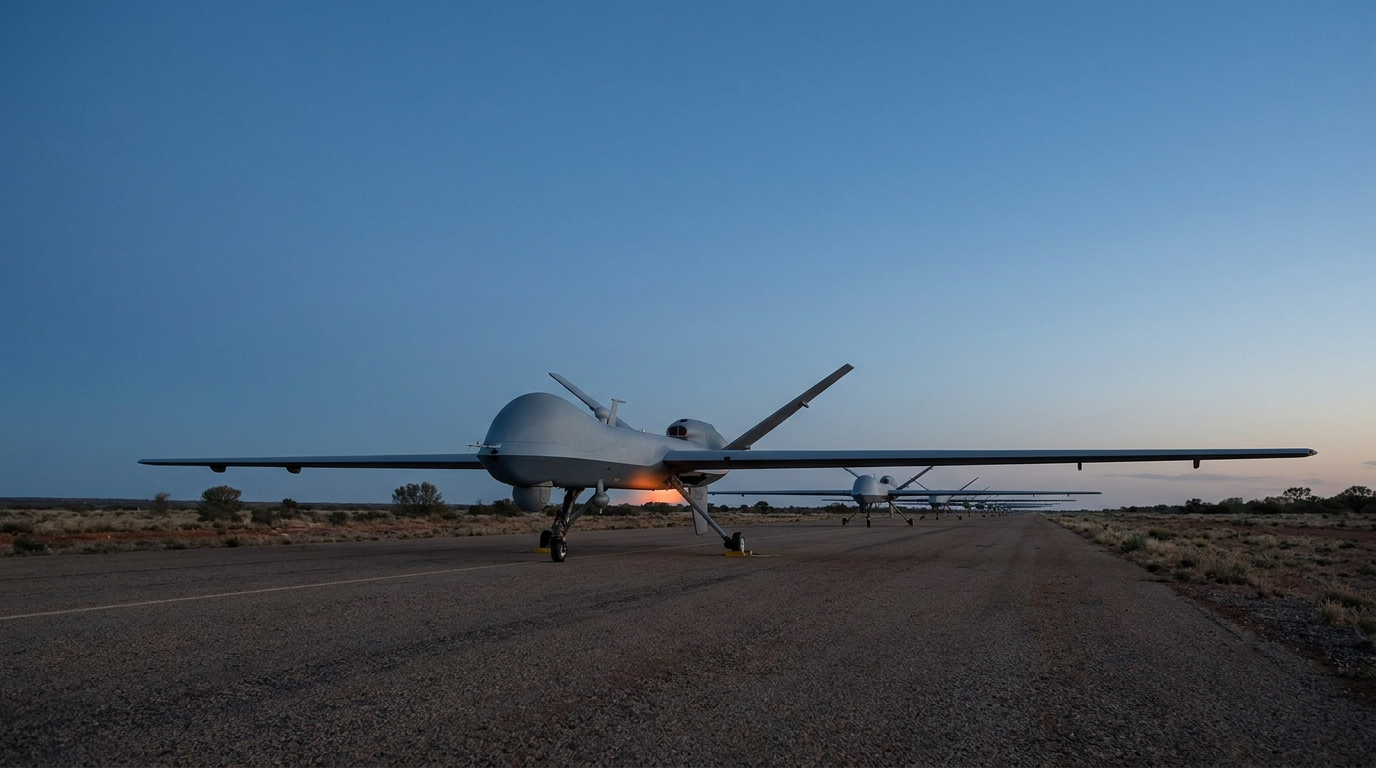
Strategic Overhaul with Uncrewed Systems
Announced on April 16, the strategy allocates the substantial funding over the next decade to enhance Australia's capabilities with autonomous air, ground, and maritime platforms. This initiative represents one of the most significant recalibrations of the nation's defense posture in recent years, aiming to build a technologically advanced and more resilient military force.
The investment will cover a wide spectrum of uncrewed technologies. These range from unmanned combat aircraft and autonomous submarines to various ground-based robotic systems, signaling a comprehensive approach to modernizing the Australian Defence Force.
Lessons from Modern Conflicts
The government's decision explicitly acknowledges the pivotal role that drones and other remote systems have played in recent global conflicts. The wars in Ukraine and events in the Middle East provided stark demonstrations of how uncrewed vehicles can reshape the modern battlefield.
These technologies have proven their value in strengthening intelligence, surveillance, and reconnaissance (ISR) operations. Furthermore, they provide commanders with precision strike options without exposing military personnel to direct harm, a capability Australia is now formally prioritizing.
Indo-Pacific Implications and Naval Strategy
Analysts note that these autonomous systems are particularly effective in complex maritime environments. Their deployment could significantly enhance Australia's ability to monitor and secure key maritime choke points and contested waters throughout the Indo-Pacific region.
The development of such advanced capabilities is also expected to draw interest from other nations in Asia. This could position Australia as a regional leader in autonomous military technology and potentially foster new defense partnerships or export opportunities for its burgeoning defense industry.
The decade-long plan underscores a long-term commitment to integrating these assets fully into Australia's defense architecture. The focus on uncrewed naval assets, such as autonomous submarines, aligns with the strategic imperative to project power and maintain security across the vast maritime domains crucial to Australia's national interests.