Jet Fuel Costs Trigger Major Airline Industry Crisis
Soaring jet fuel costs are creating an industry-wide crisis, forcing Spirit Airlines to cease operations and prompting major carriers to slash routes.
Atlas Newsdesk ·
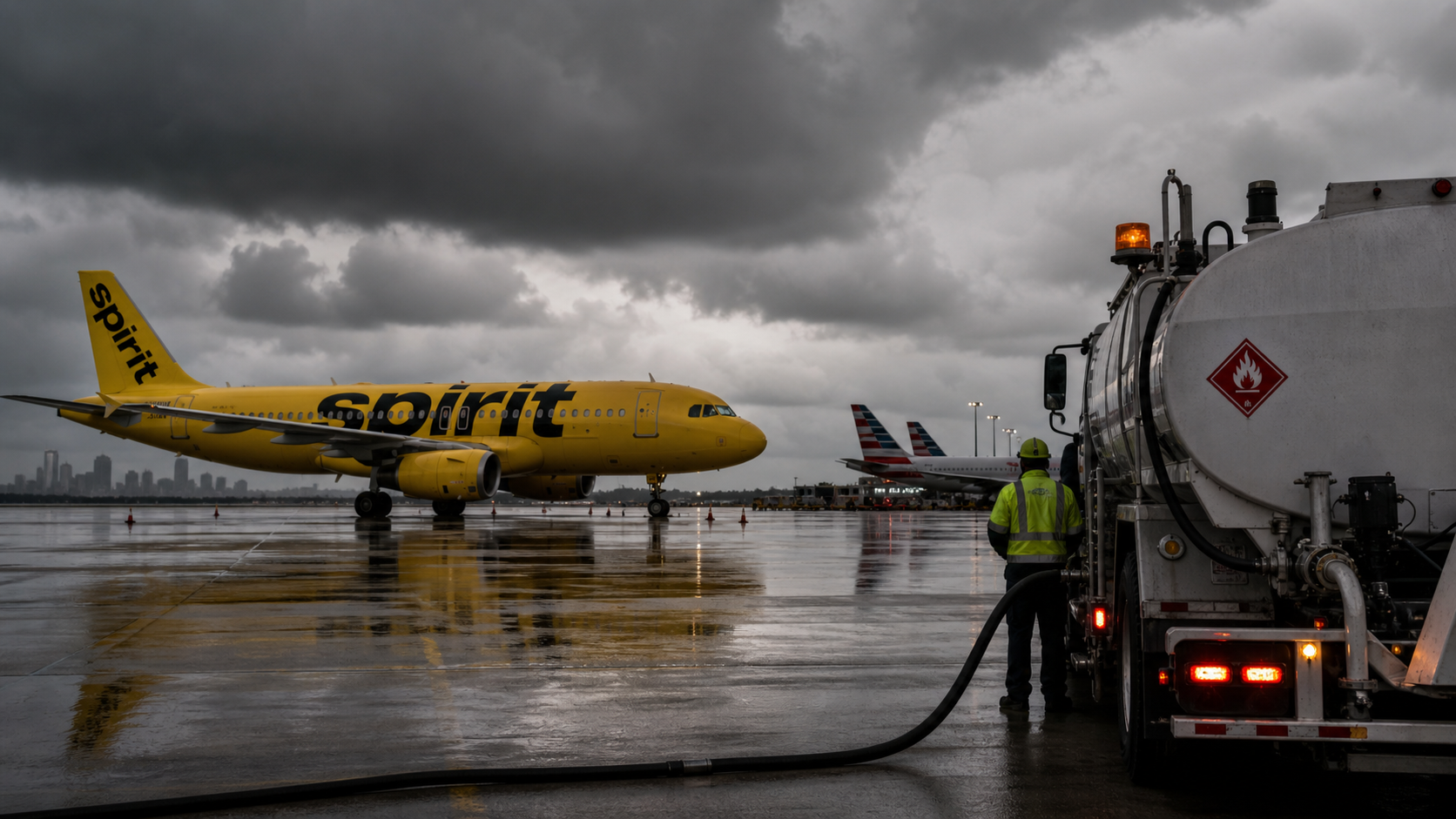
Spirit Airlines Halts Operations
Surging jet fuel costs are creating a severe financial crisis for the global airline industry, forcing carriers to implement drastic measures to survive. The situation has claimed its first major casualty, with Spirit Airlines ceasing all operations after a last-ditch effort to secure a government bailout failed.
The budget carrier, which had been operating under its second bankruptcy in less than two years, could not withstand the sudden spike in expenses. The end came after officials from the Trump administration could not agree on the terms of a rescue package, a move also resisted by some of the airline's bondholders.
Widespread Financial Turbulence
The financial strain extends well beyond smaller carriers, impacting even the largest players in the industry. Major airlines are now scrambling to adjust forecasts and strategies that, at the start of 2026, had predicted a year of strong profits fueled by robust travel demand.
American Airlines revised its financial outlook in April, estimating its annual fuel expenses would increase by $4 billion. The carrier warned it could now post a loss for the year, a stark reversal from earlier projections of significant earnings. Similarly, United Airlines has also slashed its profit forecasts.
To cope with the unexpected costs, carriers from Air France-KLM to Lufthansa and Cathay Pacific have begun trimming flight schedules. This strategy of cutting unprofitable routes and raising fares has become the primary defense for legacy airlines seeking to protect their bottom lines.
A Widening Industry Divide
The crisis is amplifying the gap between large, established carriers and smaller, low-cost airlines. While major airlines believe they can manage the situation by passing costs to consumers, budget carriers with thinner margins are being pushed toward the brink.
JetBlue Airways has been actively managing the fallout. CEO Joanna Geraghty recently sent a memo to reassure employees that the airline is not facing bankruptcy. However, company executives acknowledge the immense challenge posed by fuel prices, which reached $4.23 per gallon in late April.
JetBlue President Marty St. George commented on the sudden shift, noting, “You sit down at the poker table and play the cards you were dealt.” The airline is now performing a forensic analysis of its routes to eliminate flights that cannot cover the high cost of fuel, airport fees, and maintenance.
For Spirit Airlines, the fuel crisis was the final blow to an already fragile company. Its collapse was preceded by a federal judge blocking its merger with JetBlue, a move that severely limited its strategic options. The recent rise in fuel prices, reportedly linked to the war in Iran, ultimately made its plan to exit Chapter 11 bankruptcy untenable.
As the industry grapples with this new reality, analysts speculate that a significant reordering is imminent. Questions about potential mergers and acquisitions are increasing, signaling a potential wave of consolidation that could reshape the aviation landscape and reduce competition.