Artemis II sets distance record during successful moon mission
Artemis II returned on April 10, 2026 after a record lunar flyby, with Orion splashing down in the Pacific west of San Diego.
Jason Kwon ·
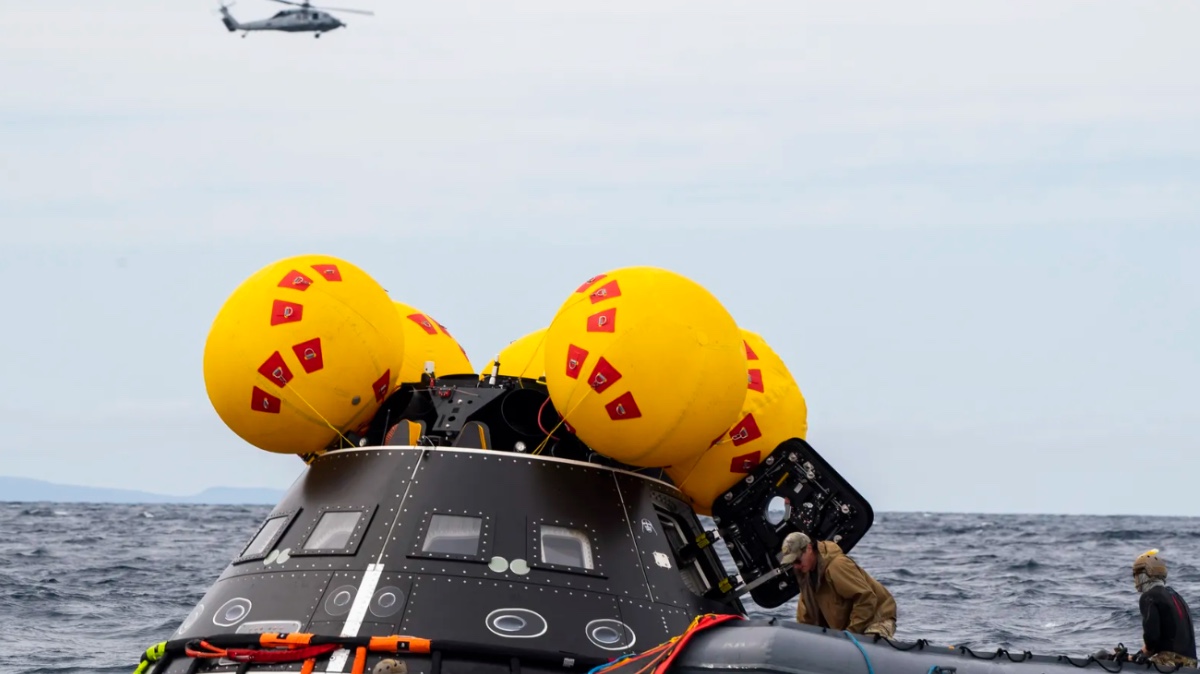
Artemis II , a crewed mission carrying four astronauts, completed its flight and returned to Earth on Thursday, April 10, 2026, after a lunar flyby that set a new distance mark for human spaceflight. Officials said the Orion capsule splashed down in the Pacific Ocean west of San Diego, California, at 11:04 a.m. EDT (1504 GMT). The return closed out a 25.5-day expedition that included orbiting the Moon.
The mission’s flight profile was designed to test the Orion spacecraft’s systems and validate operational procedures intended for future crewed deep-space missions. During the journey, Orion reached 470,000 miles (756,000 km) from Earth. Its closest pass to the Moon’s far side came within 6,700 miles (10,800 km), a distance that established a new record for the farthest humans have traveled from Earth, according to the mission description.
Officials described Artemis II as a key step toward upcoming lunar landing efforts. The mission’s central goal was to demonstrate Orion’s capabilities while prioritizing astronaut safety over an extended lunar-duration flight. The flight is positioned as a preparatory milestone for later missions aimed at sustained operations beyond low Earth orbit.
Recovery operations following the splashdown are expected to provide data from both the crew and the capsule. Officials said those results will be used to inform Artemis III, which is slated to place astronauts on the lunar surface. The mission’s outcome is also framed as part of a longer pathway toward establishing a continuous human presence on the Moon and, eventually, supporting voyages to Mars.
For global stakeholders, the Artemis II outcome is closely tied to the pace and reliability of future crewed lunar activity. The mission’s completion adds a major operational datapoint for deep-space human spaceflight, particularly around long-duration performance and procedures during a lunar flyby and return.
At the same time, officials have not detailed in this account what specific post-flight findings will emerge from the capsule and crew assessments, leaving the scope and timing of any follow-on adjustments for Artemis III unclear.
Implications
Country Impact: For the United States, the successful return and recovery of Artemis II supports the stated sequencing toward Artemis III, which is slated to land astronauts on the Moon. The splashdown and recovery west of San Diego also underscore the operational role of U.S.-based maritime and aerospace infrastructure in crewed deep-space missions.
Industry Impact: For the space sector, Artemis II provides a completed end-to-end crewed test of Orion’s systems and procedures on a lunar trajectory. The post-flight data from the crew and capsule is positioned by officials as an input to Artemis III planning, with the specific findings not detailed in this account.
Market Impact: For global markets, the mission’s completion reinforces the credibility of near-term lunar activity timelines described by officials, which can influence expectations around space-related procurement and long-cycle programs. However, the market relevance of the flight will depend on what recovery and inspection data shows, which has not been specified here.